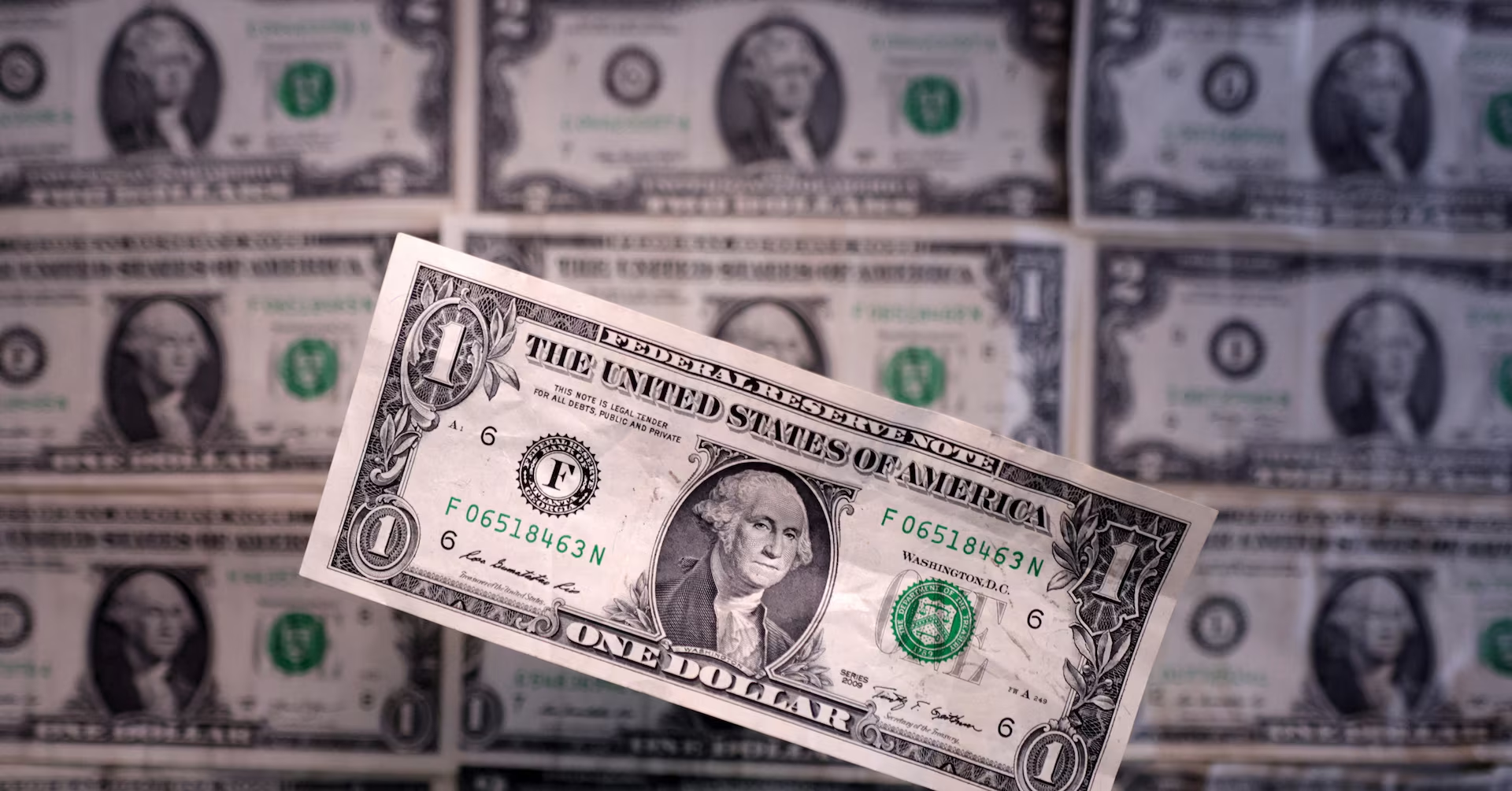
- Dollar on track to extend winning streak into fourth day
- Anticipated Supreme Court tariff ruling not happening on Friday
- US job growth slows in December
- Dollar hits one-year high against Japanese yen
NEW YORK, Jan 9 (Reuters) – The dollar gained on Friday after data showed slower than expected U.S. jobs growth, suggesting the Federal Reserve could leave interest rates unchanged later this month.
The unemployment rate fell to 4.4% last month from a revised 4.5% in November, the U.S. Labor Department reported on Friday, even as employers added 50,000 jobs in the month. Economists polled by Reuters had forecast a gain of 60,000.
Sign up here.
The latest job market data appears to give the central bank a bit of breathing room to leave short-term borrowing costs where they are, as Federal Reserve Chair Jerome Powell last month signaled policymakers are inclined to do at least in the near term.
Financial markets had been bracing for a possible Supreme Court decision that could strike down President Donald Trump’ssweeping tariffs. But the court will now not issue that ruling on Friday, though a decision could still come next week.
The U.S. economy added 50,000 jobs in December, according to Labor Department data released on Friday. That was lower than an estimated increase of 60,000 jobs forecast by economists in a Reuters poll.
The dollar was up 0.2% to 0.801 against the Swiss franc , headed for the second straight week of gains.
The dollar index rose 0.25% to 99.13 and was set for the second consecutive week of gains.
“In real life, the standard error margin for non-farm payrolls is 20,000 and so I don’t think the market is going to pay much attention to this,” said Steve Englander, head of global G10 FX Research at Standard Chartered.
Fed funds futures are pricing an implied probability of 95% that the central bank holds interest rates at its next two-day meet on January 27 and 28, up from 68% a month ago, the CME Group’s FedWatch tool shows.
YEN WEAKENSThe Japanese yen weakened following a report that Prime Minister Sanae Takaichi is considering calling a snap election for parliament’s lower house in the first half of February.Data showed Japanese household spending, opens new tab unexpectedly grew in November from a year earlier, indicating that consumption accelerated before the Bank of Japan lifted its policy rate to a 30-year high in December.
“(This) means April BoJ hike “could” happen technically (as assumption was spring election = no chance of BoJ move until after event), but equally Takaichi will likely not be happy to see a faster pace than every 6 months either and she’ll win back more power of LDP and be able to shut down internal opposition from hawks more,” said Jordan Rochester, head of fixed incomme, currencies & commodities strategy at Mizuho EMEA.
The dollar hit a one-year high of 158.185 against the yen . It was last up 0.64% to 157.88 yen, on track for the second straight week of gains.
In Europe, German exports, opens new tab unexpectedly fell in November as shipments to other EU countries and the U.S. dropped, while industrial output rose despite expectations of a decline.
The euro was down 0.2% at $1.1635, on track for the second straight week of losses against the dollar.
Meanwhile in China, annual consumer price inflation, opens new tab accelerated in December to its highest in almost three years.
The dollar weakened 0.06% to 6.977 versus the offshore Chinese yuan.
In other currencies, the pound sterling was down 0.24% to $1.3403, while the Canadian dollar weakened 0.32% versus the greenback to C$1.391 per dollar.
And the Australian dollar weakened 0.13% versus the greenback to $0.6688. Bitcoin fell 1.05% to $90,247.14.
Reporting by Chibuike Oguh in New York; Editing by Chizu Nomiyama, Nick Zieminski, Joe Bavier and Diane Craft
Our Standards: The Thomson Reuters Trust Principles., opens new tab