
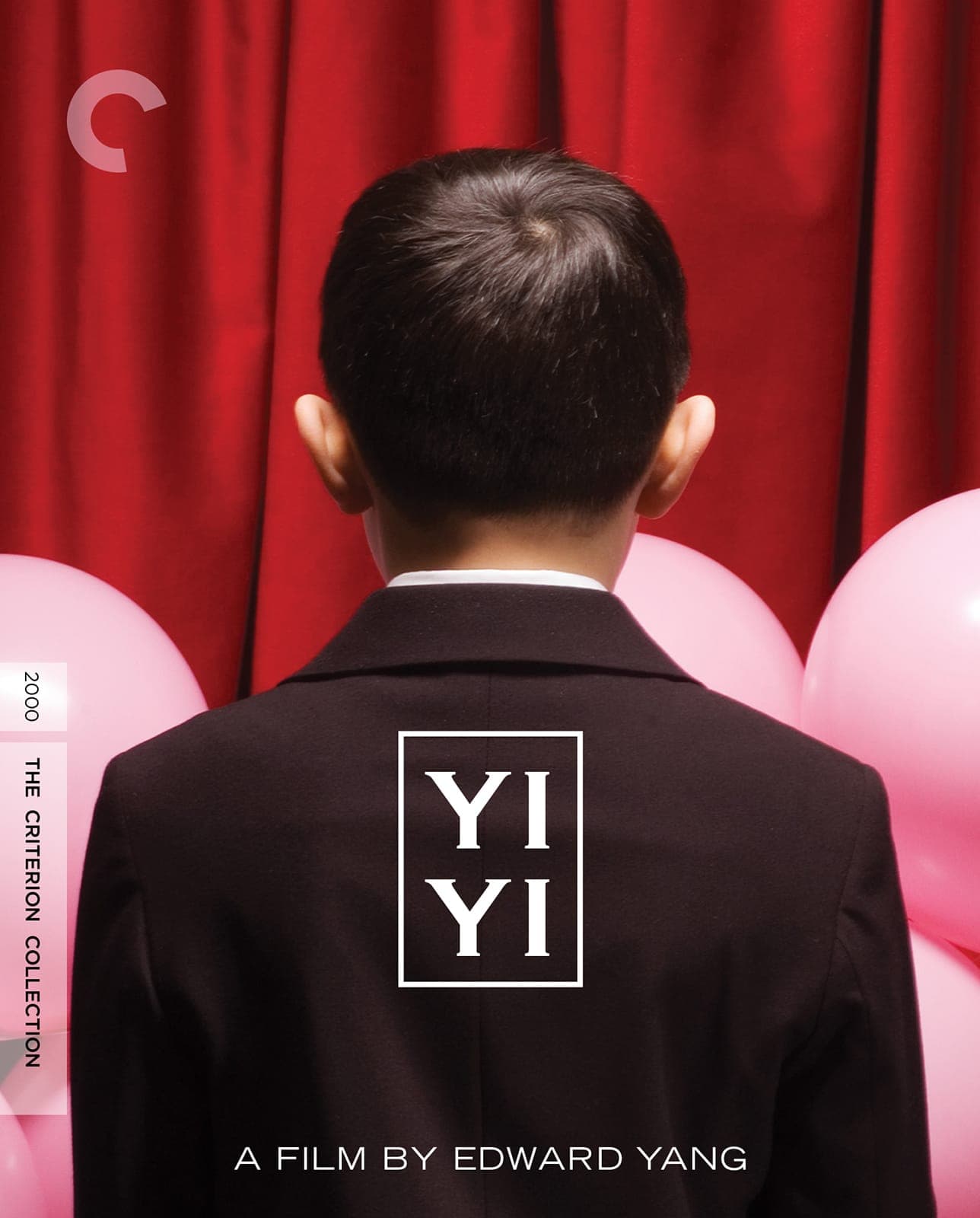
 Edward Yang’s Yi Yi is a moving celebration of family and cultural identity. The film’s brilliance emanates equally from its structure (the story is delicately bookended by two cultural rituals: a wedding and a funeral), the acuteness of its gaze, and Yang’s acknowledgement of life as a series of alternately humdrum and catastrophic occurrences—like a flower that blooms in the summer and wilts in the fall (he hopes you’ll notice it, because seeing is what validates its unique extraordinariness).
With the help of his camera, young Yang-Yang (Jonathan Chang) attempts to come to grips with the many dualities of the world around him. He takes pictures of people’s backsides because he wants to show them what they cannot see. His desire is representative of the film’s very philosophy: that there’s a second side to every story, and that the perception of that side promises new awakenings.
Yang-Yang’s father, NJ (Wu Nien-jen), must confront the reasons why he abandoned his ex-lover, Sherry (Ke Su-yun), at the altar when they find themselves growing closer again. He acknowledges and frees himself of pent-up pains and admits to still loving her. Though she leaves him this time around, her actions aren’t vengeful. This transcendent moment suggests that the past cannot be undone and that NJ’s only hope is to improve upon his present.
NJ’s cycle of enlightenment ends with the death of his mother-in-law (Tang Ru-yun), the family matriarch from whom everyone seemingly draws their every breath. Most appreciative of the old woman’s loving warmth is NJ’s daughter, Ting-Ting (Kelly Lee). A flower is the evocative symbol of the girl’s headlong search for inner peace. Her fellow classmates laugh at her for overfeeding it, but the wilted plant comes back to life after a divine encounter with her grandmother. It’s a remarkable moment that conveys the transcendence of the flesh and the transmigration of energies between the living and the dead. This is the essence of Yang’s masterpiece, a film whose profound emotional and cultural resonance brings to mind Robert Altman’s Short Cuts.
Image/Sound
Though sourced from a new 4K restoration, the Criterion Collection’s transfer of Yi Yi isn’t radically superior to the one used for the distributor’s 2011 2K release. Most of the improvements can be seen in the added sharpness of the backgrounds in the film’s many deep-focus compositions and the added pop of intensity to those ubiquitous reds and greens. There’s an expectedly light fuzziness to scenes shot in daytime under natural lighting conditions, while interiors and nighttime exteriors glow with the warmth of yellow bulbs and neon signs, respectively. Grain distribution is even throughout, and contrast is stable. The audio track is indistinguishable from the one on Criterion’s 2011 release, offering a balance of dialogue, ambient city noise, and tasteful music cues where no one element obscures the others.
Extras
Criterion ports over all of the extras from its 2011 home video release, including a commentary between Edward Yang and critic Tony Rayns. Yang’s contributions are a grab bag of personal and production anecdotes, and Rayns has an effortlessly way of keeping the writer-director talking and on point. In a separate interview, Rayns discusses the broader New Taiwan Cinema Movement and its aesthetic and thematic aims. The disc is rounded out by a theatrical trailer and a booklet essay by Kent Jones elaborates on Yang’s careful rooting of Yi Yi’s characters and drama within the social currents of turn-of-the-century Taipei.
Overall
The unfussy beauty of Yi Yi’s 4K digital restoration, as evidenced by the transfer on this release, is of a piece with the film’s quiet profundity.
Score:
Cast: Wu Nien-jen, Elaine Jin, Issey Ogata, Kelly Lee, Jonathan Chang, Chen Hsi-sheng, Ke Su-yun Director: Edward Yang Screenwriter: Edward Yang Distributor: The Criterion Collection Running Time: 173 min Rating: NR Year: 2000 Release Date: January 13, 2026 Buy: Video
If you can, please consider supporting Slant Magazine.
Since 2001, we’ve brought you uncompromising, candid takes on the world of film, music, television, video games, theater, and more. Independently owned and operated publications like Slant have been hit hard in recent years, but we’re committed to keeping our content free and accessible—meaning no paywalls or fees.
If you like what we do, please consider subscribing to our Patreon or making a donation.