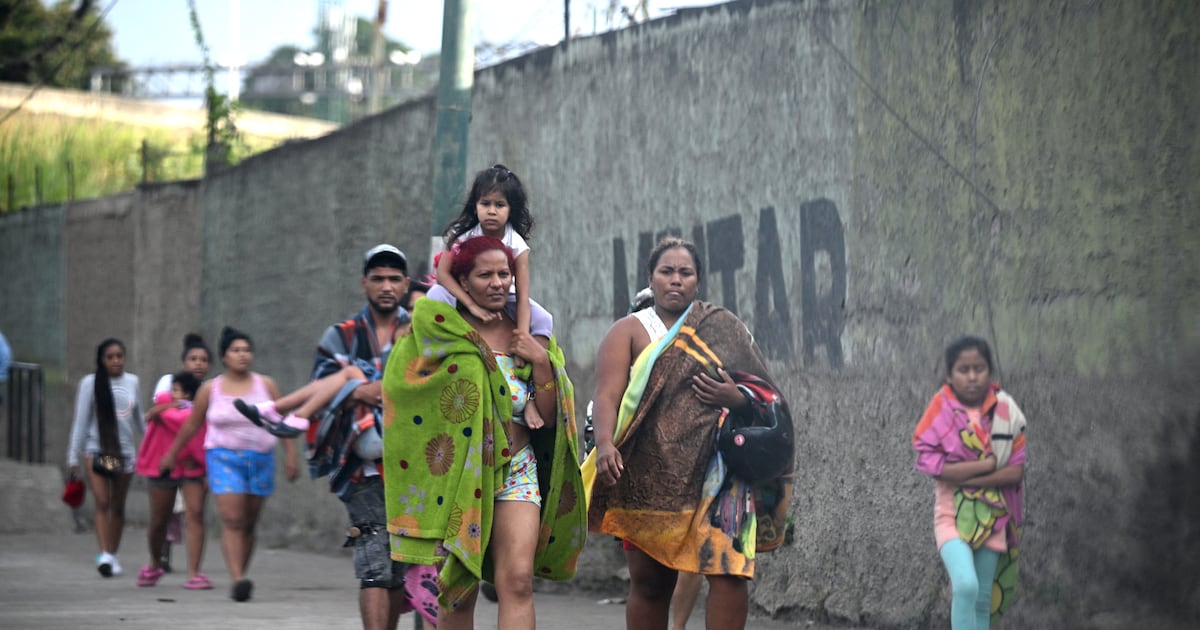
For residents living in and around the Fuerte Tiuna military base in Caracas, weeks of threats by US president Donald Trump against Venezuela’s dictator Nicolás Maduro led them to prepare for the worst.
Not only is the base the largest in the city, it was also suspected to be one of the safe locations Maduro used to evade being tracked by the US armada massed on his country’s Caribbean coast.
Given that her flat in a public housing development is located within Fuerte Tiuna, Ana had an emergency bag with water, medicines and some clothes at the ready.
“Our part of the base might be residential but it is close by the military area. We were on alert.”
Likewise, just outside the base’s perimeter in her family’s apartment, Blanca had a similar bag at the ready. It was in the hall when, last Saturday, after a night staying up late watching television, she went to bed, only to jump out of it five minutes later after a loud “boom” that was followed by all the power failing.
“Then, maybe three seconds later, we heard the first explosions.”
On the base itself Ana also heard detonations: “Sounds like I’d never heard before. The windows rattled, the power went. I just thought: Explosions. War. We’re being invaded.”
Their account of the night and its aftermath was given to The Irish Times in phone interviews. Names have been changed to protect identities amid fears of ongoing regime repression in a country ruined by the failed Bolivarian revolution launched by Hugo Chávez and which descended into dictatorship under his successor Maduro.
As the explosions started, Blanca says she grabbed her child and ran for the hall of their apartment to get away from the windows.
“It was like there was an earthquake; everything was shaking. To explain how I felt at that moment is difficult. There was so much fear. We had talked with our kid about how something like this could happen. But it is one thing to explain this to a child, another to live through it.
“When the first bomb exploded, their first words were ‘Mummy I don’t want to die’. I had to control my own fear so that I could calm theirs.”
If Blanca’s decision was to shelter in place, Ana – actually living on the military base – had decided to make a run for it: “In an emergency I don’t freeze, I get busy.”
She quickly got dressed, grabbed her laptop – “all my work is on it” – and the emergency bag and headed out.
“It was crazy but this was my reaction. It was one bomb after another, very close and very strong, they shook the building.”
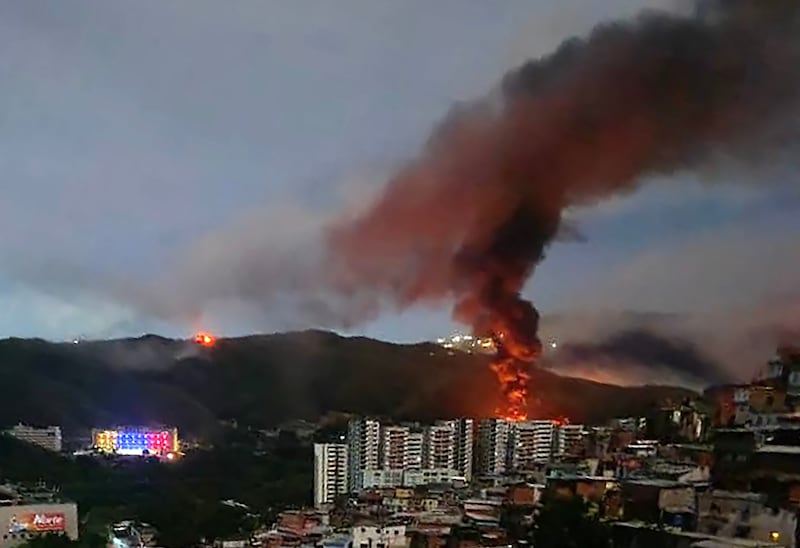 Fire at Caracas’s Fuerte Tiuna military base seen from elsewhere in the city early last Saturday. Photograph: AFP/Getty
As she left her lower-floor flat she saw neighbours from higher floors streaming down the stairs, families with crying children.
Eventually she got outside.
“Then I was hit by the reality of it. It was terrifying. I thought: it’s over.” Smoke was rising from where the bombs had hit. The sky was full of drones, helicopters and planes.
Then, as she ran to her car, she noticed there was a yellow full moon.
“It struck me as beautiful. It makes no sense to think that at a time like that but that’s just how I am.”
Eventually she got in her car and away from the base to the house of one of her children in another part of the city.
From her hall Blanca could hear people in the street outside shouting as the bombing went on. After some time she and her husband went to the window to look. “We had no idea what was happening. We had to check to confirm it really was an attack. It was like dawn out the sky was so orange and filled with smoke and fire from the explosions.”
After 90 minutes the bombardment ended and the planes and helicopters left. It was only hours later that Ana and Blanca came to understand the attack was not the start of an invasion and though they had been right by the centre of it, the attackers’ surgical precision meant their neighbourhoods had emerged unscathed, if without power.
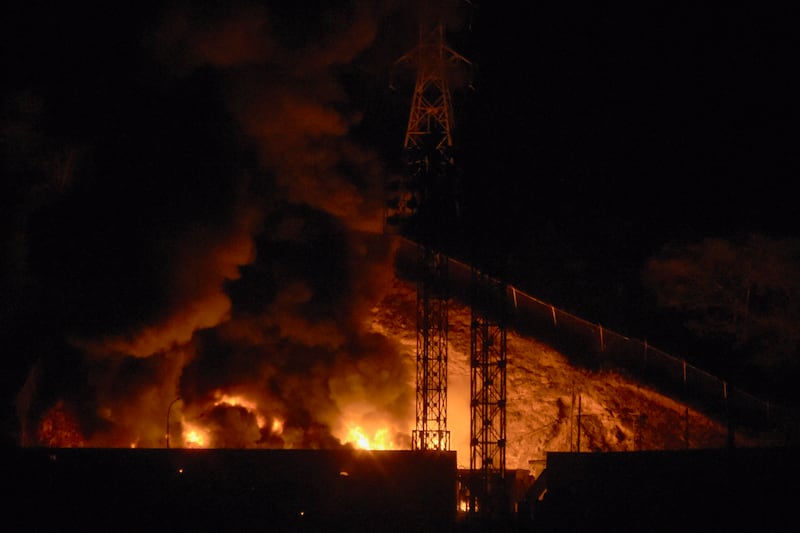 Fuerte Tiuna after the US attack. ‘It was terrifying. I thought: it’s over.’ Photograph: Luis Jaimes/AFP/Getty
“I never imagined the bombardment was so targeted. I thought they were destroying everything. It was only later I realised it was something else,” says Ana.
Neither Ana nor Blanca sound overly moved by news the raid was to seize Maduro from Fuerte Tiuna, pointing out that otherwise his government is still in place. “We are still governed by the exact same people as before. Maduro was always just part of a group. I don’t feel hope because I don’t think this is the end,” says Blanca.
Both talk of a climate of fear in the city and a pervading sense of uncertainty. Ana says in its immediate aftermath friends and family shared photos and video of the attack with each other. But as it became clear that the regime remained in charge, everyone deleted everything they worried might get them in trouble with its militias, who have been out on the streets checking people’s phones.
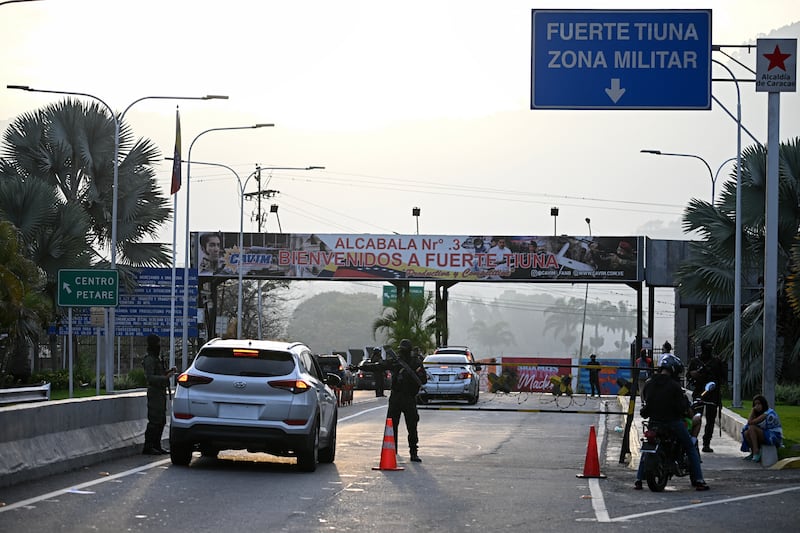 Members of the Venezuelan national guard at an entrance to Fuerte Tiuna. Photograph: Federico Parra/AFP/Getty
But otherwise normal life is resuming. Shops are open and prices that spiked over the weekend have come back down. People are back at work.
“So there is a sense of normal life returning but there is also this feeling of fear,” says Blanca.
Ana is still staying with family in another part of Caracas rather than return to Fuerte Tiuna. With Trump threatening more attacks, she fears the crisis is not yet over.
“It is hard to recover when we are living under the threat of another bombardment. I got through just one and since then I cannot stop thinking of those people in wars who have to live through them day after day.”