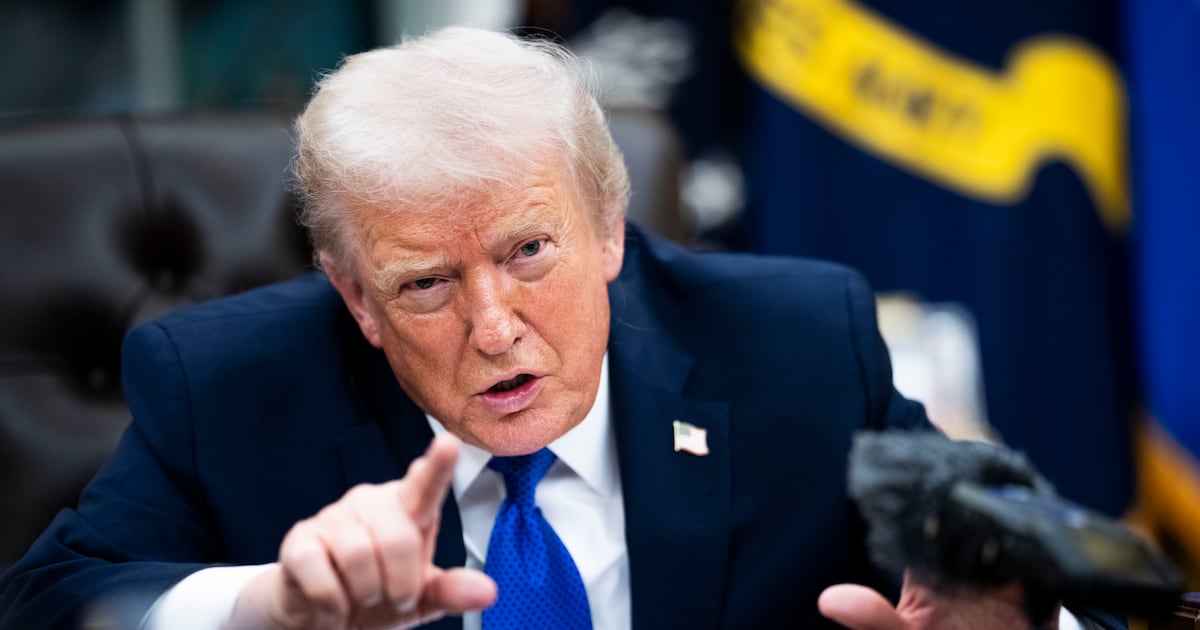
“They say aspirin is good for thinning out the blood, and I don’t want thick blood pouring through my heart,” US president Donald Trump told The Wall Street Journal in an interview published on New Year’s Day. “I want nice, thin blood pouring through my heart. Does that make sense?”
Perhaps, unsurprisingly where Trump is concerned, it doesn’t make sense.
He proudly proclaimed that he takes a higher dose of daily aspirin than his doctors recommend and has been doing so for 25 years.
The president takes 325 milligrammes of daily aspirin – four times higher than the recommended 81 milligramme low-dose aspirin used for cardiovascular disease prevention. There are a number of reasons why this is a problem, but before looking at these, let’s take a look at how aspirin works and why it is considered a ‘wonder drug’.
Aspirin is probably best known as a key cardiovascular drug, because of its action as an anti-platelet medication. The first study which showed that aspirin is effective in preventing further heart attacks in people who have already experienced a myocardial infarction was published in 1974 in The New England Journal of Medicine. Now the evidence for using aspirin in secondary prevention of heart disease is strong. Long-term treatment with low-dose aspirin reduces the risk of a future heart attack by about a quarter.
Aspirin’s place as a wonder drug is copperfastened by its ability to reduce the incidence of a broad range of cancers. Taking low-dose aspirin on a daily basis reduces overall cancer mortality by one-fifth.
The drug also has a proven role in the secondary prevention of “mini-stroke” or transient ischaemic attack (TIA), and stroke. Given early after a TIA, it reduces the risk for a recurrent vascular event by 50 per cent; long-term treatment with the drug reduces the risk by 20 per cent. But a large 2021 study found no evidence that aspirin at a higher dose, such as 325 milligrammes daily, produced any additional benefit.
Aspirin’s cardiovascular benefits arise from its ability to make blood less sticky by reducing platelets clumping at the site of narrowing of the arteries in the heart and the brain.
With such striking cardiovascular benefits, it seems a no-brainer to use aspirin – as Trump does – for the primary prevention of vascular events.
[ Doctors find drug that is better than aspirin at preventing heart attacksOpens in new window ]
However, in the past 10 years a number of large trials clearly showed that aspirin is not effective compared with a placebo in the primary prevention of stroke, heart attack or death from vascular disease. The trials also found that the incidence of major bleeding was higher in people taking aspirin, with about one in 250 patients having a significant bleed into either their brain or stomach. With such an unfavourable risk/benefit ratio, the hope that aspirin use could be promoted for everyone faded.
Aspirin is not, as Trump claims, a blood thinner. To thin out the blood requires the use of drugs such as warfarin, which acts on proteins in the blood. Aspirin reduces platelet aggregation (clumping), using a different mechanism, but does not thin blood out.
In a recent review of low -dose aspirin for primary prevention published in his Substack, Ground Truths, Dr Eric Topol had this to say: “The body of evidence reviewed here strongly argues against use of low-dose aspirin for people of older age for primary prevention – without heart disease. Without cardiovascular disease means no prior heart attack, bypass surgery, or percutaneous coronary intervention (stent) since these represent secondary prevention, which has clearcut net benefit for aspirin. That benefit extends for secondary prevention of cerebrovascular disease (TIA, stroke) individualised for the basis of risk of major bleeding.”
He also noted that the medical community does not appear to be fully aware of these findings.
The bottom line is that, at 79 years of age, Trump shouldn’t be taking aspirin at any dose for the primary prevention of heart disease.