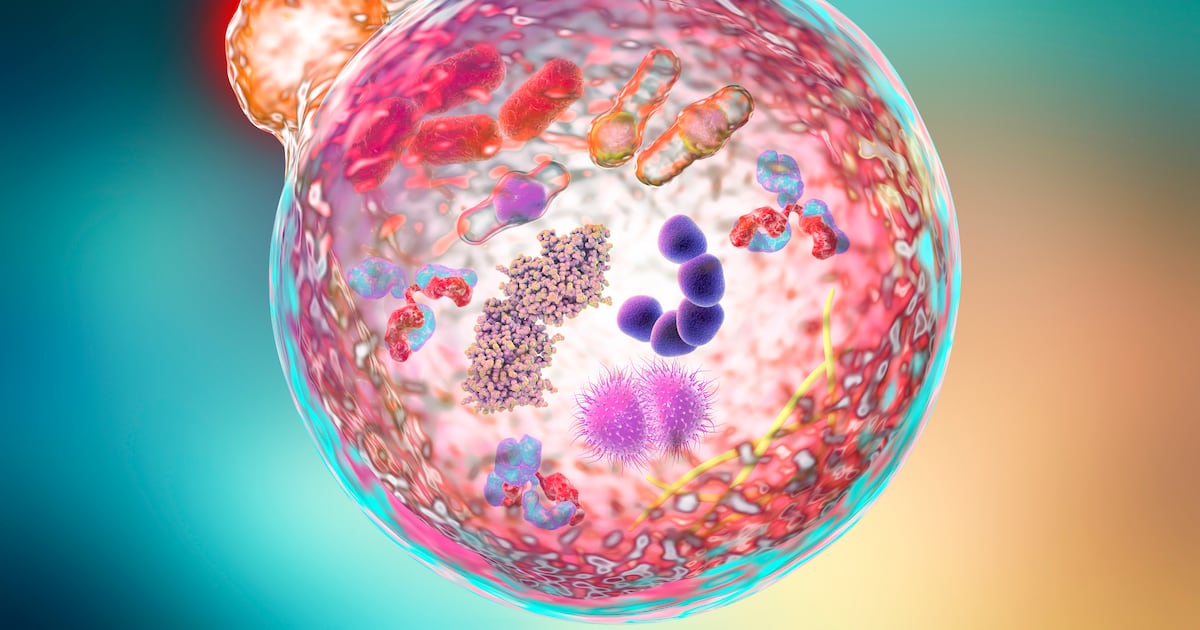
Scientists have discovered that when we give ourselves a break from eating – something extraordinary begins to happen to us. Our cells don’t just “rest”. They wake up and repair. They do a house clearance.
Autophagy is the natural regeneration process that occurs inside the body’s cells that can reduce the likelihood of some diseases, as well as increasing lifespan. It sprang to prominence in 2016, after Japanese scientist Yoshinori Ohsumi won the Nobel Prize for this research into how autophagy works. His studies have improved our understanding of disease mechanisms in conditions such as Parkinson’s and dementia.
Oshumi’s pioneering yeast experiments revealed autophagy’s core genes and mechanisms, showing how cells recycle under stress – such as prolonged fasting.
The cell biologist’s research accelerated efforts to find drugs that simulate the process, while the wellness industry also stepped in, with claims that lifestyle interventions such as fasting, high-intensity exercise and diets low in carbohydrates could induce autophagy naturally and reduce risk of disease.
The wellness interest was magnified by a book, Glow 15, from “wellness explorer” Naomi Whittel, which set out a 15-day programme, including 16-hour fasts three times a week, reduced protein intake on some days, eating carbohydrates later in the day and periods of high- intensity exercise.
[ What causes us to age? Scientists search for answersOpens in new window ]
In tests of the programme on volunteers at Jacksonville University in Florida, she highlighted a number of health benefits. “Some people lost weight in 15 days. Others saw a reduction in fine lines, changes in blood pressure and improvements in lean muscle mass.”
These lifestyle recommendations are unlikely to cause harm. But more rigorous scientific evidence is need to confirm the benefits of fasting on ability to induce autophagy.
So, what does the science say about our ability to simulate or induce autophagy in our bodies and mitigate disease risk?
First, what exactly is autophagy?
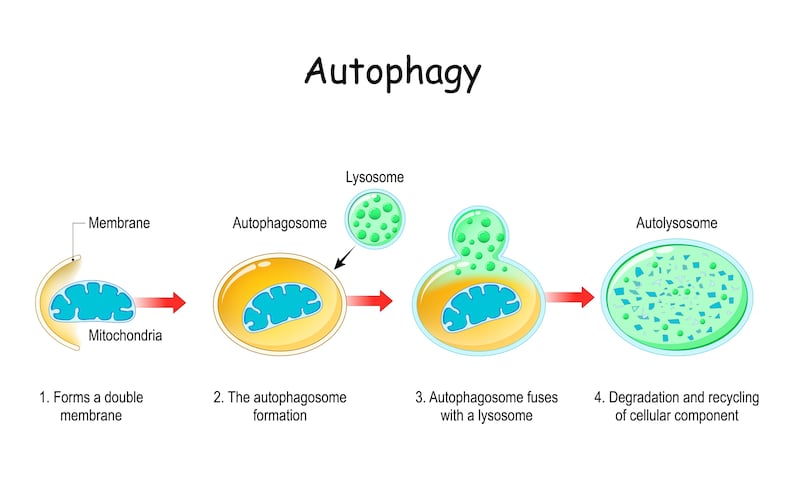
Autophagy is the process by which cells degrade and recycle their cellular components, providing fuel for energy as well as building blocks for renewal of cells. It is the process used by cells to get rid of damaged proteins and components of the cells that occur through the process of ageing. It may also play a role in terms of protection against infection and excessive inflammation.
In a paper published in the Institut Pasteur Research Journal (2024), scientists outlined how they had stimulated the mechanism of autophagy by intermittent fasting.
“Autophagy is a possible avenue for research to ‘cleanse’ the neurons of their aggregates of harmful proteins in diseases such as Alzheimer’s or Parkinson’s,” the researchers said. “Elucidating the mechanism of autophagy raises hopes that it might be possible to stimulate the process of autophagy and perhaps, one day lead to a cure for neurodegenerative diseases.”
Intermittent fasting has become a popular practice in recent years. Several studies, including one in Nature (2015), report how leaving longer gaps between meals reduces the risk of heart attack, stroke and cancer and can potentially increase lifespan.
The biochemical processes induced in cells when we deprive ourselves of food are becoming clearer. The researchers in the Institut Pasteur state that one such process is autophagy, “a key recycling system induced in all cells when we are hungry”.
The researchers describe how, during autophagy, a membrane sac, or trash bag, forms inside cells to collect cellular waste. The method by how these trash bags were formed has until recently remained a mystery.
Research published in Nature (2024) by the Institut Pasteur research team identified how hungry cells produce cellular trash bags, shaped like cups, that enable them to collect and contain waste. The formation of these container cups requires protein scaffolding. The researchers were able to reconstruct these cellular trash bags with their protein scaffolding in test tubes. They suggest this could be a key step towards identifying a cure for age-related diseases.
“Our discovery paves the way for the identification of drugs that activate autophagy and induce the formation of cellular trash bags,” said lead author Thomas Wollert.
“We know that autophagy is a serious avenue to explore as a way of breaking down the protein aggregates observed around neurons in degenerative disease” – and thereby slowing down the ageing process. Our hope is that these drugs could be used to treat patients with Alzheimer’s or Parkinson’s disease.”
If you want to start intermittent fasting, you should always consult your doctor for advice.
In their study, the scientists referred to 16/8 intermittent fasting. This is a well-touted system involving fasting for 16 hours and eating within an eight-hour window. The researchers state that the diet only works if it is sustained permanently so it is not recommended for everyone, and medical advice should always be sought.
Other fasting regimes including the 5:2 diet (fasting for two days a week) or Eat Stop Eat (fasting for 24 hours once or twice a week) can be associated with health risks, as highlighted in a paper in Nutrients (2022), including nutritional deficiencies or eating disorders.
If you want to start intermittent fasting, you should always consult your doctor for advice.
In the meantime, the science around autophagy and its links to mitigating Parkinson’s and Alzheimer’s continues to emerge and offer the hope that perhaps one day may lead to a cure for neurodegenerative diseases.
- Dr Catherine Conlon is a public health doctor in Cork