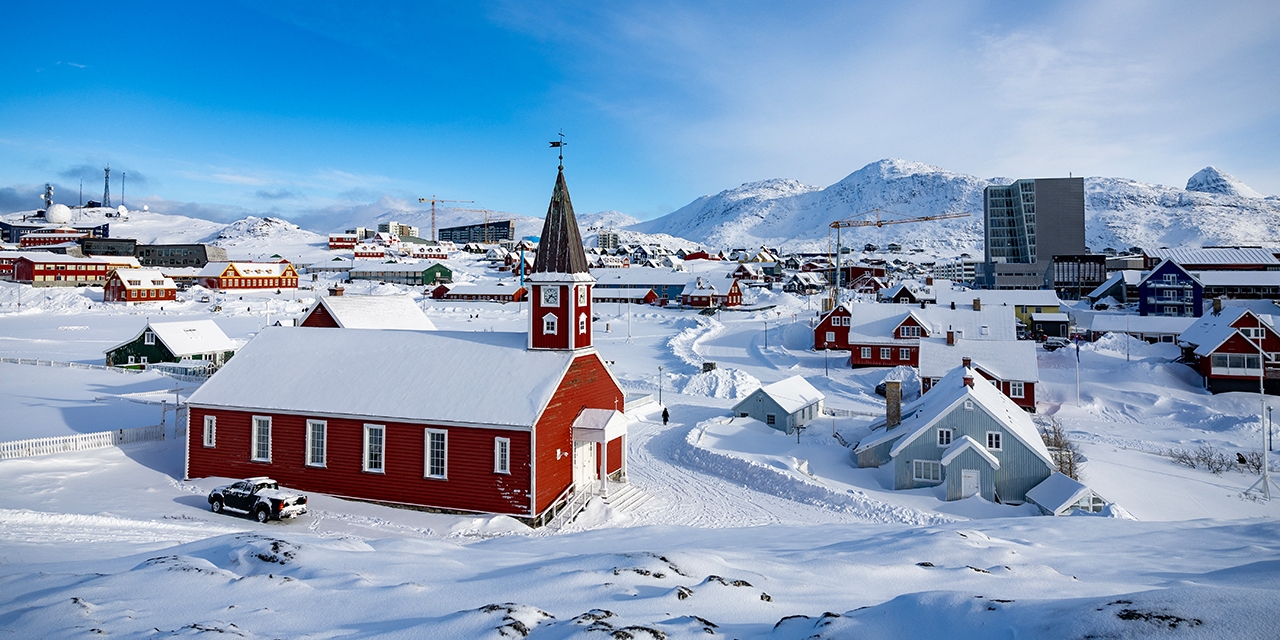
Donald Trump wants to buy Greenland — and he’s not ruling out military force to take it.
His allies are fanning the flames. Just hours after the U.S. military operation in Venezuela, Katie Miller, wife of senior Trump advisor Stephen Miller, posted a map showing Greenland covered with the American flag, captioned with a single word: „SOON.“ Greenland belongs to Denmark, a NATO ally.
So what do these threats really mean?
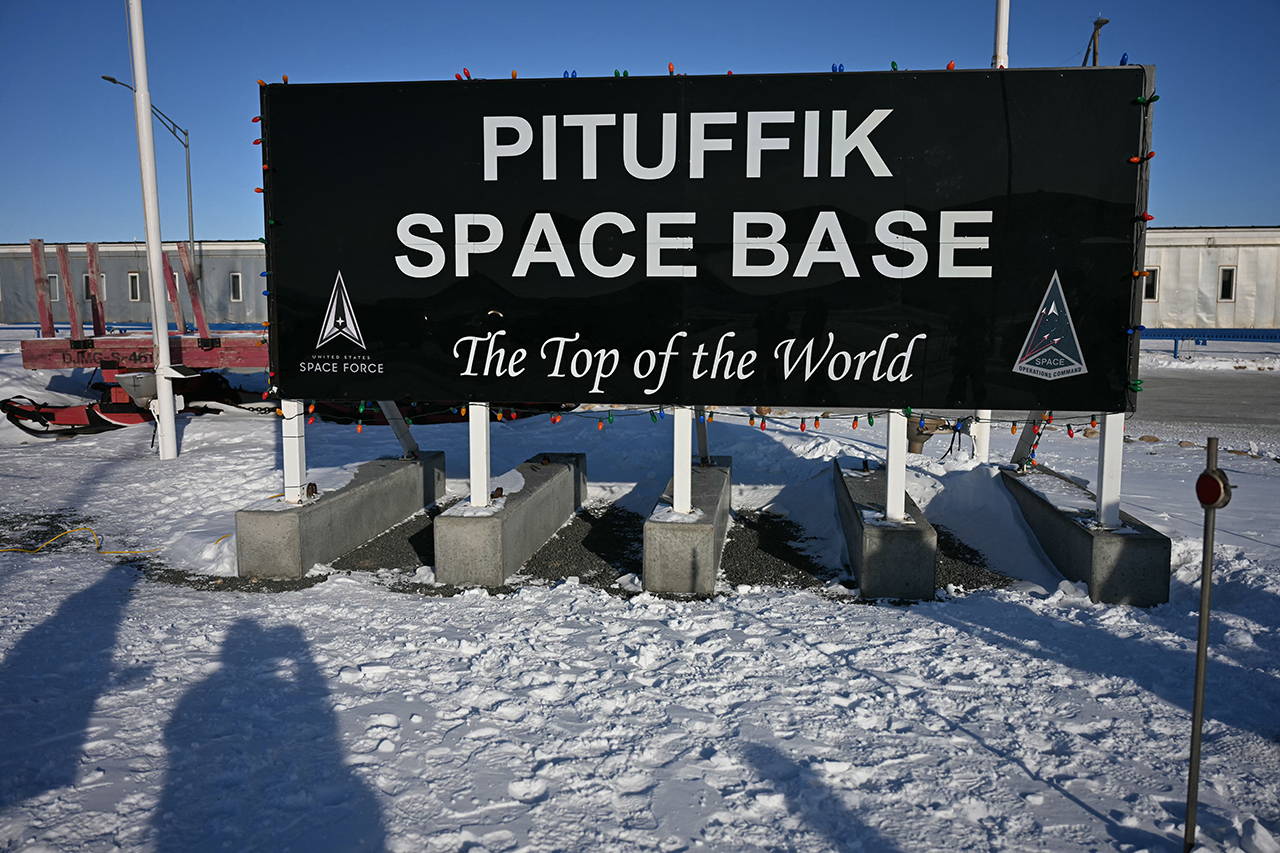
The idea of U.S. troops invading the territory of a NATO ally might seem absurd, but the military presence is already in place, according to Shashank Joshi, defense editor of The Economist.
“There is a U.S. Space Force base called the Pituffik Base, which has a very powerful space radar on it,” Joshi explains. The base hosts the 12th Space Warning Squadron, which operates ballistic missile early warning systems. The U.S. maintains approximately 150-200 active-duty personnel at Pituffik Space Base
“And so in some senses,” argues Joshi, America doesn’t need to send in forces in the manner it did in Venezuela. It just could say this is now U.S. sovereign territory, this base at least, and perhaps all of Greenland.”
APA/AFP/POOL/Jim WATSON
Security Arguments Don’t Add Up
The Trump administration has argued it needs to „have“ Greenland for national security reasons. But that rationale falls apart under examination. Denmark has already authorized Washington to deploy additional forces or build more missile defense infrastructure on Greenland if needed.
“America used to have far more troops and bases on Greenland than it does today. It closed many of them over the last 30 years. And that was up to America, not up to Denmark,” Joshi notes. “So if America wanted to expand its presence on Greenland to cope with what it says is a growing threat from Russia and China — a threat that it somewhat exaggerates in terms of the ships swarming the island, as Trump talks about it — it could do so. Denmark would have no problem with that.”
As for critical minerals, Greenland’s government has already expressed willingness to sell its natural resources to the United States. Washington effectively has access to anything it could reasonably demand.
So why threaten a close ally and antagonize several of his most powerful allies? Seven European leaders including Emmanuel Macron, Friedrich Merz, and Keir Starmer issued a joint statement saying Greenland „belongs to its people“ and that „It is for Denmark and Greenland, and them only, to decide on matters concerning Denmark and Greenland.“
Why ruin the transatlantic relationship?
“Drunk on Power”
Joshi believes the timing is key: “I think that they are slightly drunk on power. They’ve pulled off this remarkable military operation in Venezuela, and even though the political outcomes may be very uncertain for now, I think that this MAGA movement doesn’t really see itself as constrained by international law or rules. They see a world that is dog eat dog.”
The End of NATO?
Danish Prime Minister Mette Frederiksen has issued a stark warning: if the U.S. attacks Greenland, „everything stops, including NATO and the security architecture established since the end of World War II“.
Joshi takes that warning seriously. “America is so vital to NATO — the Supreme Allied Commander Europe, SACEUR, is a four-star American general sitting in Belgium — that if America were to do anything like this, I think it would basically explode the idea that America would come to the aid of Europe if it was attacked by Russia. And that, in turn, would blow up the underlying trust in NATO’s Article 5, and with it, the political cohesion of the alliance.”
What Would That Mean
The consequences would ripple across the continent. “You might not notice it the day afterwards when you wake up, but if you’re sitting in Estonia or Latvia or Lithuania and you’re a citizen of those countries, I think you would very much be concerned that actually Russia could now feel perhaps it could invade one of these countries and the likelihood of an American response would be much lower,” he says.
“Your level of insecurity, your level of uncertainty would be really quite profound. And I think you’d see it in European stock markets. I think you’d see it in levels of investment in Europe. You’d see it in the sense of security everyday European citizens would eventually feel.”
APA/AFP/Odd ANDERSEN
Europe Faces a New Reality: A Predatory America
Denmark’s response to Trump’s threats has evolved dramatically. A year ago, when the rhetoric first began, Copenhagen urged quiet diplomacy. „They were being very careful and saying to Europeans, look, let’s deal with this privately. We’ll talk to the Americans. Don’t make a fuss,“ Joshi recalls. „That’s all completely changed.“
Now Denmark is actively calling on its European partners to speak up. The first line of defense has been securing public statements from major European powers standing by Denmark and condemning American rhetoric — what Joshi calls „deterrence by rhetoric.“
But Denmark’s options remain limited. „If it goes beyond that, I think they will be looking very closely at U.S. intelligence activity on Greenland, for example, operations trying to influence the independence movement on the island,“ Joshi says. „But in terms of physical defense, I’m not sure there’s an awful lot they can do, given that America is so powerful and has a presence on the island.“
The Unthinkable Scenario
For decades, conflict between the U.S. and its European NATO partners seemed unthinkable. European militaries remain heavily dependent on America — not just outgunned, but reliant on U.S. technology for their weaponry to function at all.
„I think the scenario that many Europeans were worried about was really an America that pulls away from Europe, that is more interested in Asia or indeed in Latin America, as we see,“ Joshi explains.
A Fundamental Shift
„What was less prominent in these scenarios of concern was a predatory America, an America that is threatening Greenland, that is sanctioning former EU officials, that is encouraging far-right parties in Europe. That’s a different world.“
The shift is forcing a fundamental reassessment. „I’m talking to lots of military officials in Europe, all of whom are now really, really concerned and saying, we must really think about our future without America now in a serious way,“ Joshi says.