More than 57,000 hectares of threatened species habitat was approved for destruction by the Australian government in 2025 – the most in 15 years, according to analysis by the Australian Conservation Foundation.
The ACF’s latest annual “extinction wrapped” report has revealed that the threatened species habitat greenlit for land clearing was about 10 times the size of Sydney Harbour – more than double the 2024 figure, and over five times the 10,426 hectares approved for razing in 2023.
Former Greens leader Adam Bandt, the ACF’s new chief executive, described the year-on-year doubling as “really distressing”.
“A lot of people don’t know that Australia is a global deforestation hotspot … every year, we lose more forest than the loss from the entire palm oil industry in Indonesia,” he said. “The nature that we love is under threat like never before.”
The ACF report also noted that 42 new plants and animals were added to Australia’s list of species facing extinction.
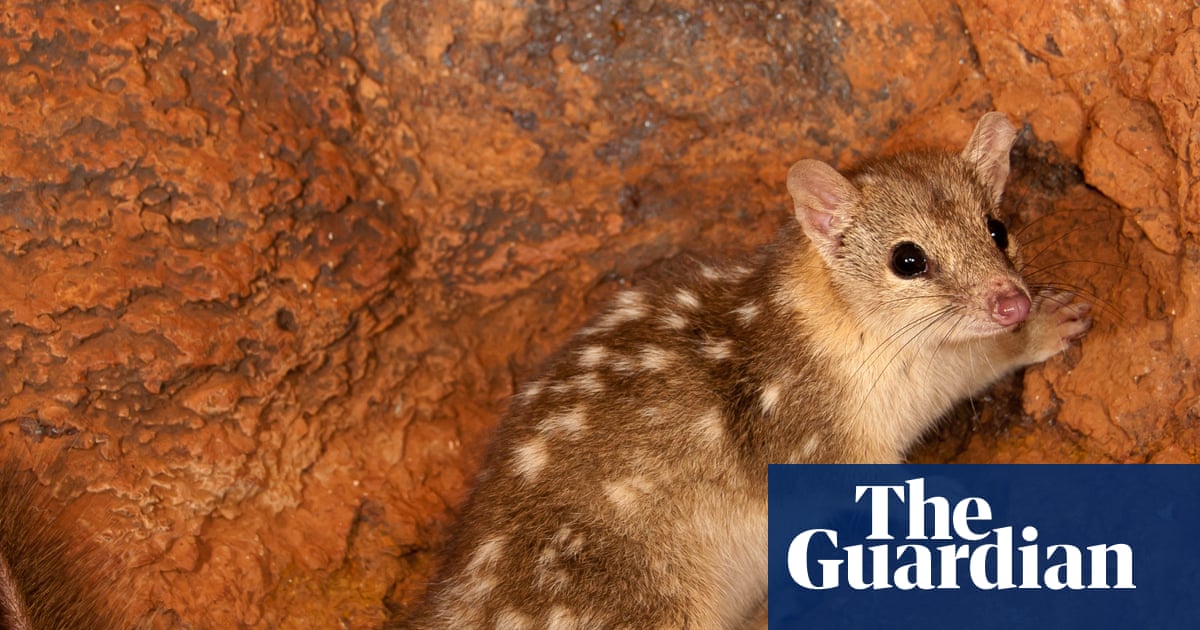
The northern quoll was the species worst affected by federally approved land clearing, with 7,643 hectares marked for destruction.
Of the threatened species land clearing, 98% occurred in Western Australia, Queensland and New South Wales. The mining industry accounted for two-thirds of the area cleared.
The Pilbara region of Western Australia had five animals worst affected by habitat destruction: the northern quoll, night parrot, ghost bat, Pilbara leaf-nosed bat and Pilbara olive python.
“The mining projects approved there are just so massive and so devastating for the threatened species that live there,” Bandt said.
Citing the elusive night parrot, a bird thought to have been extinct for a century until 2013, Bandt said: “Two things happened to the night parrot in 2025.
“One is it was moved officially a step closer to extinction and is now classified as critically endangered. The second is the government gave the green light to bulldoze over six Sydney Airports’ worth of its habitat.”
Federally approved land clearing was only the “tip of the iceberg”, Bandt added, as most clearing for agricultural purposes was not previously assessed under national environment laws.
Reforms to nature legislation, which passed in November, mean that some agricultural clearing, and clearing within 50 metres of waterways in Great Barrier Reef catchments, must now be assessed.
Bandt, in his first month in the role as the ACF’s CEO, added he was hopeful the new laws “could give nature a fighting chance”, but noted “the devil will be in the detail”.
Under the legislation, the government will establish an environmental protection agency.
“A lot will hinge now on how it is established and how it is resourced, and what rules it’s given to enforce,” Bandt said. “It can and should be a very strong watchdog for nature.”
A federal government spokesperson said the Albanese government “remains committed to protecting Australia’s unique and diverse plants and animals – that’s why we fought so hard to introduce a national Environment Protection Agency and reform the EPBC Act at the end of last year”.
“Under the reforms, projects will need to demonstrate a net gain for nature to receive approval, providing stronger protections for threatened species and their habitats.
“The changes, some of which are now in force, and others which will start in coming months, will deliver stronger environmental protection and restoration, more efficient and robust project approvals, and greater accountability and transparency in environmental decision making.”