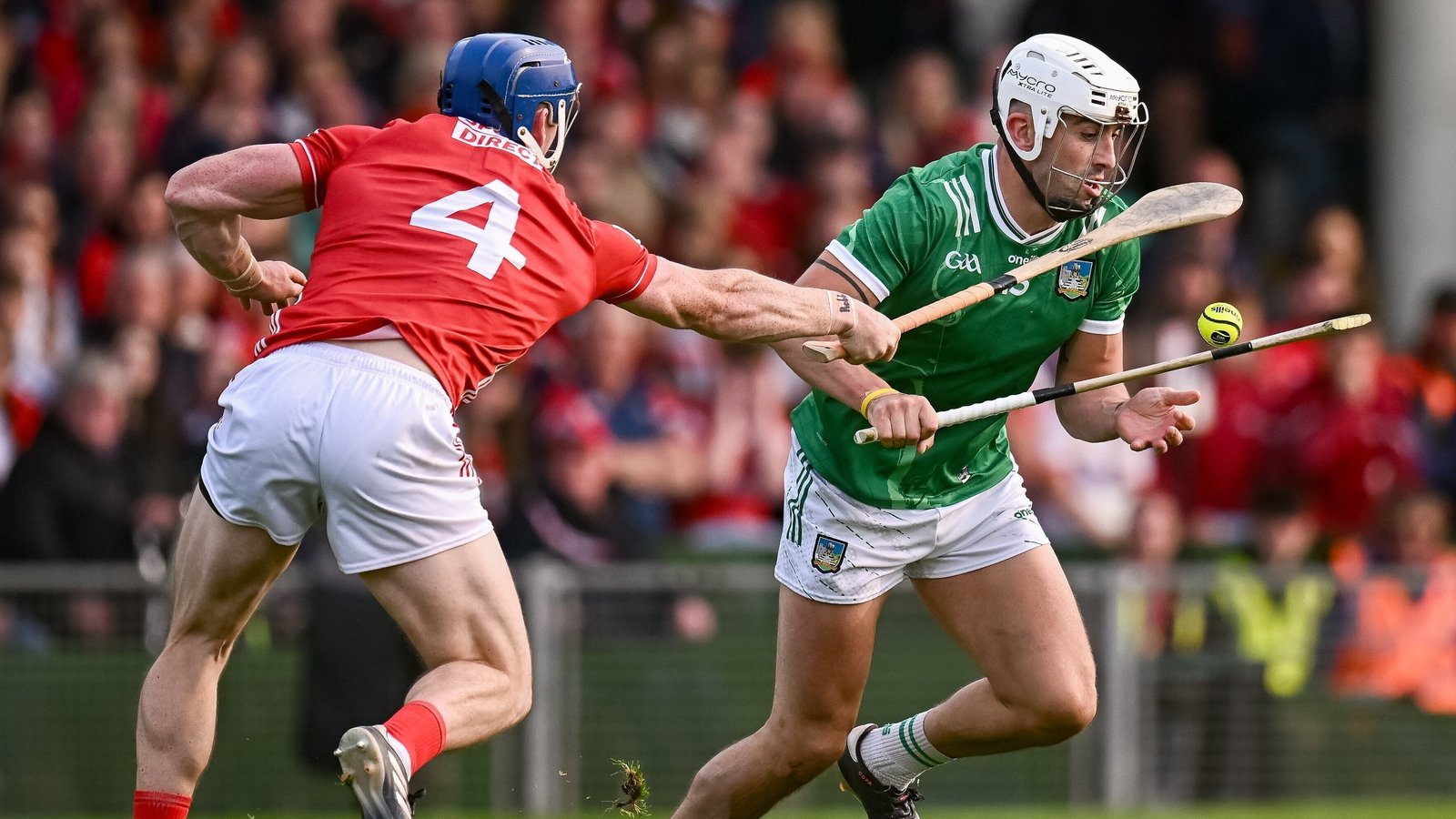
Munster GAA CEO Kieran Leddy says he disagrees with the view that four counties should emerge from each round-robin provincial championship in hurling.
Under the current format, the Munster and Leinster champions respectively advance directly into the All-Ireland semi-finals, while the runners-up go into the quarter-finals. Third-placed teams in the round-robin progress to the preliminary quarter-finals.
In his report to convention on Friday, Leddy warned that the provincial championships would become more like a warm-up league if teams that finish fourth progressed to the All-Ireland series.
“There is a suggestion that the hurling championship structure should be altered to allow four teams to qualify from the round robin,” he said.
“In my view, this will do far more harm than good to the profile of hurling. While the championship would gain two quarter-finals with this format, the round-robins would become meaningless, with 10 games being played to eliminate one team.
“Therefore, we would lose far more big occasions than the two additional quarter finals that we would gain.”
Leddy added: “We must stop thinking that our senior championships are there to develop teams. They are there to pit the best teams against each other and to decide who the best team in the country is.
“There are several other grades and competitions that have a development purpose.”
Meanwhile, in response to criticism of a historic penalty shoot-out to decide last year’s Munster Hurling final, he also said that a replay would have forced the runner-up to play three consecutive weekends in a row.
“A replay would have taken place on the following Saturday evening, meaning the runner-up would have been playing the quarter-final the week after the replay and therefore subjected to playing three weeks in a row.
“I was amazed that very few asked if a replay was a fair situation on the players, which in my view, it is not.
“If we build in a replay weekend, with the All-Ireland quarter-final two weeks after, then the Munster winner waits for five weeks for the All-Ireland semi-final under the current format, which is also very unfair on the winning team. We need to stop harping back to the days of replays.
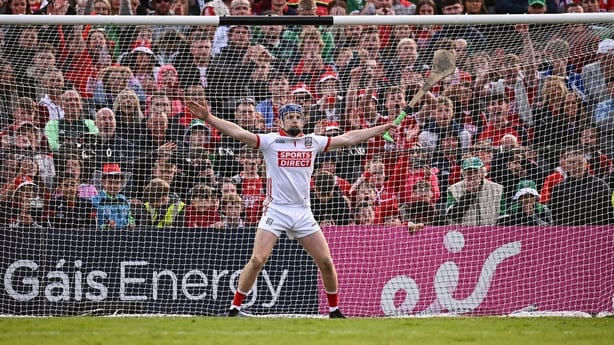
Cork prevailed in a shoot-out against Limerick in the 2025 Munster Hurling final
He also dismissed the view that a ‘Golden Score’ would be the best way to end a match.
However, Leddy suggested one change to reward runners-up in the provincial championships.
“I believe the provincial final losing team should have home advantage in the quarter-finals. It is important that the provincial final losing teams have some advantage over the team that finished third in their province, and home advantage in a knockout game would provide that,” he wrote.
Leddy also referenced the controversy during the year when the Council voted to seed its senior football championship in the future, with the top two performing Munster teams in the leagues gaining automatic entry to the following year’s provincial championship semi-final draw, and both will be on opposite sides of the draw.
The proposal, which was passed with a one-year delay clause included, is in place for a three-year period from 2027, but drew resistance from some counties in the province and the Gaelic Players Association.
“We have not had an open draw in Munster for many years now. We have the strongest county in our province, and one of the weakest, so it makes sense that we have had a draw structure that reduces the chances of both those teams meeting in the championship,” the CEO added.
“Our 2025 final had the poorest attendance of all four provincial finals. Our average attendance for the last 4 finals is 13,000. TV viewing figures are also struggling.”
Meanwhile, Leddy also welcomed the GAA’s proposed inter-county certification programme, describing it as long overdue and essential to tackle the “runaway train” of inter-county team costs.
The Munster CEO also issued his desire that the certification would prevent counties from entering teams in inter-county competitions where their competitive adult team numbers fell below a practical number.
“No county with two or three adult club teams should have an inter-county team. As I said in a previous report, this practice has done nothing for the promotion of hurling, in particular, and money spent on these teams could have been better spent promoting the games and funding regional club competitions.”
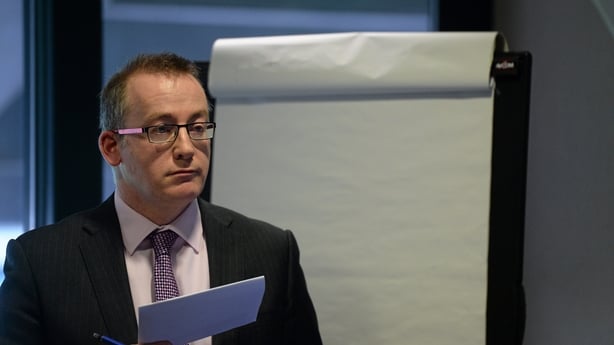
Munster GAA CEO Kieran Leddy
In his report, Leddy also issued his hopes that the province can build a dome in the future, and he revisited criticisms of the Munster Council’s decision to increase adult ticket prices by €5, and to increase the juvenile ticket from €5 to €10 for the final.
This followed an increase of €5 per adult ticket in 2024.
The report shows that the council had a surplus for 2025 of €473,884.
Leddy wrote: “All told, a family of two adults and two kids can attend all Munster senior hurling round-robin games and the final for a total of €440. I am not saying for a moment that this is cheap, but it compares very favourably with other sports and is reflective of the huge costs now associated with holding major events, along with the investment we are making in county and club facilities around the province.”
Leddy revealed that three Munster counties – Kerry, Limerick and Clare – had made good progress in developing a fit for purpose training centre, adding that one county urgently needs to expand theirs, with two other counties not having one.
“Semple Stadium requires a significant multi-million euro investment,” he said.
“Walsh Park is undergoing a major redevelopment to modernise the venue, while Cork has committed their €1.2 m towards funding the acquisition of land for a Centre of Excellence.
“These are all very worthwhile projects that need significant financial resources from Munster GAA. A strategic aim of the Munster Council is to assist with the development of a network of artificial floodlit pitches in Munster, and in time, to see a Dome developed.”