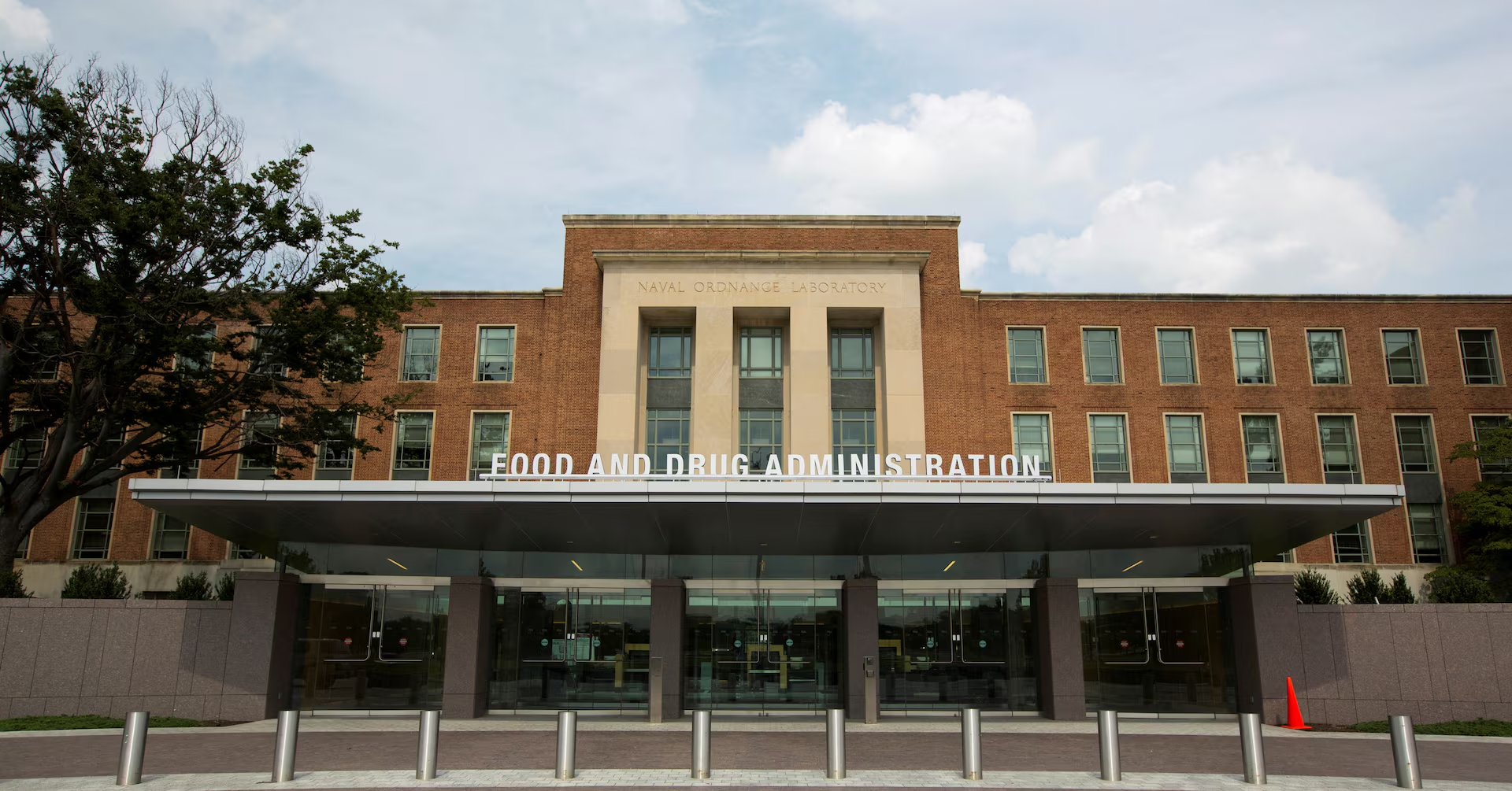
Jan 13 (Reuters) – The U.S. health regulator asked drugmakers on Tuesday to remove label warnings about a potential risk of suicidal thoughts from widely used GLP-1 weight-loss drugs, including Novo Nordisk’s (NOVOb.CO), opens new tab Wegovy and Eli Lilly’s (LLY.N), opens new tab Zepbound.
The request, also covering Novo’s older weight-loss drug, Saxenda, follows a review by the U.S. Food and Drug Administration that found no evidence linking GLP-1 receptor agonists to an increased risk of suicidal thoughts or behavior.
Sign up here.
The FDA’s move could ease a key safety overhang for the fast-growing class of medicines that are being tested or used for conditions beyond weight loss, including cardiovascular issues, fatty liver disease and sleep apnea.
The warnings, part of their original approval, were based on reports of such events observed with a variety of older medicines used or studied for weight loss, the FDA said.
A Reuters review of the agency’s adverse-event database in 2023 had found that it received 265 reports of suicidal thoughts or behavior in patients taking these or similar medicines since 2010.
GLP-1 receptor agonists, originally developed to treat type 2 diabetes, mimic a gut hormone that suppresses appetite, creating a feeling of fullness.
Novo’s Saxenda contains liraglutide and Wegovy contains semaglutide as their respective active ingredients, while Lilly’s Zepbound contains tirzepatide.
While the FDA, in a preliminary review, as well as the European Union’s drug regulator, had reached a similar conclusion in 2024, the FDA had said at the time that it could not rule out a small risk because of limited data.
The labels for these drugs in the EU do not carry such warnings.
The regulator said on Tuesday it had conducted further analyses of placebo-controlled clinical trials involving GLP-1 drugs, which did not show an increased risk of suicidal thoughts or behavior versus the placebo, nor other psychiatric side effects such as anxiety, depression, irritability or psychosis.
The review covered 91 trials involving 107,910 patients, including 60,338 who received a GLP-1 drug and 47,572 who received placebo, it said.
Reporting by Mariam Sunny in Bengaluru; Editing by Shilpi Majumdar and Alan Barona
Our Standards: The Thomson Reuters Trust Principles., opens new tab