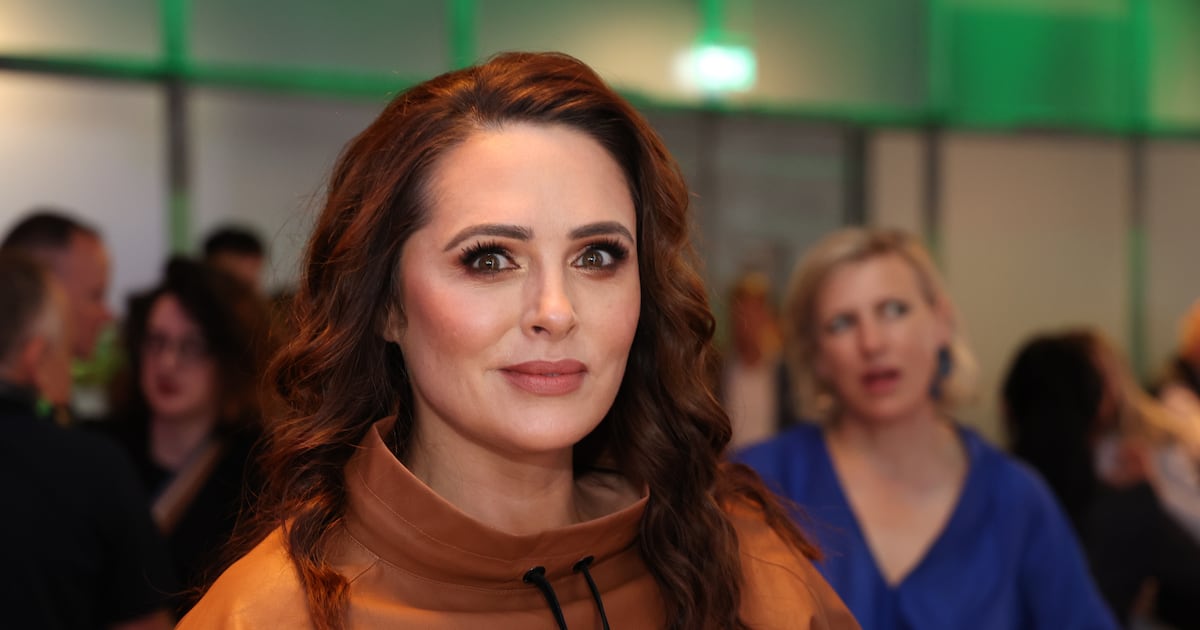
Gráinne Seoige, the former TV presenter and one-time election candidate, has called on politicians to conduct an urgent review of apps that allow “sexual abuse imagery” to be made and shared online.
Ms Seoige has previously spoken about how a “deepfake” non-consensual intimate image of her generated by AI was widely shared online during her unsuccessful general election campaign in 2024.
She is calling for an “emergency review” and a law that would clearly criminalise AI-generated fake non-consensual intimate images.
She has also offered to give evidence to the Oireachtas about the effect the abuse had on her.
Ms Seoige, who ran for Fianna Fáil in Galway West, said gardaí had not been able to process an investigation into the generation of the image of her, despite the fact that sharing an intimate image without someone’s consent, including an AI generated image, has been a crime since 2020.
“What we are seeing now is a system that is not victim-focused,” Ms Seoige told The Irish Times in a statement after writing to Government Ministers about her concerns.
“AI apps can generate sexual imagery of real people in seconds, and messaging platforms can distribute it at scale within minutes – yet the law allows everyone involved to pass the buck while the victim is left exposed.”
[ Social media pressure and fake videos undermining democracy, Taoiseach saysOpens in new window ]
She said the recent controversy around allegedly illegal images generated by Grok, the AI tool owned by billionaire Elon Musk and the “unchecked spread of material” through apps such as WhatsApp, owned by Meta, “have exposed serious failures in existing law, regulation and platform responsibility”.
Ms Seoige has formally complained to Meta, whose European headquarters are based in Ireland, about their “slow, procedural and inadequate” responses to her case.
She has written to the Oireachtas media committee, Minister for Justice Jim O’Callaghan and Minister for Media Patrick O’Donovan calling for “urgent action on AI apps and messaging platforms enabling sexual abuse imagery”.
She said there needed to be better legislation at both national and European level. She is seeking “an urgent review of the legislative gaps exposed by AI-enabled sexual abuse imagery”.
“This legislation cannot be written in the abstract,” Ms Seoige said.
“Those drafting it need to hear directly from people who have lived through this – the fear, the humiliation and the lasting impact.”
She has also written to the Garda Commissioner and to the media regulator, Coimisiún na Meán, and has lobbied women TDs and Senators in Fianna Fáil to support her campaign for stronger laws.
A spokesman for Mr O’Donovan said the Minister has not yet seen the letter from Ms Seoige but is aware that it was sent to him and other ministers or politicians. “He will of course consider the issues raised in the letter but would note that Government is already examining this matter.”
Taoiseach Micheál Martin told the Dáil on Tuesday that he was convening a meeting of relevant Government Ministers and the Attorney General about Grok to develop a “fully co-ordinated response”.
Mr Martin said the Attorney General was providing legal advice and if there were any gaps in existing AI legislation they would be “addressed quickly”.
He told Social Democrats leader Holly Cairns any investigation of illegality was “a matter for the investigating authorities”.
He was not aware of any specific Garda investigation but added that the Garda “don’t alert us to every investigation” that is under way.
Ms Cairns said social media company X, owner of Grok, can be prosecuted under the Child Trafficking and Pornography Act because of the proliferation of thousands of sexualised images of women and children online.
She said the Government’s response to the scandal was “so muted and confusing” with Mr O’Donovan stating responsibility for creation of these images lies with users, while Minister of State for AI Niamh Smyth said X was breaking the law and enforcement action should be taken against X and Grok.
Ms Cairns had highlighted some of the “vile prompts” given to Grok, including “put her in a bikini and rub her down with baby oil” and “replace her bikini with dental floss”, which had generated thousands of sexually abusive images online.
“These images are not a mistake. This is the model working as intended,” she said.
Last year new edit features were added to make it easy to undress people in photographs.
“Incredibly, no thought was apparently given to how this tool be used and weaponised against women,” said Ms Cairns.
“The company didn’t even bother to include age restrictions to prevent child sexual abuse imagery being generated.”