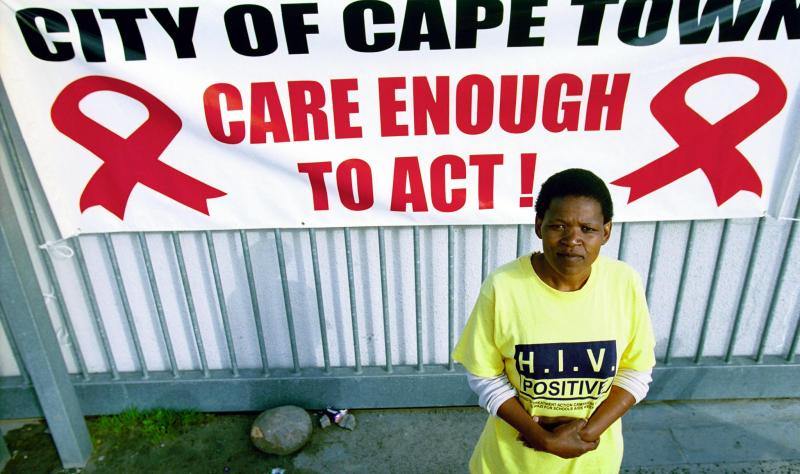
“These advancements remain precarious, especially for vulnerable groups such as sex workers, people who inject drugs, men who have sex with men (MSM), transgender individuals, incarcerated populations, and those in other closed settings,” he wrote. “Additionally, women, young people, migrants, refugees, and internally displaced persons face heightened risks due to social and structural barriers.”
Boghuma Titanji, MD, PhD, an HIV specialist and assistant professor of medicine in the Division of Infectious Disease at Emory University School of Medicine, said that, in addition to jeopardizing patient’s HIV suppression, a lack of access to antiretrovirals can lead to the development of antiviral resistance when patients start rationing their supplies.
“They are taking one pill every three days to stretch out the supply,” Titanji said. “So the virus is being exposed to a less-than-therapeutic dose of the drug and able to more easily select for drug-resistance mutations and overcome the effect of the drug.”
Compounding the problem, Africa has fewer options for second-, third-, and fourth-line drugs, which means that if and when the supply of drug is restored, it’s not guaranteed that patients who have developed drug resistance will immediately have a replacement option to treat their HIV.
Funding for antiretroviral drugs given as HIV pre-exposure prophylaxis, or prevention (PrEP), either as a long-acting injection or orally, is also under threat.
With limited funding and little time to mobilize more funding, countries may have to prioritize either HIV prevention or treatment, Titanji said: “Does the country fund antiretroviral therapy to make sure that patients who already have HIV can have access to their drugs if PEPFAR is no longer around? Or do they fund condoms and birth control and injectable and oral PrEP options?”
Effects on research

MarcelC/ iStock
Richard Jefferys, Basic Science, Vaccines, and Cure Project director at the Treatment Action Group (TAG) in New York City, cited some examples of research projects in South Africa that have had to be halted or dramatically scaled back, such as a USAID-funded, four-arm clinical trial evaluating different ways to induce protective antibody responses to HIV.
TAG is a research and advocacy organization that has been focusing particularly on the implications of the funding cuts on South Africa, a country that has been instrumental in developing better prevention and treatment for HIV and other infectious diseases. US projects, such as one in its seventh year of developing an HIV vaccine that was being renewed, have also been terminated.
Cuts to PEPFAR and USAID also extend to HIV research, much of which has taken place in Africa, he added. “If you completely dismantle all of that research infrastructure, there is also the question of what that would mean for innovation in terms of HIV vaccine development and better and continually optimized treatments for HIV,” Titanji said.
In practical research terms, while collaboration with other countries is ongoing, if the United States silos itself from Africa, it may cut itself off from the numbers of HIV patients it needs to conduct feasible, sufficiently powered clinical trials, she added.
It also begs the question of whether infected Africans, who make up 75% of the world’s HIV patients, would have access to HIV therapy advances, she said. “Or will we get back to the late ’90s, when it took 10 years for combination therapy to trickle its way down [from the United States] to the African continent?”
Jefferys said while the funding cuts have been ostensibly to save the United States money, they don’t make sense. “Obviously, while some of these cuts are being presented as about savings, if you spent $10 million on a trial and, and it’s nearly finished and you have $500,000 left to spend, then you’re setting fire to most of that money,” he said.
Jefferys noted that although the National Institutes of Health said that it plans to use existing tools to eliminate HIV, it is actually increasing the need for HIV prevention with its actions.
“They’re not really doing anything to eliminate it,” he said. Unlike antiretrovirals, which carry the risk for drug-drug interactions, an HIV vaccine “could be used in widespread immunization campaigns without regard to what someone’s ultimate lifetime risk might be or how they perceive that risk.”
Cuts only adding to the burden
Mitchell Warren, executive director of AVAC, a nonprofit that advocates for the ethical development of effective HIV prevention options and global access to these options, called PEPFAR and the Global Fund “the most successful global health programs—and diplomatic efforts—in history.”
The Global Fund is a worldwide partnership that raises and invests up to $5 billion a year to fight AIDS, tuberculosis, and malaria in the 100 hardest-hit countries.
“All of this is being undermined by recent cuts over the past year,” Warren said. “While the global community was charging towards the UN [United Nations] goal to end HIV as a public health threat by 2030, this new administration has derailed progress, put lives at risk in the short-term, and jeopardized partnerships and relationships that have taken decades to build.”
He called the Trump administration’s statement that it doesn’t want PEPFAR to support primary prevention other than PrEP for pregnant and breastfeeding women “the most short-sighted policy imaginable.”
“There are still 1.3 million new HIV infections every year, which means the pool of people who need treatment will grow rapidly without more prevention,” Warren said. “The cuts to primary prevention do exactly the opposite of what this administration says they want to do, which is to get countries to own their AIDS response and own their budget. We all want to see that transition, but we’re making it harder for countries by not helping them reduce the burden of treatment programs.”
And the repercussions won’t be confined to Africa. Countries such as the United States, which has already seen cuts to the sexually transmitted infections division at the Centers for Disease Control and Prevention (CDC), may see higher rates of HIV as a result of more cases in Africa. “An estimated 30 million people on the African continent are living with HIV, and of course, Africa is not sealed off from the rest of the world,” Titanji said.
Building on PEPFAR’s legacy
Steve Evans / Flickr cc
All of this doesn’t mean no progress is being made against HIV, however. Just today, Stat reported that Unitaid stepped in to provide funds for South Africa and Zambia to broaden access to lenacapavir, Gilead’s HIV prevention drug.
The injectable drug, given just twice a year, has been shown to be highly effective in preventing HIV. It was approved last summer by the US Food and Drug administration for PrEP. Unitaid said it will work with local health and community organizations to distribute the drug to at-risk groups such as sex workers and pregnant women via pharmacies, hair salons, and other local sites.
An international aid organization, Unitaid is funded by countries around the world and philanthropies such as Wellcome and the World Health Organization Foundation.
A number of trials on experimental HIV vaccines are under way. Last week, the International AIDS Vaccine Initiative (IAVI), a global nonprofit scientific research organization, announced that it had begun testing experimental HIV vaccine antigens in December at the Perinatal HIV Research Unit in Soweto, South Africa.
Indeed, Titanji said she is hopeful that African countries will find alternative sources of funding to build on PEPFAR’s legacy of groundwork, infrastructure, and training, and while the situation may be rocky for a time, it will eventually stabilize. The ultimate hope is to help prevent the excess deaths projected to result from the US funding cuts.
“There is a whole generation of scientists, doctors, nurses, and community workers who have been trained by PEPFAR and who are still there and ready to do the work,” she said. “So let’s just be careful of predicting absolute collapse, but importantly, highlight the real threat and the need for a phasing out rather than completely pulling up the rug from under the feet of people.”