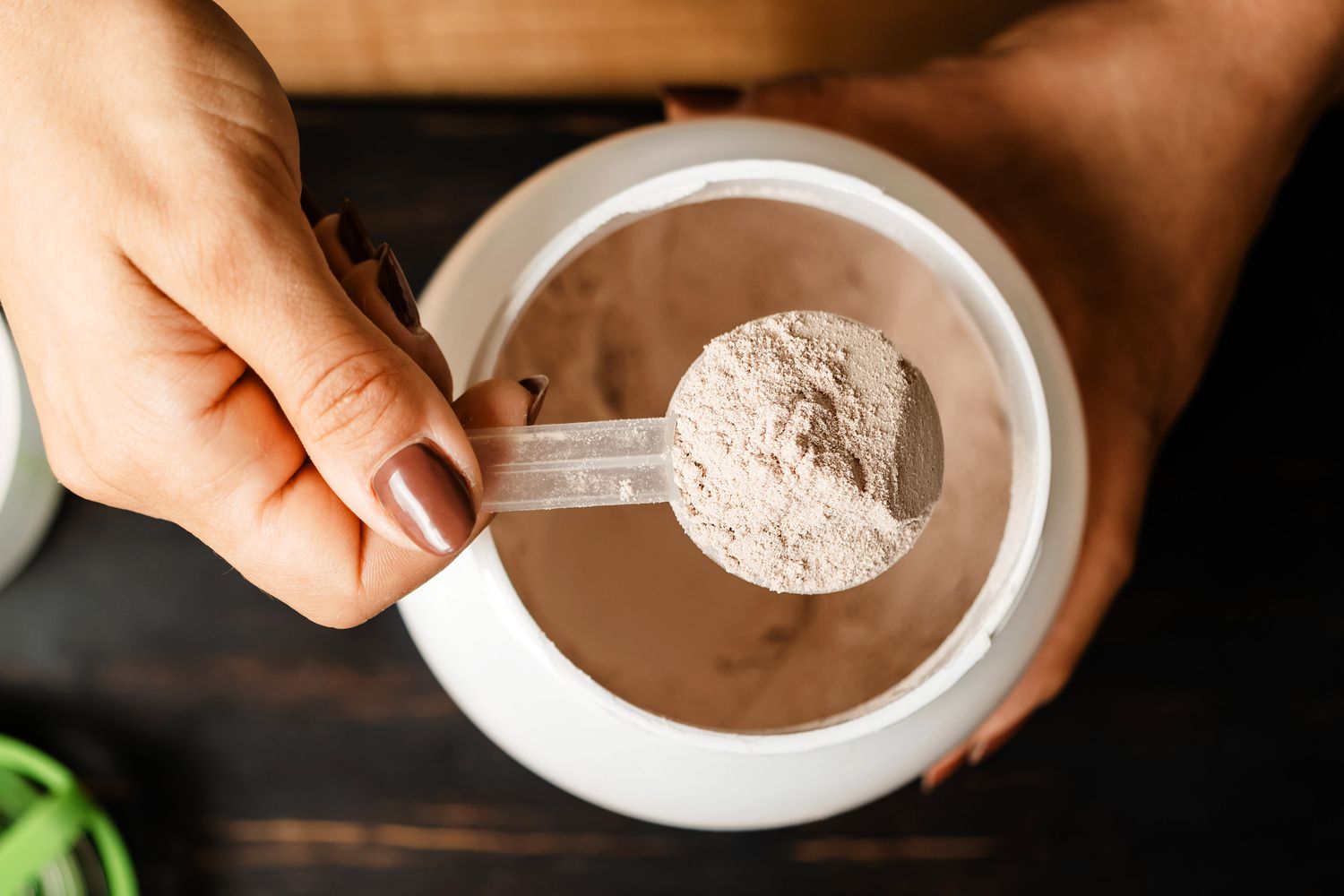
- Consumer Reports released new findings after testing five reader-requested chocolate protein powders for lead and other heavy metals.
- The nonprofit organization previously revealed in late 2025 that it had found surprisingly high levels of lead in the majority of 23 protein powders that it tested.
- This time, Consumer Reports revealed that the protein powders it analyzed most recently contained acceptable levels of lead per serving, pointing to inconsistency across the industry.
Consumer Reports made major waves in October when it revealed the results of its investigation into 23 protein powders, sharing that some of the most popular options on the market contained a concerning amount of lead — and not by a small margin.
The nonprofit organization found that about 70% of the protein powders and shakes it reviewed contained more lead in a single serving than food safety experts deemed safe to consume in a day, with some even containing more than 10 times the recommended limit.
Now, Consumer Reports has released the results of further testing of even more protein products, and this time it’s got good news.
In an email shared with Food & Wine, Consumer Reports explained that it conducted a fresh round of heavy metal testing targeting five of the most popular reader-requested chocolate protein powders. All five were revealed to be safe for daily or near-daily consumption, with overall lower average levels of lead and arsenic than its previous tests had found in protein powders.
”I was surprised by our findings because they seemed to contradict a claim we heard again and again from some parts of the industry after our last investigation: that it was nigh on impossible to make chocolate-flavored or plant-based protein powders with very low levels of lead. These results show that’s not the case,” Paris Martineau, an investigative journalist on Consumer Reports’ special projects team, shared with Food & Wine.
For this round of follow-up testing, Consumer Reports collected five reader-requested protein powder brands: Premier Protein, Equate, Truvani, Clean Simple Eats, and Ritual. To limit the variables that could skew results, the organization focused on chocolate-flavored protein powders only — with any vegan protein powders featuring pea protein as a primary ingredient, similar to its previous testing — and analyzed multiple samples of each powder from distinct product lots.
The team tested each sample for the heavy metals arsenic, cadmium, lead, and mercury, which it noted were “the four elements of concern identified in our 2025 investigation.” It found that for all five powders the levels of heavy metals were “generally consistent across product lots,” and four of the five powders tested below its level of concern for lead, which rings in at 0.5 micrograms per daily serving.
Clean Simple Eats’ whey-based protein powder yielded especially great numbers with only 0.21 micrograms of lead per serving, followed closely by another whey-based powder from Walmart’s brand Equate, which had 0.27 micrograms of lead per serving. Next up was Premier Protein’s dairy-based protein powder, with 0.38 micrograms, then Truvani’s plant-based protein powder — made using pea protein — which contained 0.46 micrograms.
One of the plant-based powders, Ritual’s Essential Protein Daily Shake — also made with pea protein — contained 0.53 micrograms of lead per serving, putting it just above the level of concern. However, Consumer Reports outlined that the amount of lead found in this product is low enough that its experts say it’s okay to have up to 6.5 servings of it per week.
The organization emphasizes that consumers should be concerned about lead because it has the ability to “linger” in the body, and repeated exposure, even in small amounts, can accumulate over time and contribute to health risks.
“Consumers shouldn’t have to guess whether their protein powder poses a risk for lead,” Tunde Akinleye, the Consumer Reports food safety researcher who led both testing projects, added in the published findings. “These results show manufacturers can keep contamination low, but we know from prior investigations that lead levels in protein powders are not consistent across the industry.”
The team also noted in its statement that it believes a “lack of regulation” may be why so many protein powders have higher levels of lead. Oversight of the protein powder industry falls to the Food and Drug Administration (FDA); however, as Consumer Reports details, the FDA does not usually review, approve, or test dietary supplements before they’re sold. Additionally, there are no federal limits that dictate how much lead or heavy metals are allowed in protein powders.
The findings come as little surprise to people like Pieter Cohen, MD, an associate professor of medicine at Harvard Medical School and a Cambridge Health Alliance physician, who added in Consumer Reports’ statement that these findings are “very consistent with how the supplement industry is,” explaining that “there are companies that are working hard to try to do the right thing, despite the fact that it’s not required by the law, and there are other companies that are cutting corners.”
Cohen underscores that until the FDA provides clear guidance and ensures its requirements are fulfilled, “I doubt there will be any standardization in terms of lead levels in protein powders.”