
Listen to this article
Estimated 3 minutes
The audio version of this article is generated by AI-based technology. Mispronunciations can occur. We are working with our partners to continually review and improve the results.
A tiny pest and a fungus will win eventually.
A Saskatoon city council committee absorbed that sombre message on Tuesday about the challenge of protecting the city’s cherished tree canopy.
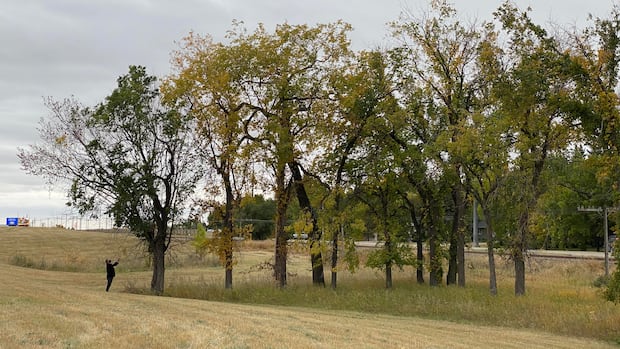
Parks director Thai Hoang said the city is focused on coping with Dutch elm disease, rather than eliminating it, after a record 12 cases were identified last year.
The fungal disease, which kills elm trees, is spread by the tiny elm bark beetle. Hoang labelled it as “endemic” in Saskatoon. Mayor Cynthia Block called that word “concerning.”
“Our strategy with the record number of Dutch elm cases last year is to move toward mitigation instead of complete annihilation of the disease, essentially,” Hoang told the environment, utilities and community services committee.
Hoang said the city focuses on rapidly eliminating trees affected by the disease, including 37 that were removed last year. Injections intended to try to save infected trees are very expensive, he added.
A city report says Saskatoon lost 6,000 ash trees due to another problem: the spread of the cottony ash psyllid, a tiny insect that kills ash trees.
A separate report on the city’s urban forest says city hall cares for about 110,000 trees in parks and on boulevards and city property.
City hall has set a target of citywide tree canopy cover of 15 to 20 per cent by 2060. But in 2017 the city’s canopy was just nine per cent. Some areas, like older neighbourhoods close to downtown, had canopy cover of 25 per cent.
The committee backed seeking $100,000 from the federal government to help assess the city’s tree inventory this year as part of a strategy to restore lost trees.
Project manager Jeff Boone said the city is focused on a more diverse mix of trees and avoiding a concentration of one species in an area.
“Generally, diversity is the key, diversifying streetscapes and diversifying our urban forests so no one tree that can be impacted by pests and diseases is lost all at once,” Boone explained.
“Regardless of the distribution of the trees, [pests and disease] do eventually find and then cause decline of those trees, but it’s about creating resilient streetscapes that still have trees after those trees are lost.”
Getting the lead out
It’s going to take a little longer for Saskatoon to reach its goal of being lead-free.
The committee heard the city has 675 lead pipes remaining to be replaced, but it will take until the end of 2028. Originally, all lead water lines were supposed to be removed by the end of this year.
But several factors pushed the date back, including the postponement of replacements during the onset of the COVID-19 pandemic in 2020 and higher construction costs than expected in 2023, which affected the program.
Homeowners pay 40 per cent of the cost of replacement and the city covers the rest.
The lead pipes, which once numbered in the thousands, are located in older neighbourhoods. City hall made a concerted effort last decade to accelerate efforts to replace them.