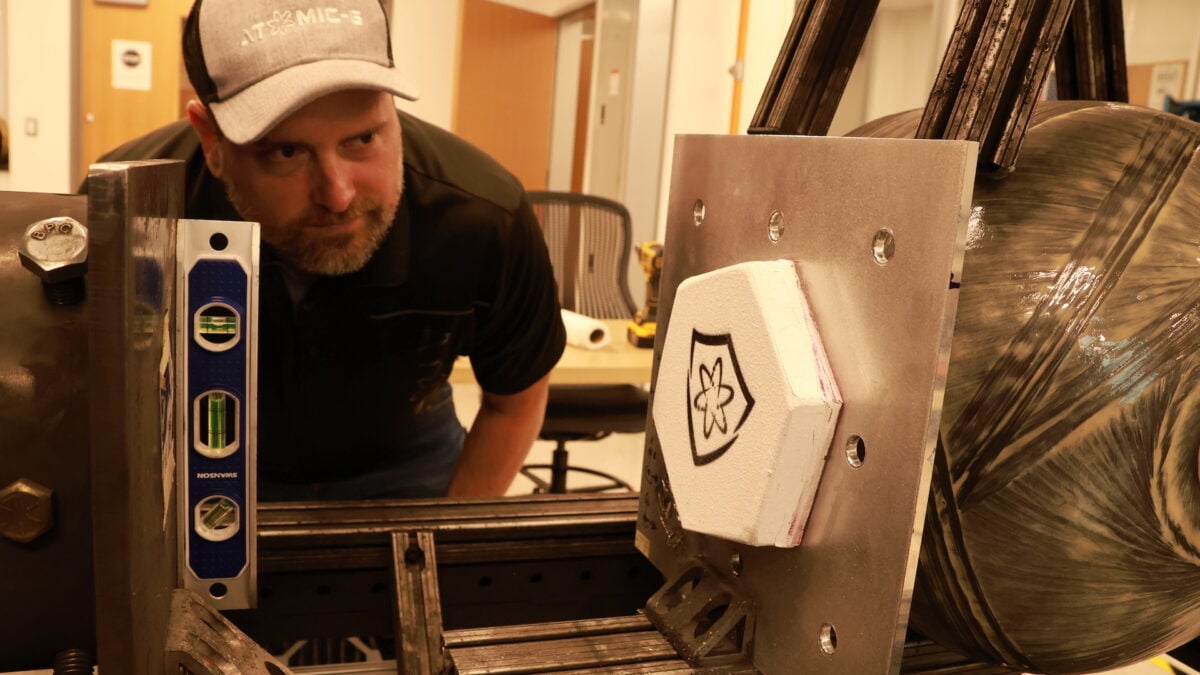
Georgia-based startup Atomic-6 has come up with a new solution to safeguard spacecraft, satellites, and astronauts from high-speed debris strikes. The company’s Space Armor tiles are being prepped for the first in-orbit demonstration on board an upcoming SpaceX mission this year, promising a lighter, stronger alternative to the 1940s tech currently being used.
Portal Space Systems has chosen Space Armor as the micrometeoroid and orbital debris protection for its spacecraft, launching on SpaceX’s Transporter-18 mission in October, Atomic-6 announced today. The spacecraft will be the first to be outfitted with the company’s protective tiles, marking a much-needed shift away from age-old technology as the growing problem of space debris threatens precious hardware in Earth orbit.
“Five years ago, we didn’t have [thousands] of satellites flying around, we didn’t have that activity,” Atomic-6 CEO Trevor Smith told Gizmodo. “Necessity is the mother of invention, and because this has become a problem, you will now see more and more of these types of protections.”
Suit of armor
Atomic-6 developed its Space Armor tiles under a $1.2 million Small Business Innovation Research grant funded by the U.S. Air Force and U.S. Space Force. The objective was to develop a new type of space debris shielding.
Most spacecraft currently rely on the Whipple shield, developed in the 1940s by astronomer Fred Whipple. The Whipple shield is reasonably effective, but the market is in need of a modern alternative that can handle the stress of a growing space industry littering Earth orbit with metallic junk.
Unlike traditional orbital shields, Space Armor tiles aren’t made from metal. The tiles are also much more compact, measuring less than an inch thick—around 15% thinner than the Whipple aluminum shields.
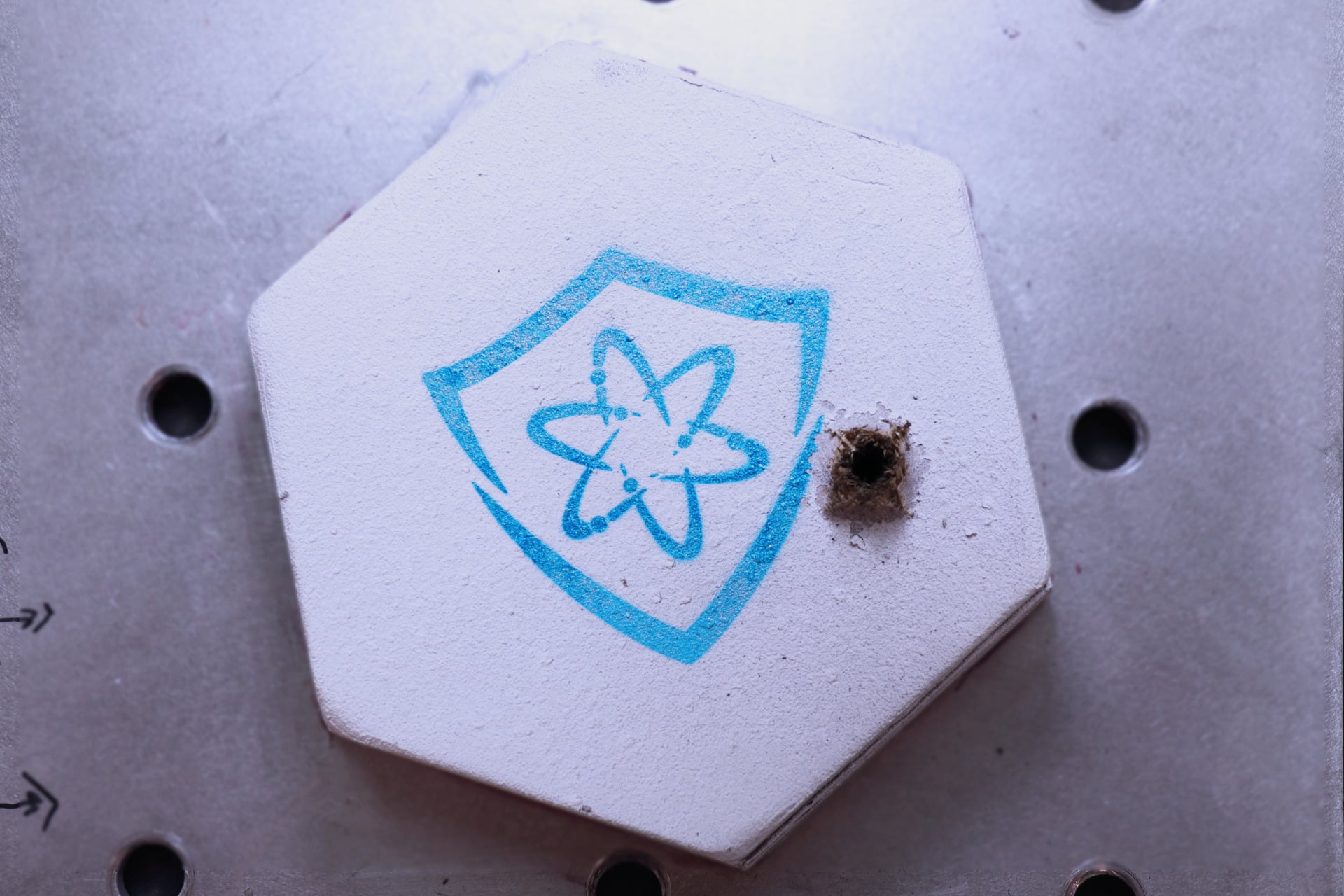 Atomic-6 conducted on-the-ground testing of its orbital shield tiles. Credit: Atomic-6
The most striking difference, however, is that Space Armor is specially designed to avoid creating any secondary orbital debris. “When a Whipple shield gets hit, there is a lot of metal ejected from that impact, so actually causing more debris than the original projectile coming in,” Smith said. “Our shield not only stops the projectile, but also minimizes that secondary debris creation.”
The company has come up with two variants of its tiles. Space Armor Lite is designed to stop particles 3 millimeters or less in diameter, while Space Armor Max can withstand impact from debris up to 12.5 millimeters in diameter.
The majority of space debris in low Earth orbit is about 3 millimeters in size. With particles this tiny, moving at high speeds through space, the debris cannot be tracked ahead of a possible impact. That means orbiting spacecraft can’t perform maneuvers to avoid the incoming impact.
That type of impact often goes unnoticed, but it can cause damage. In November 2025, China’s Shenzhou-20 spacecraft was struck by a small piece of debris suspected to be around 1 millimeter wide. Although tiny, the impact caused enough damage to prevent the crew of astronauts from boarding the spacecraft for their return to Earth.
Space Armor is “designed to protect from the unknown,” Smith said.
Space test
Atomic-6 has tested the Space Armor tiles on the ground, but the upcoming mission will provide the first opportunity to see how they behave in the space environment.
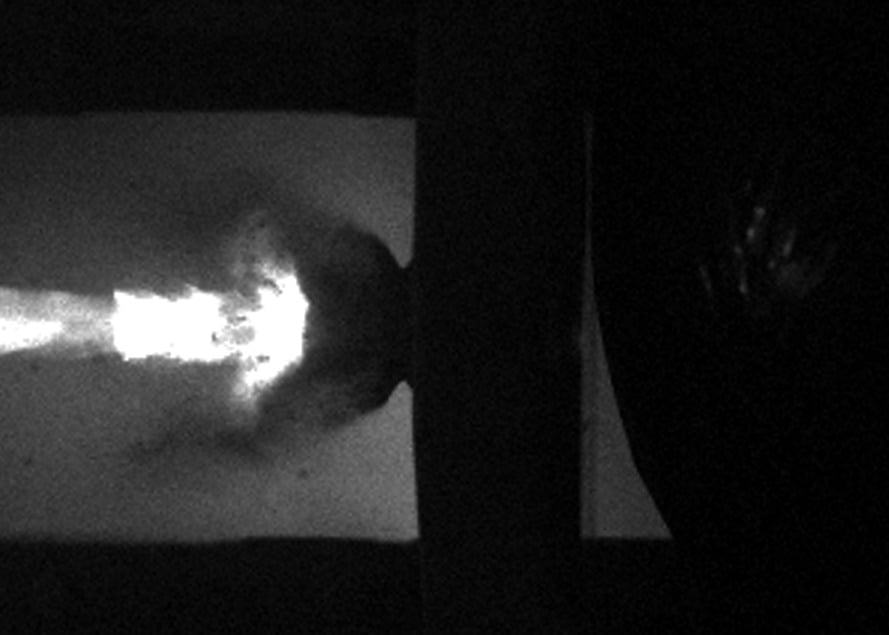 Space Armor tiles impact test. Credit: Atomic-6
Portal Space Systems will be pointing a camera on the tiles placed on its spacecraft to verify the new technology. “My hope is they actually get struck, but get struck in the tile, and we get it on camera,” Smith said. “Then they actually can look at the telemetry of the satellite and confirm that no systems were damaged, but you can visually see that impact strike on the tile, and that is really the only way we’ll know for sure if it works.”
Following the verification of the tiles, Atomic-6 is hoping to expand on its applications. Space Armor can also be applied to astronaut suits to protect astronauts during spacewalks, as well as to orbiting space stations. Atomic-6 has also been approached by lunar infrastructure companies to build protective boxes for payloads destined for the Moon.
“So once Space Armor has gone through qualifications, we actually would be able to protect human-rated spacecraft and private space stations,” Smith said.