
Listen to this article
Estimated 4 minutes
The audio version of this article is generated by AI-based technology. Mispronunciations can occur. We are working with our partners to continually review and improve the results.
Businesses in Edmonton don’t have to recycle or compost — but that could soon change.
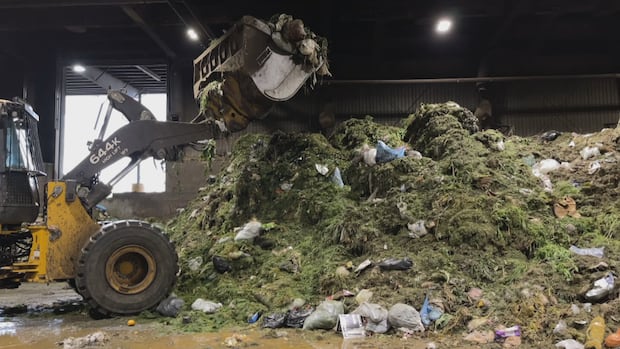
The city says non-residential sectors generate 70 per cent of waste in Edmonton and half of that is organic waste. One of the actions being considered to divert more waste from landfills is a bylaw mandating sorting into multiple streams.
The city is also looking at grants that could help early adopters and educational toolkits. Businesses and industry organizations are being surveyed before the plan gets finalized and goes to a city council committee in the summer.
Gloria Bednarz, the owner of The Art of Cake, told CBC News that even separating cardboard out of the garbage isn’t universal practice in the restaurant industry.
“I just don’t feel everybody’s on board yet. And I don’t understand why — is it because it isn’t easy for them to recycle or do they just don’t care?”
Allen Gao, owner of ramen restaurant Menya Mori, said his staff reuse food scraps to make broths and flavoured oils — but taking on organics separation would be difficult for many businesses.
“Things like garbage cans are very expensive. One of those like typical grey garbage cans can run you around $55,” Gao said.
“It would be really helpful if the city could help business owners by providing some sort of financial benefit.”
Other cities
Alison Abbink, a senior waste policy planner for the city said in a statement that Edmonton is far from the first to consider something like this.
“The practice of source separation has already been introduced to businesses in other major Canadian municipalities such as Calgary, Vancouver, Regina and Halifax.”
WATCH | Businesses weigh in on potential waste separation bylaw:
As city considers waste separation bylaw, businesses weigh in
Edmontonians are probably used to sorting their waste at home by now, but it’s still not universal practice in the commercial sector. That could soon change, as the city considers a bylaw to require composting and recycling across the board.
Jennifer Koole with the Recycling Council of Alberta said Calgary’s separation bylaw is about a decade old and it’s refreshing to see Edmonton consider finally following suit.
She recalled that in Calgary the commercial sector actually asked for the change, wanting to take discretion out of the process.
“Lots of businesses have internal champions or green teams or the people saying this is the right thing to do and they’re not always the people with the decision-making power,” Koole said.
“So by having a blanket bylaw for everyone in the city, it levels the playing field and it also takes that choice out of it.”
What goes where
Both Gao and Bednarz are in favour of the bylaw idea but want to see more to incentivize buy-in.
They say a big part of that is greater transparency about what is actually getting diverted — businesses want to see their efforts actually make a difference.
Gao said he wonders if Edmonton composting facilities are equipped for the change.
“If these systems aren’t up to snuff, then there needs to be some more investment in terms of infrastructure in order to increase the capacity.”
Bednarz said she wants more communication and education from the city on what goes where.
“I’m always curious about what happens to that bin once it gets picked up by the city,” she said.
“I think if people are educated then they would actually believe in the system.”
One other area the city is looking at is construction and demolition. The city is considering programs that can encourage repurposing of materials or deconstruction, and increasing standards for diversion in its own projects.