Current and former ministers who made a “salary sacrifice” are waiting for clarification on whether pension overpayment deductions should be based on their gross salary or the net salary they gave up.
Last June, it came to light that 34 serving Ministers had received overpayments as a result of miscalculations made on their pension entitlements by the National Shared Services Office (NSSO).
Of those, 32 owed money to the State, ranging from hundreds of euro to more than €30,000. Two Ministers had been underpaid and were owed money.
Subsequently, in a follow-up examination, it was discovered that 39 former ministers had also been overpaid because of the same error. One former minister had been underpaid.
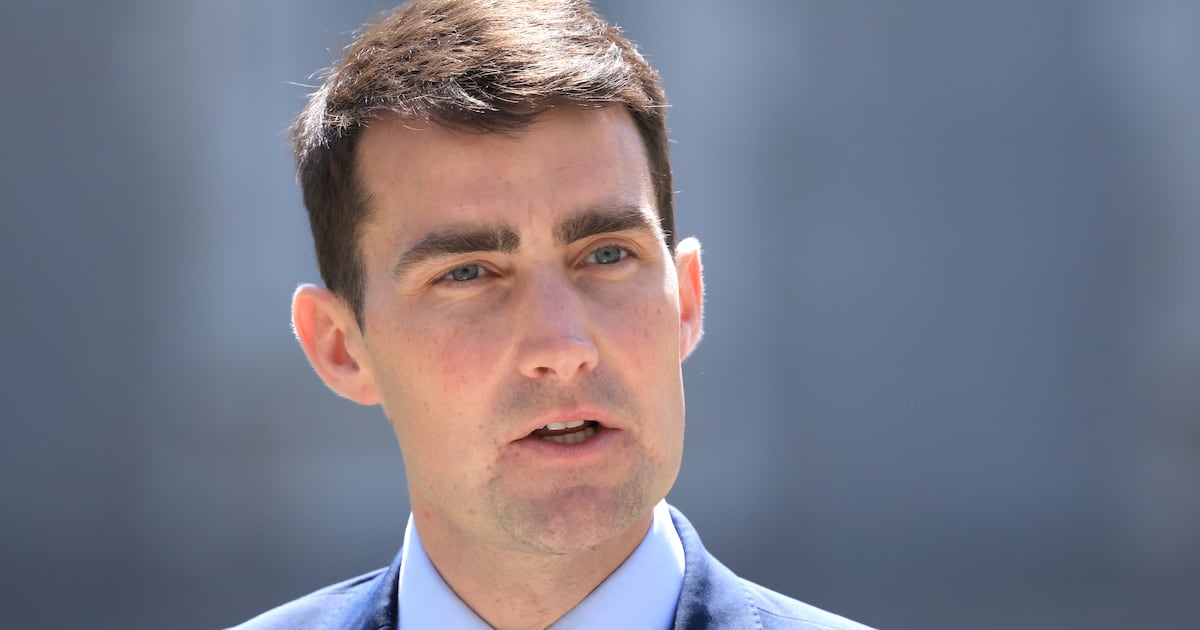
In the Dáil on Thursday, Minister for Enterprise Peter Burke defended the 32 current and former ministers involved in the overpayments controversy seven months after the issue was first raised.
Sinn Féin finance spokesman Pearse Doherty claimed they were “holding out”.
He said: “It’s completely unacceptable.”
He condemned the “complete absence of urgency, of discipline, of accountability or consequence”.
Mr Burke told the Dáil “everyone has the right to ensure that they are paying the correct amount, and every single Minister wants to ensure that they are doing that, and that is very important”.
However, Mr Doherty said 10 serving Ministers who are “paid far more than the average workers” have not paid back “a single red cent, not arranged a repayment plan, not settled their account, not even taken the most basic steps of returning money that never belonged to them in the first place”.
At a meeting of the Oireachtas finance committee on Wednesday, Minister for Public Expenditure Jack Chambers disclosed that 10 serving Ministers who were overpaid had not yet agreed to a plan to repay the money.
Mr Chambers said 22 had fully repaid the money owed or were in a payment plan.
Of the 39 former ministers who were overpaid, a total of five had repaid the money in full, while a further 12 had agreed to a repayment plan. That left a total of 22 former ministers who had yet to begin repaying their overpayments.
Mr Doherty said an ordinary worker or pensioner overpaid by the Department of Social Protection was not “given seven months to agree to pay it back”.
The department “acts without delay, and that is the experience of ordinary people right across the State. So why is it one rule for ordinary people and another rule for Government Ministers?”
He asked: “Why is the ordinary worker or pension given little or no time, yet the Ministers, some of them on up to €200,000, think it’s okay for them not to repay the public the tens of thousands of euro that they were overpaid?”
Sums of up to €30,000 were overpaid “and these are the same Ministers that decided the recent budget that left ordinary working people worse off in the middle of a cost of living crisis, and all the while, they’re sitting on public money”.
Mr Doherty added: “In fairness to Jack Chambers, he called on all the Ministers to pay it back.”
He claimed Mr Burke “didn’t even have the cop on to do that”.
But Mr Burke insisted all Ministers were engaging with the NSSO.
“All Ministers will bring this to a conclusion and will ensure when they get the clarification,” he said.
Mr Burke said Government decisions were made where “ministers took a deduction in their pay, a salary sacrifice. The question was posed, should the pension deduction, the calculation, be on the gross salary or the net amount that was sacrificed?”
“Everyone has the right to ensure that they are paying the correct amount, and every single Minister wants to ensure that they are doing that, and that is very important.”
He added the Government “is crystal clear that any retired civil servant or minister who does not comply or pay back what is due to the exchequer, will not receive their pension”.
When the issue was raised again, Mr Burke said any current Minister who did not refund the overpayment would not receive their pension in the future.