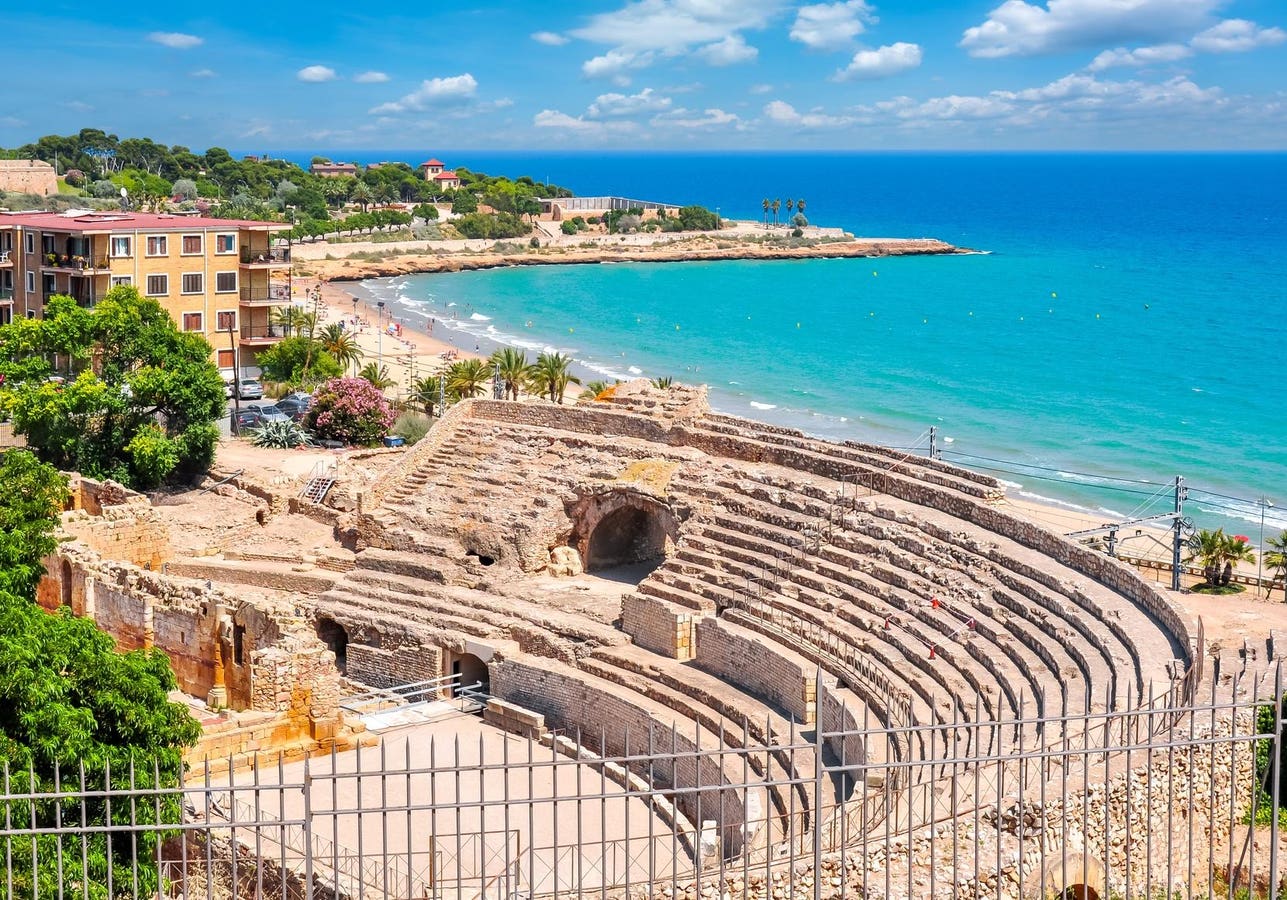
Tarragona, Spain, where a couple could enjoy the good life on a monthly budget of $2,000.
getty
According to the latest figures from Social Security Administration the average Social Security income for a couple is $3,208 a month.
In the U.S. states reported to be the cheapest, including West Virginia, Kansas, Mississippi, and Oklahoma, that amount comes pretty close to covering a retired couple’s basic costs. In West Virginia, the most affordable state, retirees would need to have an extra $12,458 to meet the annual cost of living there of $50,954.
Meanwhile, in the most expensive states, among them Hawaii, Massachusetts, California, Alaska, and New York, that $3,208 a month or $38,496 a year, falls far short of what’s needed. In the case of Hawaii, where the cost of living comes in at $110,921 a year, retirees are looking at an eye-watering shortfall of $72,425 annually.
Look overseas, and you can find havens where your social security dollars will not only cover your monthly expenses but also get you serious bang for buck.
In these three beachside cities I’m highlighting today, not only can you enjoy the good life on a monthly budget of $3,208—in some cases far less—but you’ll also have access to world-class health care, a wealth of entertainment and recreational options, and enjoy abundant sunshine, sea views, and laidback living.
Tarragona, Spain
Located in Spain’s Catalonia region and sitting on the country’s Costa Daurada (Golden Coast) 60 miles southwest of Barcelona, the beachside city of Tarragona has a long and impressive history.
Once the Roman capital of the Iberian Peninsula and one of the oldest cities in Spain, in Tarragona you’ll discover historic gems around every corner from the breath-taking amphitheater on the shores of the sparkling Mediterranean to the awe-inspiring cathedral.
Tarragona Cathedral, Tarragona, Spain.
getty
One of Tarragona’s big draws is the low cost of living. You can rent a two-bedroom, furnished apartment here for under $900 a month, dine out for $15, and all-in a couple could live well here on a monthly budget of $2,000.
Tarragona has a Mediterranean climate, with hot, dry summers and mild, wet winters. It’s a good choice if you enjoy mostly warm weather with some seasonal variation.
For a mid-sized coastal city, Tarragona punches above its weight in terms of cultural offerings with live music, museums, galleries, and a wide variety of arts performances on offer year-round.
Given its Mediterranean coastal location, many recreational opportunities here are in and on the water. The coastline and beaches are ideal for sailing, windsurfing, kitesurfing, and swimming, while the city’s historic marina and the Royal Tarragona Yacht Club are heaven for boating enthusiasts.
Platja del Miracle—the city beach—is just a short walk from the downtown area. Platja de la Arrabassada, a Blue Flag beach, is about a 10-minute drive away. At both you’ll find showers, bars, restaurants, floating wheelchairs, and lifeguards.
Tarragona’s surrounding countryside is ideal for hiking and cycling, while numerous expat and social clubs organize outdoor excursions.
You can get by in English reasonably well in Tarragona, especially in tourist areas. The locals primarily speak Spanish and Catalan but many understand English well enough for everyday interactions. To really make the most of life here you will want to learn some of the local language.
Spain doesn’t have a retiree-specific visa but its Non-Lucrative Visa (NLV) is aimed at retirees and those with passive incomes. To qualify, you need to show proof of a monthly income of around $2,535 per month. This gets you a one-year residence permit, which you can extend for four years.
Puerto Vallarta, Mexico
Located on Mexico’s Pacific Coast, Puerto Vallarta has grown from a quiet fishing village into a thriving beach resort.
Puerto Vallarta lies on the Pacific coast of Mexico, in the state of Jalisco. This lively resort is famous for its beaches, water sports, and vibrant nightlife.
getty
For North American expats here, accessibility is a big draw. PV as the locals call it, is a quick flight (or drive) from Canada or the U.S. and is in a similar time zone so there’s no need to worry about jet lag.
With the ocean on one side and the mountains on the other, there’s a wealth of activities at your fingertips. Add to that an active and growing expat population plus the super-friendly locals, and you’ve got a recipe for a fun retirement in the sun.
High-quality, affordable medical and dental care is readily available, too. Plus, it’s easy to get by in English, even at the doctor’s office, and it’s warm year-round.
As Puerto Vallarta’s popularity has grown with tourists and expats, its prices have risen. It’s by no means a cheap place to live but it is still largely affordable by North American standards and on a couple could enjoy retirement here on a social security income of $3,208 a month.
If you mostly get around by bus, shop and dine in local spots, and stick to domestic beers when going out, you’ll spend little on a daily basis. In local markets, you can easily stock up on essentials (fresh produce, eggs, rice, beans, tortillas, milk, coffee) at reasonable prices. For a taste of home you can pop to the local Walmart, CostCo, or Sam’s Club.
PV is home to several modern private hospitals which cater extensively to international patients, accept most global insurance plans, and are familiar with coordinating billing for American expats. A specialist consultation typically runs $40–$80 while a routine doctor visit can be as low as $25.
If you’re a fitness buff or sports enthusiast, you’ve got plenty of options here. Gyms, padel, tennis, golf, sportfishing, yoga, Pilates, Zumba, and surfing are all on offer.
One of the most enjoyable ways to spend an evening in PV is to take a stroll along the ocean-front where you can listen to the buskers and indulge in an ice-cream cone or cold beer while enjoying the sunset.
As PV is a popular tourist spot you’ll have little trouble getting by in English. It’s also among the safest cities in Mexico and has a well-staffed bilingual tourist-police unit to assist those who don’t speak Spanish.
The one caveat when it comes to the affordability of retirement in Mexico is residency. Mexico offers straightforward paths to residency but the financial thresholds are high—the qualifying amount for temporary residency starts around $4,295 a month. However, you can use savings as proof of income and, depending on the kind of lifestyle you envision, you may not need to apply for residency. You can stay for up to six months at a time as a tourist, a popular option for snowbirds.
Hua Hin, Thailand
In the late 1870s, Thailand’s King sent a young prince on an important mission: to identify a coastal retreat for members of the royal family. When the prince made his way to the fishing village of Ban Laem Hin, he knew he had found the perfect spot.
That village, located around 130 miles from Bangkok on the Gulf of Thailand, was renamed Hua Hin and today is one of the country’s most popular havens for retirees seeking a high standard of living at a low cost.
The royal resort of Hua Hin lies on the Gulf of Thailand and has become a popular spot for retirees from North America and beyond.
getty
Home to around 64,000 people, Hua Hin boasts miles of pristine beaches, a wealth of recreation opportunities, and a welcoming and well-connected expat community.
Those making their home here enjoy internationally accredited medical care, a wide selection of dining and shopping options, and at least nine golf courses in close proximity. Plus, because Thailand receives so many tourists, many locals speak English fairly well.
Hua Hin also enjoys some of the most agreeable climatic conditions in Thailand. It only gets about 38 inches of rainfall annually. During dry season, which falls between November and April, days are bright and sunny. Temperatures range between 76°F and 90°F.
Another big attraction here is the cost of living. Studio apartments in well-equipped complexes can be rented for under $400 a month and well-located two-bedroom villas can be rented for around $700 a month. A couple can dine out for as little as $10.
Little luxuries can also be a part of your weekly routine here with an hour-long massage costing from $10. A visit to a national park is around $8, a one-day cookery class is $55, and a round of golf can be played for $45. A monthly budget of $1,442 would see a couple living comfortably here.
Thailand offers several long-stay visas, and for retirees the Non-Immigrant O-A (Long Stay) visa is among the most common. Key qualifying criteria are being aged 50 or above and being able to show a monthly income of around $2,000.
MORE FROM FORBESForbesMoving Overseas With Your PetsBy Kathleen PeddicordForbes4 Countries That Don’t Make Sense For Overseas RetirementBy Kathleen PeddicordForbesHow To Pay Less Tax When You Retire OverseasBy Kathleen Peddicord