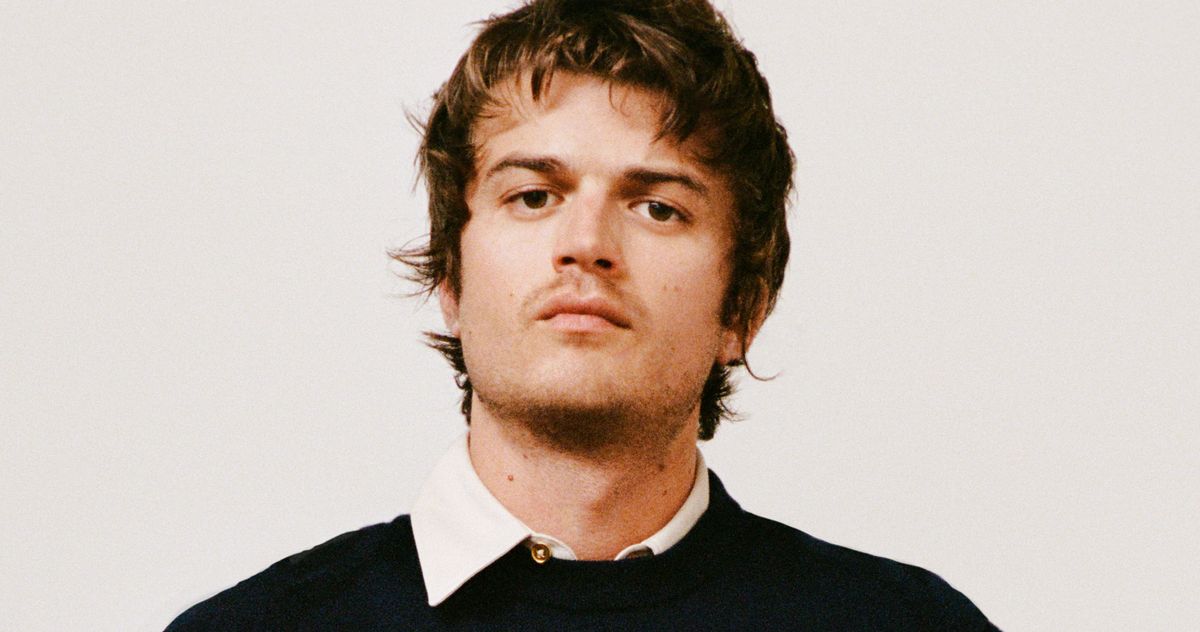
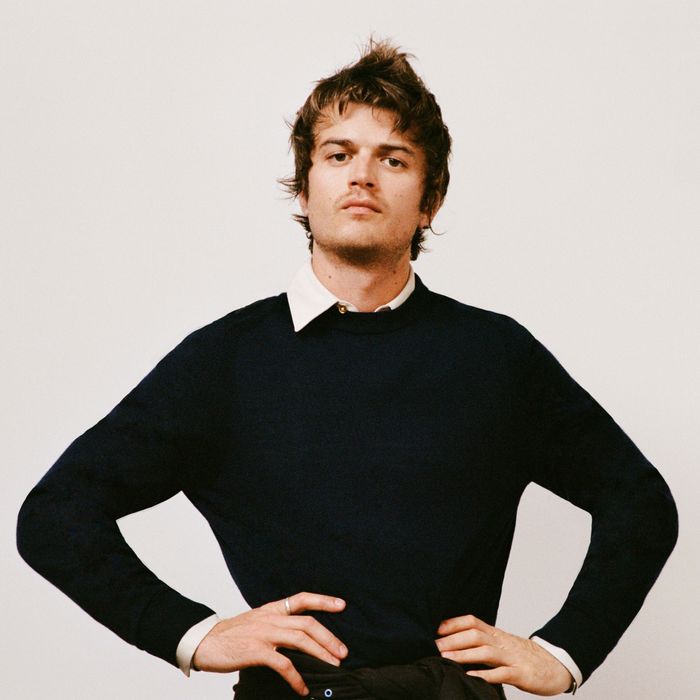
“Being independent is something I valued big time. I never wanted any money up front.”
Photo: Fabien Kruszelnicki
For a few seconds, it looked like Steve Harrington, Stranger Things’s well-coiffed reformed bad boy played by Joe Keery, was a goner. Having just triumphed in his plan to use a radio tower in the Upside Down to poke a rift into the Abyss and defeat the Mind Flayer once and for all (one of many shark-jumping moments in the series finale), the character lost his footing and seemed headed for a gruesome splat. But Keery wasn’t worried, even at the table read for the final episode of Netflix’s cultural phenomenon. “I didn’t think anybody was going to die,” he says. “It’s a little different than a Game of Thrones or a Lord of the Rings when you’re losing characters. I thought I might make it out alive.”
The scene was indeed a fake-out, with Steve’s romantic rival, Jonathan (Charlie Heaton), and his stealth deltoids catching Steve in the nick of time, teeing up the group’s final victory. The whole crew lives to tell the tale — an ending that came too easily, many critics noted after the episode aired on New Year’s Eve — and, in a flash-forward 18 months later to a rooftop reunion at the radio station, Steve is the only member of his young-adult coterie still living in small-town Hawkins, a beloved baseball coach and sex-ed teacher who hopes to one day be father to “six little nuggets.” You get the feeling Steve is the kind of town mainstay whose obituary will, in several decades’ time, make the front page of the Hawkins Post.
But here in the real, Demogorgon-free world, 33-year-old Keery is one of the most popular musicians of the moment. His song “End of Beginning,” which he released as an independent artist under the stage name Djo in 2022, has broken global streaming records for the past two weeks, with the baroque rock tune about appreciating the past bulldozing the usual pop stars on Spotify and Billboard’s global charts, including a Showgirl-era Taylor Swift. “End of Beginning” already had a resurgence in 2025, but you don’t join the ranks of Spotify’s list of songs with 2 billion streams just because it provided a nice soundscape for a bunch of TikTok videos. (Keery remains skeptical of that Spotify achievement: “A song like ‘Back in Black,’ you can’t quantify how many barbecues since 1980 it’s been played at. It’s probably been played 10 billion times.”) Though “End of Beginning” never appeared in Stranger Things, Keery knows his appearance in the final season likely drummed up interest in his music and helped the song reach a new apex of success. “It feels like it’s taken on this life of its own,” he says. “It’s being used to underscore the end of a year and the show coming to an end — the end of an era and the start of something new.”
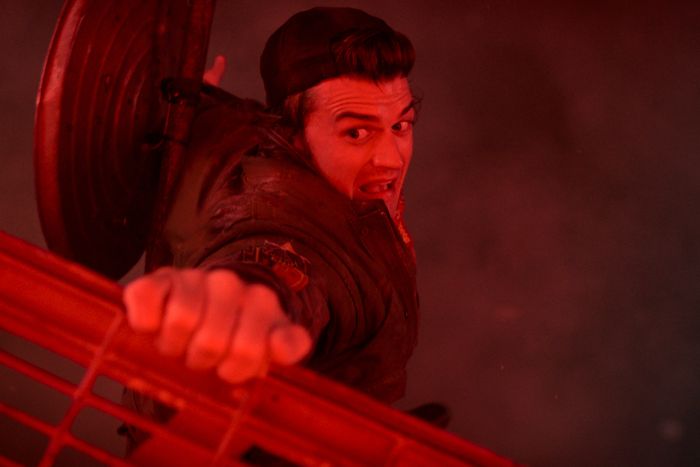
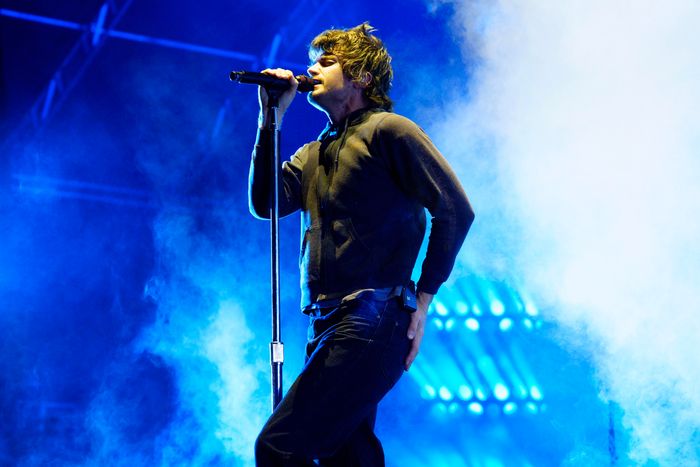
From left: Keery in the series finale of Stranger Things. Photo: NetflixKeery performing in October 2025. Photo: Erika Goldring/WireImage
From top: Keery in the series finale of Stranger Things. Photo: NetflixKeery performing in October 2025. Photo: Erika Goldring/WireImage
Was it surprising to you that none of the main characters died in the finale? What message is being sent with that decision?
For me, the show isn’t about people living or dying. The message that’s so powerful, and the thing I think is genius about the way they wrapped it up, is that it’s about saying good-bye to your childhood and your innocence. That’s almost more sad, in a way. That’s why the end of the show hits so hard — because it’s heavy and everybody goes through that, saying good-bye and knowing it’s not coming back. And that’s punctuated by the fact that it has been ten years for all of us on the show and for everybody watching. A lot of younger kids who started watching when they were, say, 10 — this is exactly that for them. That’s why it hit so hard for me, and I think that’s why it hit hard for other people as well.
People will take issue with whatever way you end it. I get it. There are parts of me that are like, Oh man, it would be amazing if you killed this character. You could make an argument for any of the characters. But it’s the brothers’ vision and we’re here to support them. But personally I feel like, What a nice way to wrap up the show. It worked for me.
One of the most central relationships of the show has been Steve and Dustin, so much so that they declared “You die, I die” to each other before going into battle. Steve calls Dustin his best friend. I’m curious how you would define this duo’s bond and how much they’ve changed each other.
When you pair two characters that don’t have a lot in common together, they can enlighten each other in different ways. Especially in the earlier seasons, you see a lot of the contrast of who these two people are. And when you have someone in your life that forces you to grow and pushes you, you can’t help but feel a debt of gratitude to that person.
After the evil is defeated, Steve frees Derek from inside the Mind Flayer and the camera lingers on his face when Derek embraces him in a hug. Steve seems to be going through a quiet moment of interiority there. Can you tell me about filming that scene and if you were communicating something larger there?
No, not really. I’m just doing my job and standing and looking that way. No, I’m kidding. I guess it’s a testament to working with him. He’s such a great kid and in a lot of ways reminds me of Gaten Matarazzo. I think he was 14 when we were filming, lived in Chicago, and has a great family. When you’re working with younger actors, there’s something amazing about what they can do. They feel less inhibited, maybe, by the social pressures of being an adult. I was touched by his performance, so that’s what you’re seeing.
In that last scene on the rooftop with Robin, Nancy, and Jonathan, it’s revealed that Steve is the only one who remained in Hawkins during the time jump. What do you think this terrible experience affirmed for him and his purpose in the community?
I think he’s just a guy who likes simple pleasures. He knows what he wants — he wants a family, peace and happiness, and to be around people he loves. I’m sure he’s ambitious, but he has his priorities straight. I would never stay in Hawkins, personally.
What was the atmosphere like on set for that big farewell?
Ten years basically poured into this final day. There was a moment going up to set where we were driving to base camp and I looked over at Charlie and it was like, Here come the waterworks. The whole day was riding this high of whatever that emotion was. It felt like the real closing of a chapter.
Will these four characters actually be meeting up in Philadelphia every month or did you view it as a coping mechanism to say good-bye? Will they be lifelong friends?
I have no opinion on it. They have the best intentions, but who’s to know if they actually do?
Do you have any lingering questions about Steve or any of the show’s narrative decisions?
No.
You recommended to the Duffers that they should end Stranger Things with David Bowie’s “Heroes,” and they did. What was it about that song that felt like the ideal send off?
I’m a big David Bowie fan and in a previous season there was a Peter Gabriel “Heroes” cover in an episode. I feel like that song is an anthem for people who feel like they’re outcasts. That’s kind of what the show is all about for me. It feels like a fist-in-the-air victory. I’ll take credit where it’s due, but the brothers are the real reason it worked. The credits at the end wrapped it up in a perfect way.
You currently have the No. 1 song globally with “End of Beginning,” which surged after the finale. The song is about a turning point in your life and moving on from it — fitting for an end of such a popular show. But is there another reason you think it achieved this feat now?
I’d be a fool, obviously, to say it wasn’t driven by Stranger Things. It definitely is. But the song had a life of its own about a year and a half ago. It was TikTok mixed with the way modern music is shared, especially with social media. And then the message, too. When it happened the first time, afterward people were like, What did that feel like? Oh my gosh, that must’ve been crazy. This time it feels even more that way.
The economics of a viral sensation is interesting to me, because there are only 238 songs in the “2 billion club.” I talked to Curt Smith recently — who’s in there with Tears for Fears’ “Everybody Wants to Rule the World” — and he said they renegotiated the band’s label deal and they’re now getting half of the Spotify royalties. You’re in the position of being an independent artist with no label. How did “End of Beginning” change your life, both in the interests of money and creativity?
I already came from a big point of privilege because I was using the money I was making working on Stranger Things and using that to fuel my music project. It afforded me the ability to be an independent artist and not have to sign to a label. The expenses and the overhead weren’t high. I was doing it at home for the most part. And then there would be maybe a couple weeks in the studio, so I paid for that time — flying people out to be in the studio. So now it’s allowed me to have the music side fueling itself. There’s a song called “Back on You” on The Crux with a kids’ choir. That was something I always wanted to do. Being able to have an idea that’s pricey, or maybe just crazy, and using that money to fund it, or renting instruments you’ve never used — that’s the luxury. And you’re right, being independent is something I valued big time. I never wanted any money up front. That’s not what I needed. What I was really interested in is having the ownership for the longevity of the project, and it ended up working. I mean, it was working before that song really popped off. It was already self-sustaining, and it further helped me in that way.
When artists talk about the megavirality of their songs, the one commonality the stories tend to share is that it’s never something that can be planned in a studio. How do you resist the temptation to make a song that sounds similar going forward?
That’s a pretty easy temptation to resist for me because I feel like the goal is to do something different every time. I think any artist is always trying to push past into new territory or mine deeper. Nobody wants to repeat themselves because that’s not really fun — you’ve already made that. But it’s interesting to have gone through this little bump before, when I was making the last record. So now this song’s doing really well again and we’re making another record. When I was making “End of Beginning,” it was about something in my life that was compelling enough to put into song. So it’s about continuing to try to find that and put something that evokes something in me out in the world.
Have you recontextualized the song at all now that Stranger Things is over?
It’s funny. You go through this process of getting really sick of it, and then it comes back, you get really sick of it, and then it comes back. This past year we were performing it a lot, so I had a newfound understanding of it. But no, for me, it’s really linked to that specific time in my life. I do get a little taste of that every time I hear it. But sometimes I skip it. You open the internet, you hear that song, you’re like, I can’t listen.