This article discusses depression, suicidal episodes, coming out, hospitalisation for mental illness and experiences of psychological crisis. If you need to talk to someone for mental health support, please click here to find a helpline.
In classical music, we are used to hyped young artists, to early success and (often multiple) prestigious appointments. Ben Glassberg’s career fits that pattern perfectly. Music Director roles at the Opéra de Rouen and Volksoper Wien – before the age of 30 – and plenty of guest engagements. But we often forget to take care of the person behind the success. When I meet the British conductor for a virtual cuppa in November, he isn’t having the easiest of weeks. “I’ve not been able to shift it and that’s okay. I know it will eventually.” As someone living with depression myself, I know how much strength it takes to learn this kind of patience and self-confidence again. And it strangely connects us when we talk about what he describes as “a strange year”: his suicidal episode, his coming out and his history with depression.
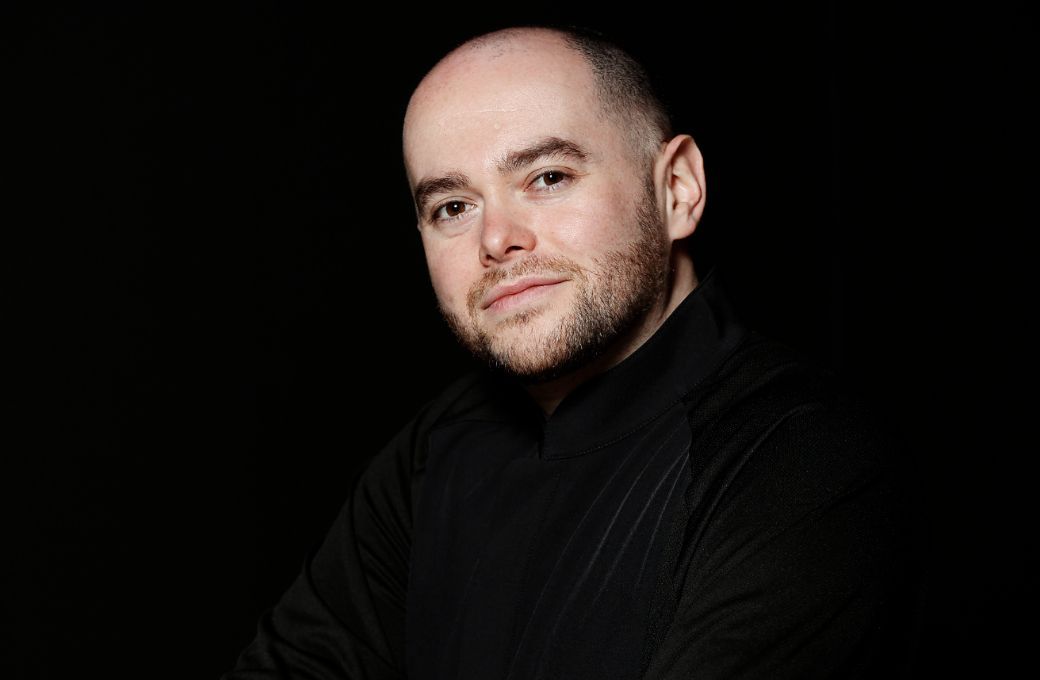
Ben Glassberg
© Caroline Doutre
“I think in some ways it started much earlier,” Glassberg says, when I ask when his journey with mental illness really began. He is reflective, calm, yet painfully honest when telling his story that sounds so similar to many others. At 12 years old, he was seeing a child psychologist. “I had terrible anxiety, really poor emotional regulation. I struggled socially.” At the time, no one quite knew what to do with it. “It was sort of dealt with and assumed to be fine.”
At university, depression arrived with more clarity. “During my first year, I was 18, 19 years old, I became quite depressed. I suppose a lot of students do,” he says. But it was serious enough that he had to miss weeks of study and return home. Glassberg saw a psychiatrist, started therapy, but again, nothing was properly named. “A common theme in my history,” he reflects now, “is not really dealing with it properly. Which is why it got so bad later.”
During postgraduate study, his anxiety was so severe it became physically immobilising. “I couldn’t get on the tube,” he says. “Some days I’d stand there and think, I just can’t. I just can’t do this.” The physical aspect of severe depression might be one of the hardest to describe to others. It doesn’t feel like what is considered a ‘normal’ I don’t want to get out of bed. It is physically impossible and paralysing, it becomes an I can’t get out of bed. “You can’t tell your legs to move. They just don’t listen.”
For Glassberg, cognitive behavioural therapy (CBT) helped, and for a while life moved forward with a few quiet years. “And then we had quite a traumatic experience with the birth of our first child. He was very sick and we nearly lost him when he was born.” As it happened at the very start of the Covid-19 pandemic, they could barely obtain any professional help for months.
The combination of trauma and isolation became the tipping point. “That’s when I started to get really, really depressed,” he says. For the first time, he sought medical help and was prescribed antidepressants. Even then, the step towards treatment was not one he took entirely on his own. “I wouldn’t have got help if my ex-wife hadn’t forced me,” he admits. “I had a complete panic attack. I was sobbing on the stairs.” His ex-wife made the decision for him. “She said, ‘We’re gonna get pizza takeaway now and it might be time to go to the doctor.’” That pizza might sound like a strange detail to remember in that context, but for me, it expresses the loving and thoughtful care through something quite ordinary when words no longer work.
Ben Glassberg conducts Marianne Crebassa and Stanislas de Barbeyrac and the Orchestre National du Capitole de Toulouse in an excerpt from Offenbach’s La Périchole in 2021.
In March last year, everything gave way. “It had been building for years, but especially the previous nine months.” He cancelled performances he cared deeply about, including a production in Zurich. “I was devastated because I was having the most amazing time. The colleagues were wonderful, I loved that production. But I just couldn’t get out of bed. I thought, I can’t face this. I cannot. I cannot do this.”
At the same time, something else forced its way to the surface: his sexuality. “I didn’t discover it recently,” Glassberg says. “I think I knew all along. Another thing that I was trying not to believe about myself.” Even in an open-minded and inclusive industry he struggled to accept it. “I wanted an easy life,” he admits. “And this felt like it would make everything harder. There were consequences for other people. For my ex-wife, my kids. It was a lot.”
It was only after his suicidal episode that he allowed himself to come out. “It was when I was in hospital, after I had nearly killed myself. I had all this time on my hands. I wasn’t working and suddenly I had the space to process it all.”
“How close did you come to taking your own life?” I ask, carefully. “Very, very close,” he replies calmly. “My ex-wife had to take me to hospital to stop it from happening.
“It hurts when people say, ‘Just pull yourself together’. Without wanting it to sound too overdramatic, it’s a matter of life and death.”
On paper, Glassberg was living a beautiful and fulfilling life. “I have a wonderful job, I’m doing the career of my dreams, I have a lovely wife, two amazing kids. Why am I feeling this shitty when I have everything I’ve ever wanted? Why am I so unhappy that I don’t want to be alive anymore?
“There’s so much shame around mental illness,” Glassberg says later. “It’s so much worse than physical illness, because it’s not visible. We talk endlessly about mental health, but we don’t really talk about mental illness, which is a very different thing. We talk about wellbeing and self-care, but we don’t really talk about what happens when you’re actually ill.”
Social media, he notes, adds to the perfect picture and clouds what might be going on behind. “I’m just as guilty of it as anyone. If you look at my Instagram from before my breakdown, you’d think he’s a happy guy with a great life. But it’s all rubbish, really. It’s a lie that we put out there – partly to convince other people, partly to convince ourselves.”
Hospitalisation brought enforced stillness. “It was the first time I’d taken a month off in ten years. The amount I was working wasn’t human. I was chasing this career, which I love, to the point where my relationship with my work was completely skewed.”
Ben Glassberg conducts Thibaut Garcia and the Orchestre National du Capitole de Toulouse in Alexandre Tansman’s Musique de cour in 2021.
For a while, music itself became unbearable. “I couldn’t listen to anything,” he admits. “There was at least a week where I actually hated music, because I felt it was all its fault. I felt betrayed by it. This thing that I love had basically caused me to want to die, because I was so obsessed with doing it. Of course, it wasn’t just the music. It was the fact that I was putting work before my kids, before my own needs, because you don’t have to think about your identity when you’re working every single day. It’s easier if there’s no time to think. But I missed the birth of my second child because I refused to cancel a project. I felt that I’ve got to do it, I have to. If I cancel this, I won’t get invited again. Today, I look back on it with so much sadness.
“I chose to do all that work,” he says. “It wasn’t my agent. It wasn’t the industry. It was me. Our industry has huge expectations on people, but I think for most artists, we put it on ourselves as well.”
There is an unspoken contract in classical music that visibility and busyness equal success and survival. To cancel is to risk being forgotten; to say no is to invite replacement. “If I don’t do this, someone else will,” he says. “And then maybe they won’t invite me back.” It is a logic most freelancers will recognise instantly.
The pressure on artists now arrives earlier and earlier. “You’re told you’re the future and you think: if I slow down now, I’ll miss my moment. This month alone, two colleagues have cancelled entire months of work because of burnout,” he says sadly. One of them is just 25. “A complete genius. Amazing. He is being pushed and is doing far too much.” He pauses. “I can say that because I did too much. And it nearly killed me.”
The problem is not only an artist’s own ambition, but that “we normalise exhaustion, and then we’re shocked when people break. What we do is our passion, our calling. For so many of us, it is our reason to be, our reason to be alive… but it’s not as important as taking care of yourself and your loved ones”
Leadership roles amplify that pressure. Being a music director is not just about musical decisions; it is emotional labour. “You care about every single person in those places. You want them to be happy. And that responsibility takes its toll.” Stepping away from that constant weight should not be seen as a failure, but a way to find space to breathe again.
What he hopes is not institutional overhaul overnight, but honesty. “If we were more truthful about how fragile this job can make people, we might stop confusing burnout with dedication.”
Yet music would also become Glassberg’s way back. After months away, he chose to return with Britten’s War Requiem. I can’t help but ironically point out the lightness of the piece. “A sensible choice,” he laughs dryly. “I don’t know why, but I had a feeling I had to do that. I started studying the score at the piano which really helped me. Just thinking about that music, not thinking about anything else and kind of trying to get into it. The act of doing that project was exactly what I needed.”
Ben Glassberg and Deborah Warner talk about Britten’s The Turn of the Screw
It wasn’t all smooth sailing, though. “My mum and my sister flew out, because I wasn’t safe to be on my own. It almost felt regressive having family come out to support me, but it was great. It was the most amazing thing. All the soloists were friends of mine and it reminded me of why I love doing what I do. It gave me back confidence, that joy.”
Recovery, he stresses, has not been linear. “This week hasn’t been great,” he tells me. “But that’s okay. A bad day doesn’t automatically mean I’m depressed again.”
Going to the gym and keeping routines support his recovery, and writing has helped him make sense of it all. A book – still in progress – has become a way of processing patterns, triggers and survival strategies. “Selfishly, it’s helped me understand what makes things better and worse. I am interviewing other people (comedians, musicians, doctors…), talking about their stories. There are so many of us that experience a different version of the same thing. It’s incredibly inspiring.”
The response to his openness, not least on social media, has been overwhelming. Messages from colleagues, from artists he admires, from people who never suspected they shared the same struggles. “Talking about it helps,” he says simply. “Every single time.”
As he steps away from institutional leadership – he is in his final season of his contract in Rouen – something essential has returned. “I’m excited about music again! I think I’ve had the wrong priorities for the last decade,” he reflects. “Now I’m learning how to live authentically. And that makes me a better musician, a better father, a better friend.”
As we finish, he says something that might feel fragile to some, but is really a testament to his strength. “I’ve been as low as it gets. I know now that I can survive more than I ever thought possible.”