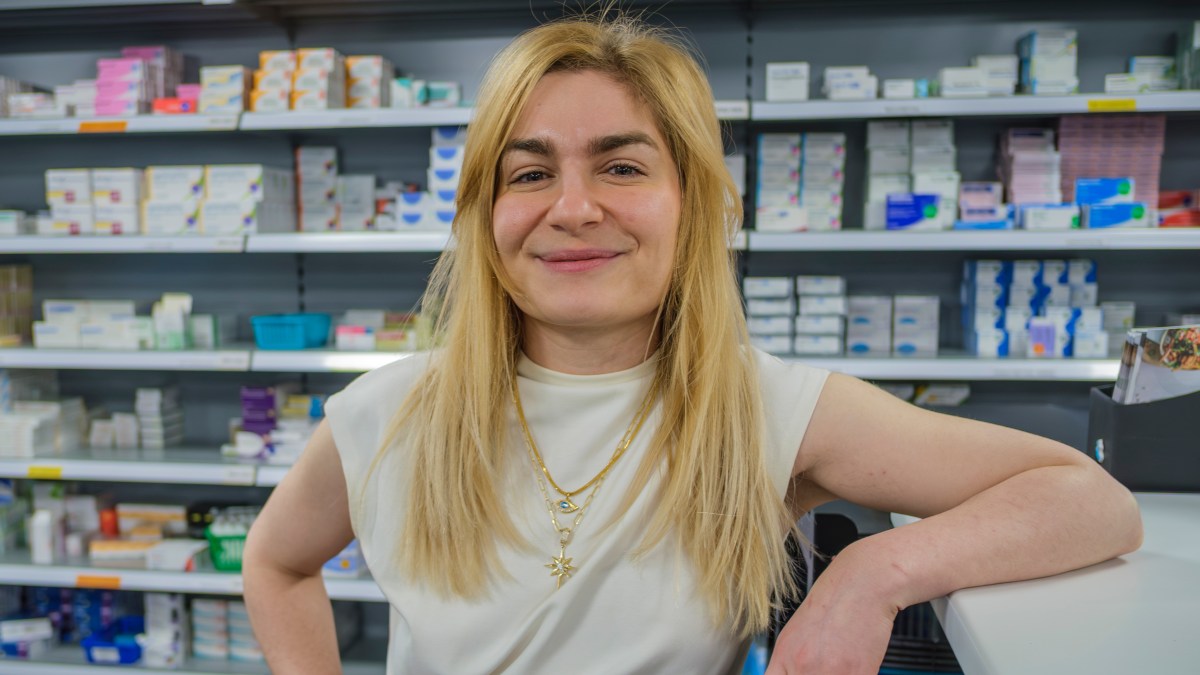
Thuria Wenbar’s parents were doctors in Iraq before the family arrived in the UK as asylum seekers in 1999. They had left as war loomed and lived in several Middle Eastern countries, then Germany, before landing in Britain and taking whatever jobs they could. Aged seven, Wenbar attended school, learnt English, did well in class and went on to qualify as a doctor.
Frustrated by the number of non-emergencies she encountered while working in A&E, Wenbar, 32, decided to do something about it, and in 2018 she co-founded the online pharmacy and telemedicine firm Evaro to try to support more people who have illnesses that do not require emergency hospital care.
The company made earnings of £470,258 last year before interest, tax and non-cash items, from revenues of £12.1 million, which have increased 110 per cent a year over the past three years. This gets it a place on the 2026 Sunday Times 100 Tech ranking of the country’s fastest-growing tech firms. The business has also created 164 jobs.
After arriving in the UK the family was placed in asylum-seeker housing in London, Wenbar says, adding that her parents “did a really good job” of shielding their children “from the realities of what was actually going on”.
At one point her father had a job as a night receptionist at a hotel, which gave the family free accommodation together in one room. They moved to a house on the condition that her mother would care for the elderly people on that block. Eventually the family settled in Slough and her father spent time working internationally, sending money back to his family.
To make ends meet, Wenbar recalls doing a lot of “ridiculous activities”. A gift card company paid £5 for placing 1,000 cards and envelopes into plastic sleeves, so her parents made a “fun activity” of doing this as a family.
“It was wonderfully tumultuous,” Wenbar says. “It instilled this idea of ‘don’t complain, just get it done’, and that definitely became useful during the early years of bootstrapping the business.”
Wenbar loved school. She took six A-levels and enjoyed the “external validation of a gold star”. After teaching herself to code as a child, she had aspirations of becoming a software engineer. However, when she built up the courage to broach the topic with her parents, they were keen for her to continue the family’s medical lineage, going back to Wenbar’s grandmother. “They would have disowned me if I hadn’t studied medicine!” she jokes.
A medical course at the University of East Anglia drew Wenbar because it “didn’t feel competitive” and was more practical than other studies, she says. From the early days she worked with actors simulating patients — an experience that helped her later when running her company.
“I remember giving someone news that they had breast cancer and I had to step away from the actor session and just bawl my eyes out,” Wenbar says. “It made me much better in the long run at speaking to patients, but also at running a company, because you can deliver really bad news in a way that you hold your emotions to yourself.”
During her first year at university she met Oskar Wenbar, 38, who was studying pharmacy. He would go on to co-found the company with her in 2018, and the two married in 2019.
With a love for a “chaotic environment”, Wenbar thought about becoming an military medic but decided to specialise in A&E medicine instead. Her first shift as a qualified doctor was overnight at the James Paget University Hospital in Norfolk, where she was immediately thrust into action when a patient suffered a heart attack in the lift.
“None of the textbooks prepared me for this. It’s baptism by fire. You’re there with your registrar [and] a whole bunch of nurses who thankfully have been there before. You’re learning rapidly on the spot.”
Despite enjoying the high-pressure environment, she quickly became frustrated with how A&E was clogged up by non-emergencies.
“It’s stuff that is important and urgent to the individual, like a urinary tract infection — that burns and stings; it’s debilitating — but it’s not actually an emergency. But the person cannot get a same-day GP appointment.”
Ask me anythingAdvice to other entrepreneurs: Be comfortable asking lots of questions.Best business tip I’ve received: We don’t work in isolation. Understand the value of networking and see the landscape as a lot of collaborators. Someone I admire: My mother. Genuinely, I think she is such a force of nature.Motto I live by: I have two hands. He has two hands. I have two eyes. He has two eyes. Anything he can do, I can do.Best way to start the day: Two hours of reading. I absolutely love that. I use a news aggregator that covers topics from tech to regulation, world news etc. If you could tell everyone one thing: Understand why you’re doing it, because it’s going to get really hard sometimes and it’s going to suck. If you don’t have a real reason why you’re putting yourself through this mess, you will tap out.
She started working on algorithms that could be used to assess each patient’s needs before they attended A&E, enabling drugs to be prescribed in advance where required. After pitching the idea to the NHS she was “laughed out of the room”, but Oskar believed in the idea. He quit his job as a manager of a local pharmacy and took out a six-year lease on a 2,000sq ft warehouse.
Initially the company was funded by them working locum shifts. Costs were kept low through DIY set-ups in the warehouse, with shelves bought second-hand. Wenbar used her medical licence to practise and Oskar his licence to dispense drugs to patients with existing conditions.
The website started with 18 medicines focused on the common needs Wenbar had seen in A&E, such as the morning-after pill, migraine medication and treatments for urinary tract infections. The company now provides treatment for more than 80 conditions and received Care Quality Commission registration in 2024, allowing it to request blood tests, interpret results and make diagnoses.
In the early days the website was held together with “duct tape”, Wenbar says. She spent late nights on Facebook coding forums, analysing problems she couldn’t solve. She hired her first engineer from a forum after he helped her for more than two hours.
Today the company has a team of 30 engineers and has expanded its AI capabilities — patients can even cough into their microphones for it to assess lung volume.
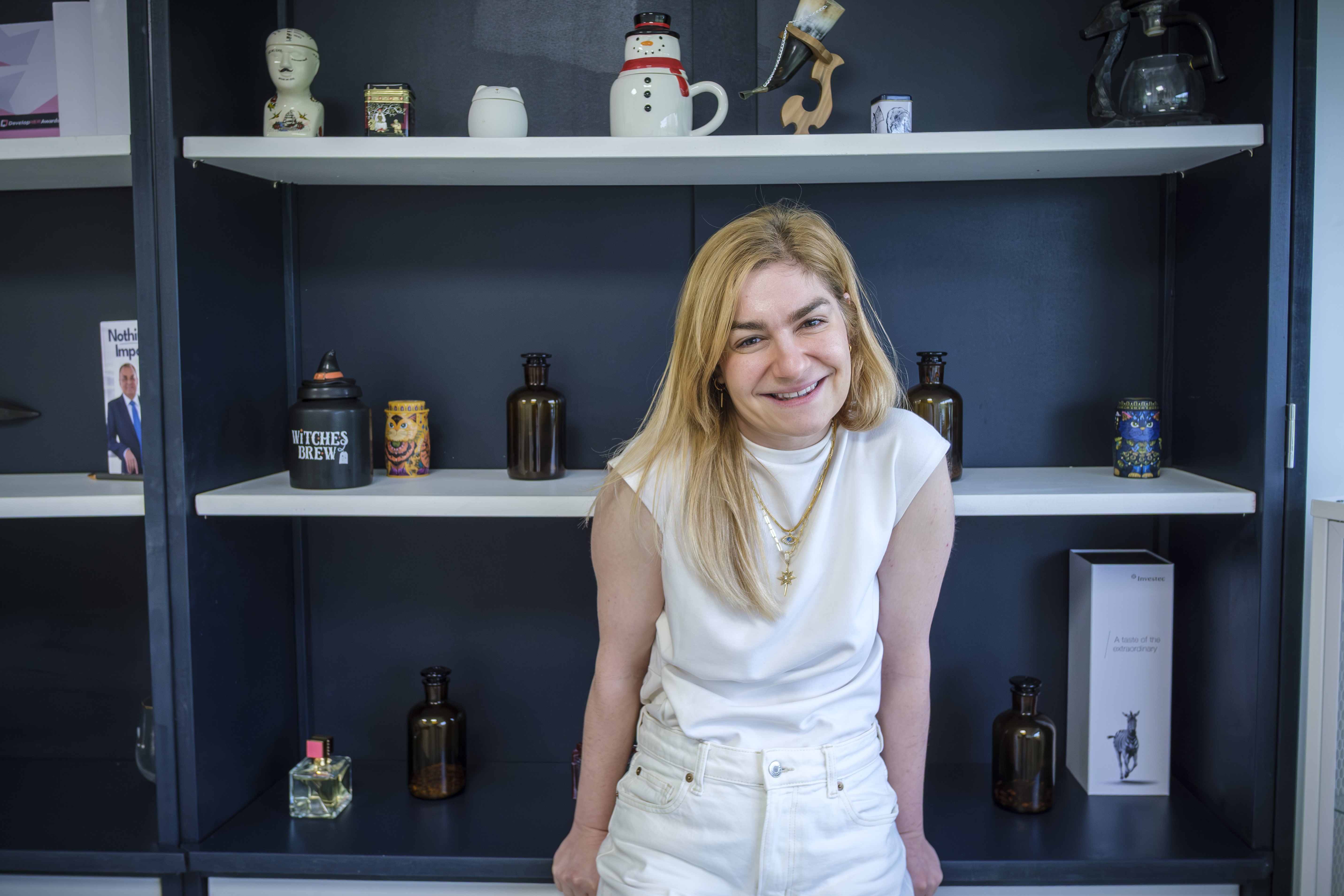
Wenbar still finds time to take on some A&E shifts every few months
JASON BYE FOR THE SUNDAY TIMES
December 2019 was a turning point for the company, when Wenbar worked 18 nightshifts in 25 days to make payroll and keep it going. That unsustainable pace made her push harder for the company to become profitable. She said this was a process of “slimming things down”, letting team members go, increasing their financial literacy and narrowing the focus to specific treatments.
Evaro was originally called E-pharmacy, but investors said that was too boring. Wenbar scraped existing domain names from GoDaddy and wrote a small program to figure out which were the easiest to pronounce. After ruling out those that were already popular internet searches, she was left with 14 choices. The founders went to watch a series of mixed martial arts bouts and assigned one name to each competitor; the name linked to the winner would be the one they adopted. When Evaro lost, they realised they had already found a name they liked.
The pair raised their first external investment of $1.5 million in January 2024 from investors including Cornerstone VC and the University of East Anglia. With the money the company moved to an 18,000sq ft facility. They made sure the cash was spent on “stuff that matters”. There was nearly £3,000 in the budget for new counters on which to prepare prescriptions, but Wenbar suggested building them using cheaper Ikea furniture instead.
Evaro has continued to grow through partnerships. In 2025 it struck deals with the adult toy and lingerie retailer Lovehoney and the period-tracking app Clue to provide NHS contraception online. Looking to the year ahead, Wenbar is aiming for further growth and to invest more in its technology, to enable it to digitally measure body mass and blood pressure, for instance. She also still finds time to take on some A&E shifts every few months to stay connected to Britain’s public healthcare system.
Explore the Sunday Times 100 Tech — interviews, company profiles and more