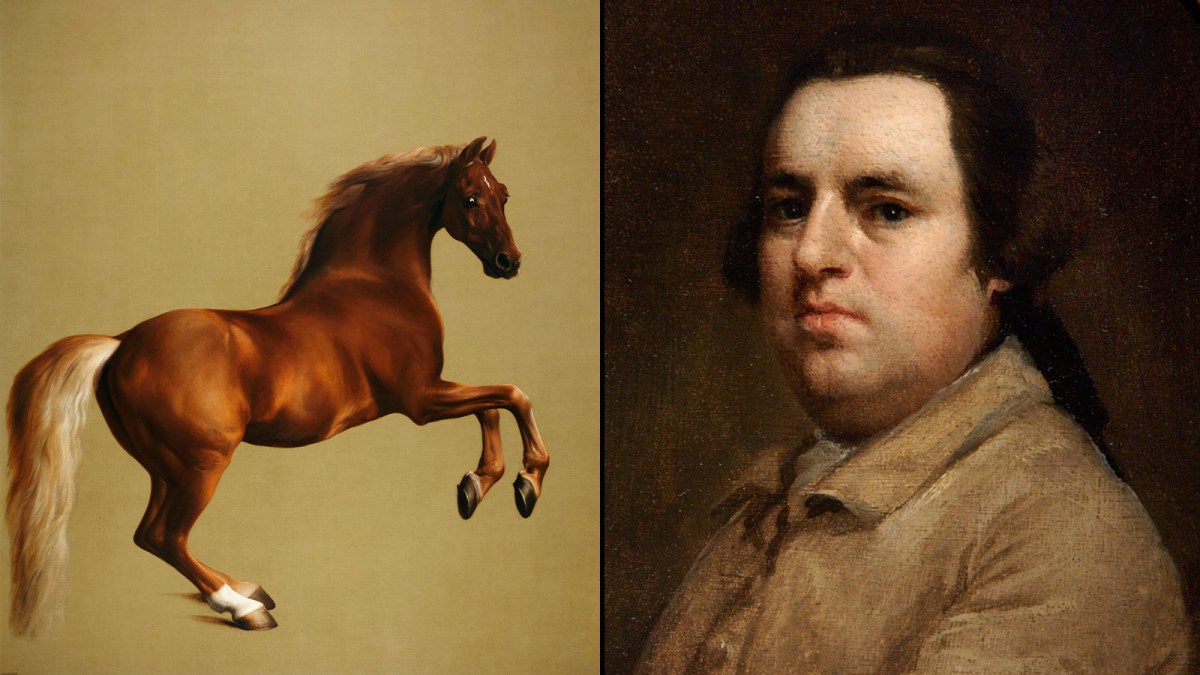
Whistlejacket may be the greatest depiction of an animal by a British artist, but is it an unfinished masterpiece?
One of Britain’s leading art historians has questioned the completeness of George Stubbs’s 18th-century painting of the horse, which rears against a plain background.
Bendor Grosvenor, author of The Invention of British Art, said he thought the painting was unfinished and that there was no conclusive evidence to “explain the mystery” of Whistlejacket’s missing background.
Grosvenor said his study of Stubbs’s brushwork, including his merging of background and subject in other equine paintings, had convinced him that the artist had been prevented by his patron, the Marquess of Rockingham, from finishing the work.
Grosvenor said there was a determination in contemporary art circles “to want everything in the past to be modern and striking”.
“The fact Whistlejacket is on this plain background makes it feel very modern, and we want to believe that Stubbs was bucking a trend and having a little experimentation,” he said, but if his “understanding of Stubbs’s technique was correct” then the artist had painted the horse first “with the intention of coming back to put the background in”.
From March 12, Whistlejacket will be joined in a National Gallery exhibition by Scrub, another life-sized painting of a horse by Stubbs that was also commissioned by the marquess and does have a landscape background.
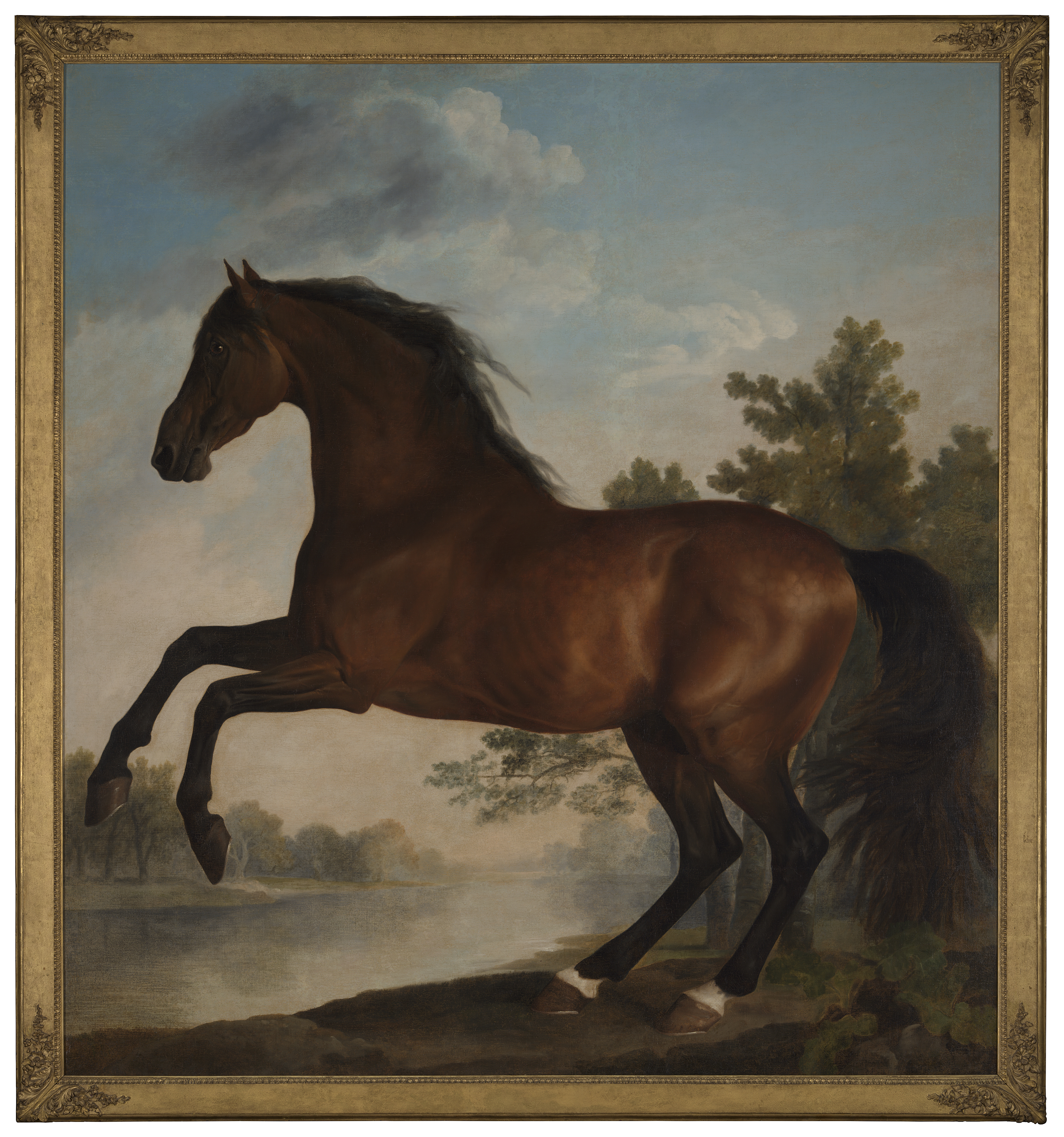
Scrub
THE NATIONAL GALLERY
Both Scrub, showing a bay colt, and Whistlejacket, an Arabian chestnut stallion, are thought to have been painted by Stubbs in about 1762 and to be the first life-size portraits of horses without riders in British art.
The National Gallery said its belief that both the marquess and “possibly” Stubbs considered Whistlejacket finished was based on a 1797 memoir by a friend of the artist, recounting an incident in which the real Whistlejacket saw its near-finished portrait and tried to attack it. The marquess was “so pleased with such proof of the excellence of the picture that he determined nothing more should be done”.
Stubbs and the marquess, who was prime minister for two terms and a renowned racehorse breeder, are known to have had a prickly relationship. Despite having commissioned Stubbs to paint Scrub, the marquess decided not to buy that artwork, and it remained in the artist’s studio for 20 years.
• Stubbs, Lowry or Turner: who painted Britain best?
Scrub — titled in full Scrub, a bay horse belonging to the Marquess of Rockingham — will be on public display for only the second time when it is shown in a room near Whistlejacket at the National Gallery.
It is thought that the marquess originally commissioned both Whistlejacket and Scrub as bases for portraits of George III, who was then to have been depicted atop the horses. It is speculated that he abandoned the plan after resigning from his post as lord of the bedchamber in 1762.
Grosvenor, who first explained his theory on his podcast, Waldy and Bendy’s Adventures in Art, told The Times that Stubbs’s landscapes were revolutionary, as were his animal depictions.
“He was the first person to really say the fidelity of the horse matters more than anything else and that is why he spent so many years literally peeling them back to the bone [through anatomical studies],” he said. “And because he is so interested in fidelity he is right up there in British art history as the first person to say: ‘I am going to paint this landscape absolutely faithfully’.
“It was at a time when aristocratic patrons wanted Italianate or Claudian pastiches. Stubbs liked to observe the reality of the landscape and I just feel that he would have wanted to situate Whistlejacket in some kind of setting.”
Ozias Humphry’s memoir recounts an incident when, according to the gallery, Stubbs was “about to finish the painting of the horse” when the real Whistlejacket began to “stare & look wildly at the picture, endeavouring to get at it, in order to attack it, the boy pulling him back & checking him”.
Humphry wrote: “The Marquis came shortly after to see what progress had been made, & learning the circumstance, was so pleased with such proof of the excellence of the picture that he determined nothing more should be done to it, tho’ it was on the bare canvas without a back ground.”
Mary McMahon, the gallery’s associate curator, said on Friday: “The anecdote may be exaggerated, particularly as it ties in to a tradition of stories about great artists producing a work so realistic it tricks the viewer. But it does record Humphry receiving information directly from Stubbs that the marquess had the final say on the finished painting, as one would expect for this time as the patron of the work.”
McMahon said there was no correspondence to “further clarify how the decision was reached … but Stubbs had already produced two other works for the Marquess of Rockingham early in 1762 without a figurative background, suggesting this was a request particular to the patron.”