Near the top of the long, rounded spine of hills that make up the ancient Slieve Bloom mountains in the southern part of Offaly is Baureigh mountain. Countless tiny springs trickle down through the boggy earth, their watery threads following shallow grooves etched into the northwest facing slopes, eventually coalescing to create the Silver River.
From its headwaters, the river cascades downwards, its force eroding the siltstone, sandstone and mudstone layers of the Slieve Blooms. It’s fast, high-energy waters sculpt the rock, breaking it into smaller, rounded fragments that, further downstream, are used by female salmon in an elegant ritual: with their tails, they dig and shape shallow nests in the loose gravel, deposit their eggs, and then flick the pebbles over them for protection.
The Silver River’s ultimate destination – the salty waters of the Atlantic Ocean, by way of the Shannon – is reached westward. Leaving the mountains behind, it winds its way through farmland and open countryside, flowing by the villages of Cadamstown, Ballyboy and Kilcormac, before turning north towards Ferbane, where it joins the river Brosna, which in turn flows into the Shannon.
In his new book, geologist John Feehan traces the story of the river from its mountainous source to the vast openness of the Atlantic, traversing rocks first laid down 425 million years ago when Silurian seas covered what is now the Slieve Bloom range. Feehan follows its story across timescales beyond the bounds of ordinary imagination, through deep-sea turbidites and the Caledonian orogeny – a mountain-building event that thrusts ancient rock layers skyward. It’s a geological odyssey in which rocks are not inert slabs but living archives: the potholes at Cadamstown Mill, the striking cross-bedding that reveals ancient river routes, and the “mushroom stones” at Drinagh all play a part in a story spanning millions of years. As Feehan observes, “Rocks can be thought of as the backbone of the body of the landscape”.
Feehan gives equal attention to the life the river sustains: stoneflies, black-fly larvae, mayflies and white-clawed crayfish, which form part of the river’s intricate web. Salmon and trout, particularly the genetically distinct Croneen trout, once flourished here, and although populations in recent times have gone through dramatic declines due to pollution, the destruction of their habitat and drainage, their remaining presence remains a symbol of possibility for restoration, along with the ancient sessile oaks, snakeskin liverworts and rare mosses. The exhaustive vascular plant checklist, spanning more than 200 species, underscores the Silver’s role as a corridor of life in the centre of Ireland.
From its older name, Mountain River, to its 19th-century designation as the Silver River, centuries of human intervention have muted its vitality. By the time it reaches the lowlands, it’s almost unrecognisable from its former, natural self. Mills at Cadamstown, Ballyboy and Kilcormac tapped its energy for production, while the catastrophically damaging Brosna arterial drainage scheme of the mid-20th century, which brought powerful machines, drilling and dynamite into the river’s waters, all transformed the river from a living, meandering natural watercourse into a straightened, channelised waterway. The dam near Cadamstown is, in its own way, an ecological tragedy along the river’s course, preventing the movement of salmon and other species up the river, while trapping gravel from moving downwards.
More recently, the wastewater treatment plant in Kilcormac, built in 1989 for a population of 2,000 people, now struggles far beyond its capacity. In a 2023 publicly funded study on the river commissioned by the Silver River Angling Club, ecologists Rory Dalton and Mick O’Connor describe the discharge as having a grey tinge, enriched with algae, and carrying “a strong odour of sewage”. The Environmental Protection Agency rates this stretch of the river as failing even minimal legal standards.
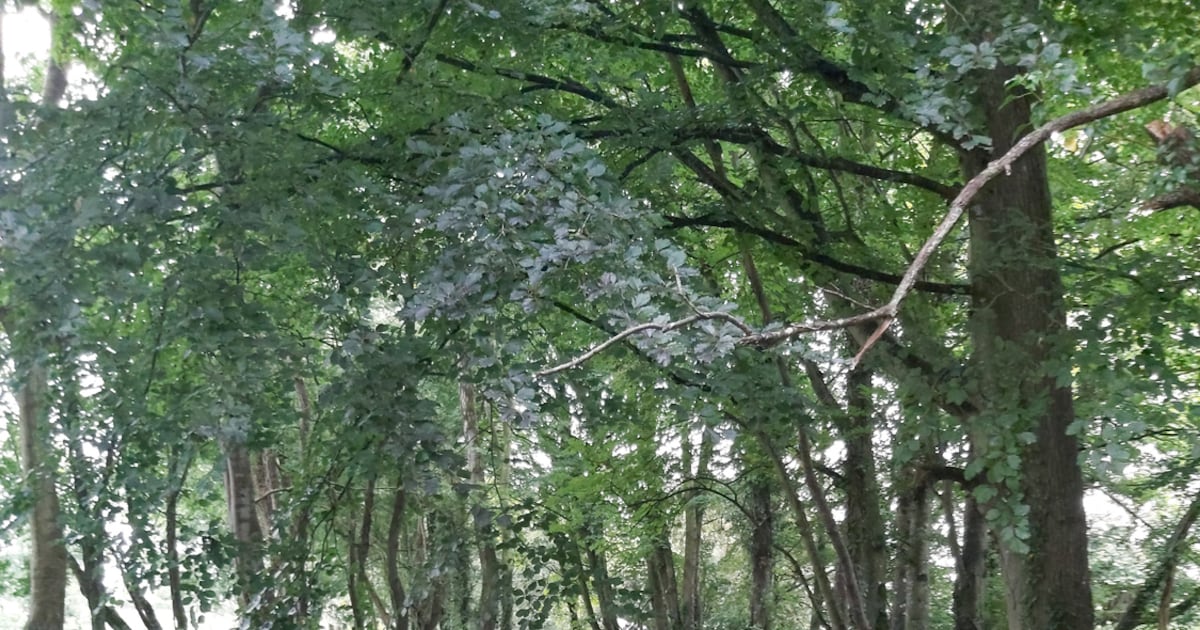
Yet small stretches that escaped the full impact of human development, such as the wooded valley near Ballynacarrig, offer a glimpse of what the river could be: shaded, meandering, cool and rich with life. There is a clear path forward: update the treatment plant, slash pollution from agriculture, fully remove the Cadamstown dam and other man-made barriers to help restore the river’s connectivity, energy and sediment flow, and allow it to rebuild natural bends, pools and riffles. This vision echoes a central theme of Feehan’s book: a call for stewardship. The Silver River is severely injured, but with care and restoration, it could thrive again – if we want it.
The Silver River of Slieve Bloom, by John Feehan, is published by Offaly County Council and available from offalyhistory.com