When Adrianne St Clair arrived in Dublin from the United States she was excited. It was nearly Christmas and after a brief stay in the Irish capital she would travel on to the UK where she planned to work as a masseuse.
Most of all, she was looking forward to hitting the shops in London.
But the 32-year-old single mother from Los Angeles never made it.
Instead, she became a prisoner in the Dóchas Centre, the women’s jail, on the Mountjoy campus on Dublin’s North Circular Road.
St Clair (32) landed at Dublin Airport on December 22nd, 2023 and a Customs sniffer dog zoned in on her luggage. She was taken aside and her suitcases inspected, revealing 22kg of herbal cannabis valued at €460,000.
She told gardaí she had only carried the bags to Dublin as a favour for an old schoolfriend.
But she conceded the same friend had paid for her flights and even paid for a car to collect her from her home and bring her to the airport in LA.
She said she was to be paid €5,000 for carrying the bags from Los Angeles to Dublin. She was charged with unlawful importation and possession of cannabis with intent to supply.
St Clair didn’t put up a fight. She entered a guilty plea and just six weeks after being caught she was convicted and jailed for three and a half years.
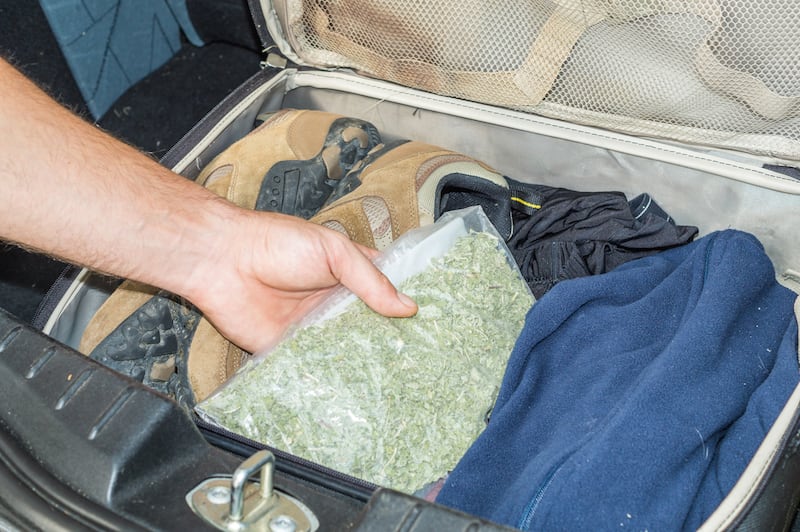 People used as couriers to smuggle cannabis into Ireland are being caught with alarming frequency, especially at Dublin Airport. Photograph: iStock
“An opportunity was placed before her, and she succumbed to temptation,” Judge Martin Nolan said of St Clair, who had no previous convictions and was a devout Christian.
Many more cases similar to Adrianne St Clair’s have passed through the Irish criminal justice system largely unnoticed – or are yet to be finalised in court – in the past two years as the Irish cannabis market has been turned on its head.
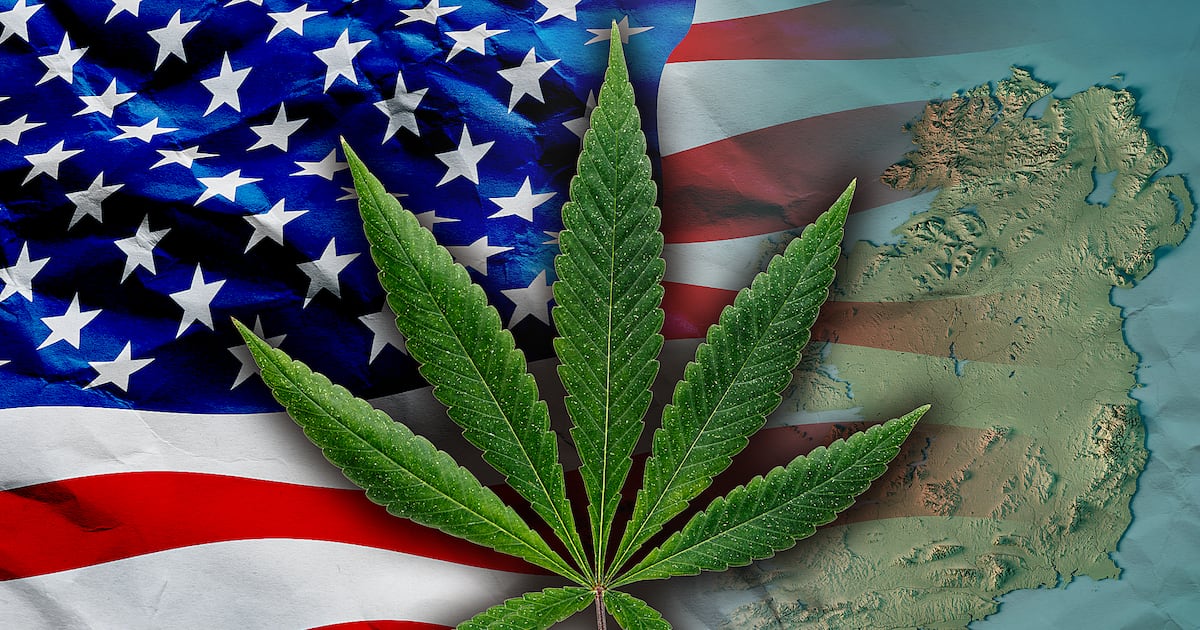
The Republic is now being flooded with cheap cannabis from the United States, Canada and Thailand where the drug has become more freely available. In those three countries the drug has been legalised – for sale and, crucially, cultivation – or the laws banning cannabis have been relaxed.
And people like St Clair – described as poor and vulnerable in court – are used as couriers to smuggle the drug into Ireland. They are being caught with alarming frequency, especially at Dublin Airport. Their crude efforts, involving suitcases stuffed with very pungent drugs, are often easily uncovered.
Many of these couriers are currently on remand in Irish prisons awaiting trial.
This week the latest mule was caught. A man in his 20s was arrested at Dublin Airport on Monday after 15kg of cannabis was found in his luggage, all vacuum-packed, after disembarking a flight from Thailand.
In addition to using individual couriers, organised gangs in the US and Ireland are shipping very large quantities of the drug in through air freight.
The latest such haul – 154kg, valued at just more than €3 million – was seized at Dublin Airport on December 13th. It had been smuggled on to a flight from the US disguised as “kitchen hoods”, destined for an address in Dublin.
 Det Chief Supt Seamus Boland, head of the Drugs and Organised Crime Bureau. Photograph: Dara Mac Dónaill
The United States is rarely thought of as a key supplier in Ireland’s illicit drugs trade. But the reality is it has suddenly become the main supplier, by some margin, of cannabis to Ireland.
New data obtained by The Irish Times reveals cannabis valued at about €107 million was seized in 2025 by Revenue’s customs officers as it was being smuggled into the Republic. Of that, about €46 million came from the US – up from just €1.1 million in 2019. It made 2025 a record-breaking year for US cannabis in Ireland.
At the same time, US president Donald Trump has threatened, or taken action against, other countries – Canada, China, Venezuela, Colombia and Mexico, among others – amid claims they are “flooding” the US with drugs. His focus has been on fentanyl, the synthetic opioid, and cocaine – not cannabis.
There has also been a major uptick in the supply of cannabis to the Irish market from Canada and Thailand.
Just over 60 per cent of all the cannabis seized by Revenue’s customs officers in 2025 came from the US, Canada and Thailand combined.
In 2023, the value of cannabis from Thailand that was seized in Ireland was negligible, at just €370,000. Over the past two years, that has soared to €26 million.
And the impact of those new and thriving supply routes, especially from the United States, has been extreme. It has resulted in a tenfold increase in the value of cannabis seized by customs officers, from €10 million in 2019 to about €107 million last year, as it entered the State.
“The main reason is simple – it’s basically the profit,” said Robert Patrancus, a crime markets and policy analyst with the European Union Drugs Agency.
“It seems that it’s due to overproduction there [in the US, Canada and Thailand]. They have had to search for other markets. The price of this cannabis is quite low so for many criminal networks it makes more sense to buy from these sources rather than to buy from Europe.”
 Many European dealers advertise cannabis on their social media channels as ‘Cali weed’, the premium-grade cannabis from California
Cannabis is decriminalised in half of US states, for both recreational and medicinal use, and has been liberalised in other states.
The Canadian authorities legalised cannabis nationwide in 2018.
[ Major drug seizures lead to surge in cocaine prices and increased dilutionOpens in new window ]
In Thailand, cannabis was delisted as a narcotic in 2022, some four years after its use for medicinal purposes was sanctioned. The changes in all three countries legally sanctioned the cultivation of cannabis crops under licence.
Patrancus said the leaking of the drug from the legal markets in those three countries into Europe has only really exploded since the start of 2024. He said the domestic markets in those three nations had become saturated, with warehouses full of the drug after over-cultivation, during the past two years.
There was a marked increase in US and Canadian cannabis in particular in Europe in 2024 before last year saw “the big boom, huge quantities that surprised everybody”, he said.
He said 50-60 tonnes was seized in Rotterdam in 2025 and about 20 tonnes seized in Belgium, “which are absolutely huge quantities”.
“And now we’re seeing more cannabis than cocaine in some of the seaports in Europe, which is something that’s totally new for us,” Patrancus said.
Compared to the European cannabis wholesale market, imported cannabis from the US, Canada and Thailand cost “half the price”. And so it “makes a lot of sense” for Irish gangs to favour the imported product, he said.
[ A year with no gangland gun murders: How one Dublin attack ‘changed everything’Opens in new window ]
And once those gangs took delivery of their consignments, the drug was being sold at standard Irish street prices, ensuring they made much higher profits.
Aside from the strong economic rationale for turning to US and Canadian suppliers, Patrancus said cannabis from those countries was often regarded as better quality. As a result, many European dealers were advertising cannabis on their social media channels as “Cali weed”, the premium-grade cannabis from California.
Det Chief Supt Seamus Boland, who leads the Garda’s Drugs and Organised Crime Bureau, said it was clear “the US and Canada were probably the main supply countries of cannabis into Ireland”.
“All of a sudden, it’s legal there and so they become source countries,” he said.
Some of the consignments now being seized on their way into Ireland were “huge” and were coming in “pallet loads”.
“Our organised crime gangs have established direct routes from source countries. Within the legitimate [cannabis] industry [in the US and Canada] organised crime is being developed. And we’ve had the same issue with Thailand; it’s become another huge source country for cannabis coming into Ireland. Other European countries are having the same issues,” said Boland.
The rate at which customs personnel were now seizing cannabis, in freight and in passenger luggage, coming from the US and Canada was “phenomenal”.
“We’re back to mules with suitcases coming in through Dublin Airport,” he said, of the foot passengers bringing in smaller quantities.
Boland said the supply of cheap cannabis from countries such as the US, Canada and Thailand had undercut gangs who cultivate cannabis in grow houses in Ireland, which were no longer as active as they once were.
“There’s also an expense involved with cannabis grow houses. And the effort you have to put into that … there’s several months before you can harvest, you have to mind [the crops], have a power supply. You have to go again [after harvest] and you have to have a premises,” he said.
“Then there’s the risk with the smell, the risk you’re going to get caught. Whereas, if there are countries that have legalised it and you can import it, why would you bother [growing your own]? But there are still some grow houses, be in no doubt, they are still there.”
Patrancus agrees, saying the heyday of Irish and European grow house gangs – who until very recently produced enough for the entire European market – may be paused rather than at an end.
He points to the fact Thailand last summer rowed back on some of the reforms it had made to legalise the cultivation and sale of cannabis. Those changes restricted the cultivation and sale of the drug to the medicinal sector in a bid to dismantle the large recreational industry that has emerged in the past few years.
[ Rampant cocaine use by normally decent people in Ireland is Trump-level hypocrisyOpens in new window ]
As a result, there were already signs that the supply of cannabis from Thailand into the illegal European market, including Ireland, was declining, Patrancus said.
Though the supply from the US and Canada only increased last year, this was a new trend, and it was not certain what the future held.
Patrancus believes it is too early to write off the grow house gangs in Ireland and other parts of Europe who once owned the European market but were now being squeezed hard by the cheaper US and Canadian cannabis imports.
“They invested money to have the facility to grow cannabis indoors; it requires a lot of equipment, infrastructure. I don’t think they’ll just say suddenly, ‘Okay, I’ll stop this now,’” he said.
“These [supply trends] from the US and Canada have all happened quite suddenly, especially in the last two years. So, for the traditional criminal networks, it’s too risky to rely completely on those new external sources.”