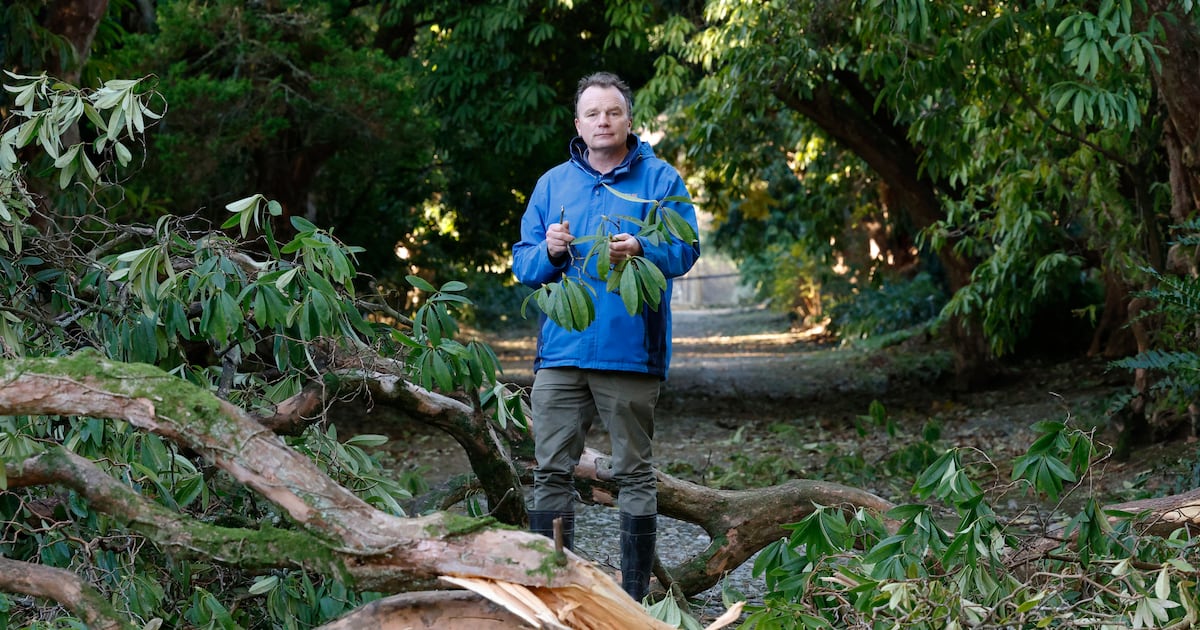
On December 22nd, to the great shock and sorrow of his family, many friends, work colleagues and fond acquaintances, the 55-year-old Wicklow-born horticulturist, gardener, plant-hunter, author and plantsman Seamus O’Brien died suddenly at his home at Kilmacurragh in east Wicklow.
It’s impossible to properly convey the scale of that loss to the world, except to say that O’Brien was a person of rare brilliance, a uniquely talented individual possessed of a first-class intellect combined with a passion for plants, an endlessly curious mind, an awe-inspiring work ethic, an impish sense of humour, an adventurous spirit and unfailing generosity. Liked, admired and respected by all who knew him or simply knew of him, by the time of his death he had already secured his reputation as one of the giants of Irish horticulture.
It’s painful to imagine how much more he could have achieved had he lived to a grand old age, especially as regards Kilmacurragh, the sister botanic gardens of the OPW-managed National Botanic Gardens in Glasnevin, where he was head gardener since 2006.
On the other hand, there’s consolation in knowing what he left behind. Along with his writing, O’Brien’s work at Kilmacurragh remains as his love letter to the natural world and a measure of his brilliance as a first-rate plantsman, garden historian and conservationist, as well as a visionary regarding its future role. Kilmacurragh was purchased by the State in 1996 and home to a unique collection of woody plants amassed by its previous owners, the Acton family. By the time O’Brien got his hands on it, the centuries-old historic estate had suffered many decades of neglect. Only he could have brought his very particular combination of rigorous historical research, hard work, courage, knowledge, chutzpah and 21st-century plantsmanship so wonderfully to its rescue.
As a gardener he always had one eye on the past and one on the future, another valuable lesson for us all. No one could have been a better archivist of Kilmacurragh or a more loving keeper of its history. As a gifted historian, its life story and the stories of the plants that grew there fascinated him, as did the stories of those who helped to introduce them into cultivation, planted them or tended to them. The announcement by the OPW, just a few weeks before his death, that funds had been secured for the restoration of Kilmacurragh House – something for which he had steadfastly campaigned for many years – brought him enormous joy.
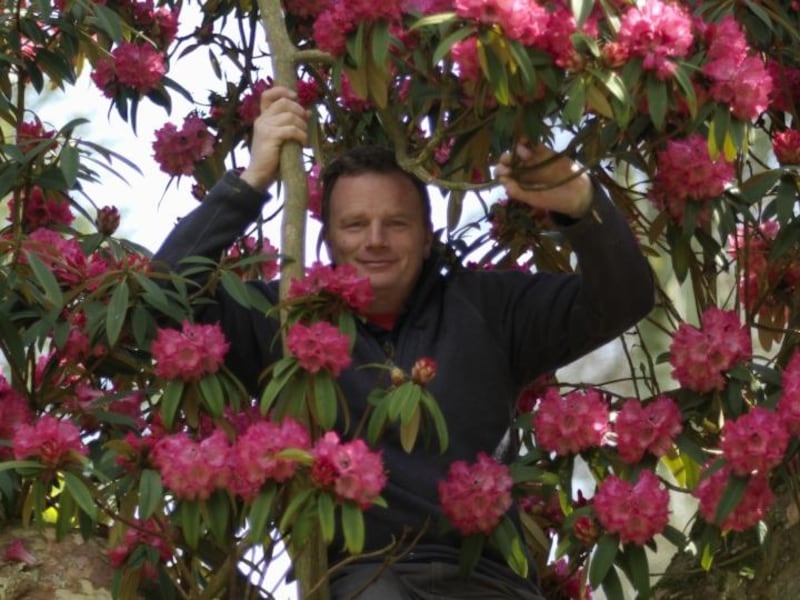 Seamus O’Brien. Photograph: Richard Johnson
Just a year earlier, when Storm Darragh destroyed historic plantings at Kilmacurragh in late 2024, he had mourned the loss of some of its ancient trees as if they were family members while simultaneously plotting myriad tactically clever ways in which to prevent similar events from wreaking similar devastation in the future. This included focusing on native, vigorous, resilient species grown from locally sourced seed in order to support biodiversity and disease resistance, which were increasingly used at Kilmacurragh as new, all-important, extended windbreaks. To position the latter as strategically as possible, he consulted with climate-change specialists to help anticipate any changes in the prevailing wind direction of future fierce storms. This clever, multipronged approach is one that all Irish gardeners can similarly employ as a way of helping to future-proof our homes and gardens against the growing threat of severe weather.
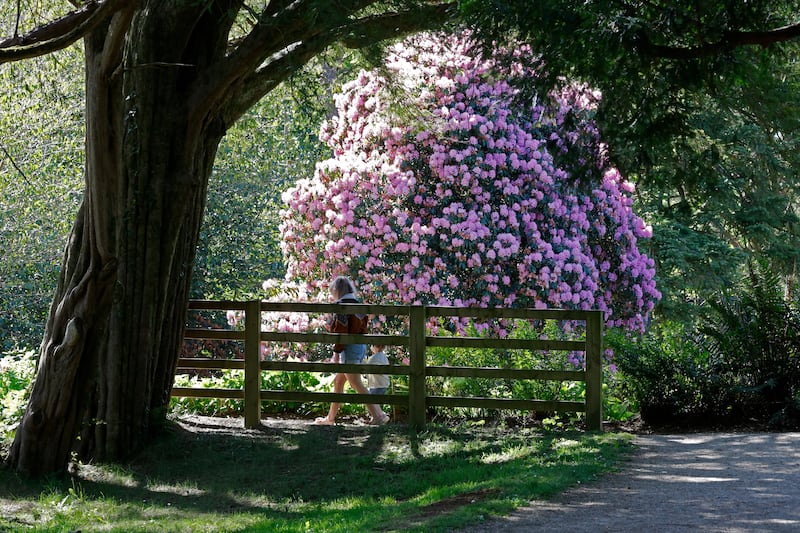 Visitors at the National Botanic Gardens, Kilmacurragh, Co Wicklow. Photograph: Nick Bradshaw
Many years before the consequences of climate change for our gardens, parks and wild places became clear, he also foresaw Kilmacurragh’s role as one of the important Noah’s arks of international botany, a public garden that could potentially help conserve non-native species already under serious threat in their native habitats.
In his role as a modern plant hunter and adventurer, following in the footsteps of horticultural heroes such as Augustine Henry, Joseph Hooker and Frank Kingdon-Ward, he often witnessed that same loss of biodiversity first hand. Those trips took him through China, Nepal, Tibet, Myanmar, Bhutan, the Sikkim Himalaya, Taiwan, Chile and Tasmania over the last number of decades, where he simultaneously marvelled at the beauty of seeing much-loved Irish garden plants growing en masse in their native habitats.
He was also one of the first to sound the alarm in terms of the growing threat to biosecurity posed by the modern international trade in plants, and the spectre of new plant pests and diseases that comes with it. Yet in the same breath, he simultaneously recognised the incalculable botanical riches of species introduced into modern cultivation by past generations of plant hunters and gardeners.
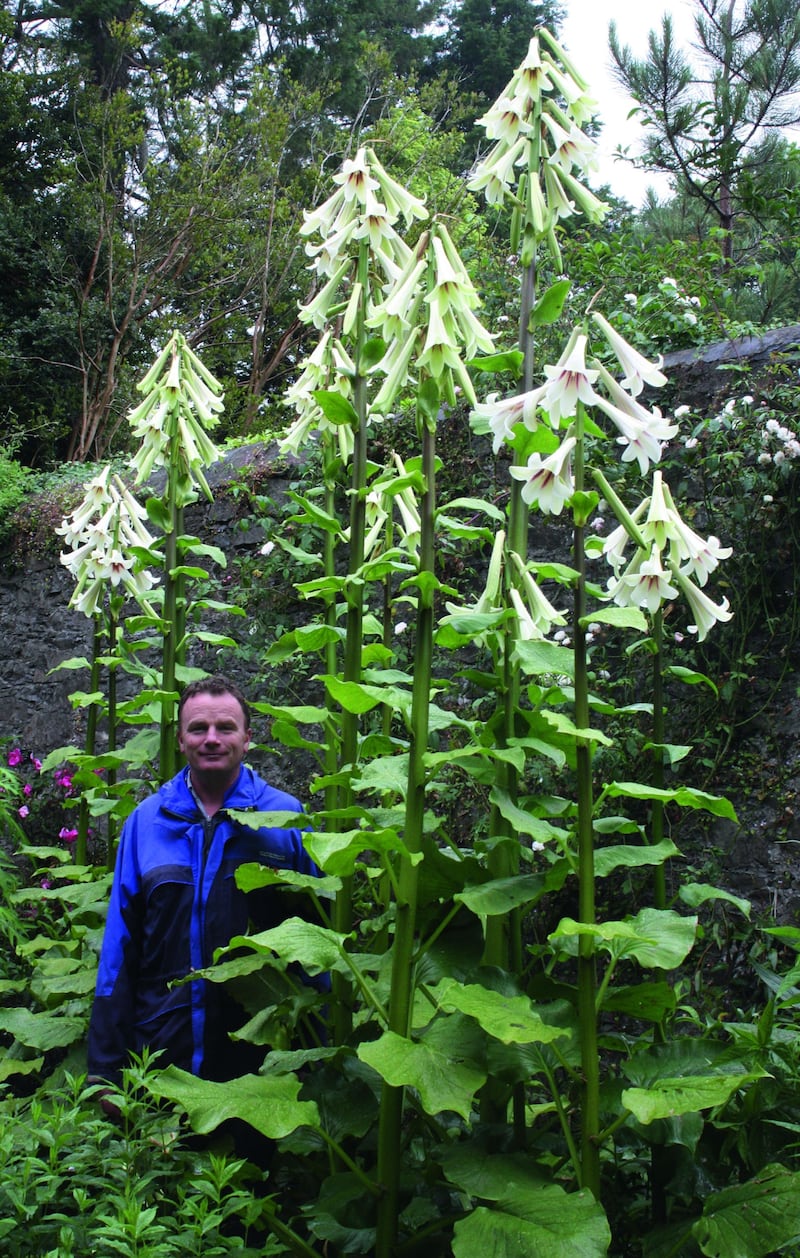 Seamus O’Brien among the giant Himalayan lilies at the National Botanic Gardens at Kilmacurragh
As a result, O’Brien treasured the rich history of Kilmacurragh’s plants, such as the Magnolia campbelli that made the thousands-of-miles journey, partly by Wardian case, from Darjeeling in India to Kilmacurragh’s walled garden back in 1876. Yet he was also clear-eyed in recognising how much the modern horticultural world has changed since that era of the great planthunters.
He was similarly prophetic in anticipating how the restoration of Kilmacurragh’s native wildflower meadows would showcase both their charm and their ecological importance to the country’s growing tribe of environmentally minded gardeners. Yet at the same time, he was no purist, instead following what he considered to be a more accommodating, “Robinsonian” approach, one where he was happy to embellish the meadows’ native beauty by planting ecologically appropriate non-native species. It’s yet another important lesson that Irish gardeners preoccupied by a strictly nativist approach would do well to heed.
Genuinely inspirational, his enduring contribution to the world of gardening will only grow with the passing of time, as will his reputation as someone who always sought to share his love and vast knowledge of plants and of gardening as well as to encourage it in others.
After he died, a mutual friend recalled how many years ago he had shared a trip with her and her husband to the US where funds were tight and sleeping quarters were cramped. In the middle of the night, they awoke to the sound of O’Brien – a brilliant public speaker and loquacious person who always talked a mile a minute – speaking aloud in his sleep. “Would you like a cutting?” he said. Nothing, I think, sums him up better.
This week in the garden
Keep a beady eye out for early-emerging flowering bulbs such as snowdrops, crocuses and daffodils when walking on lawns or weeding beds to avoid accidentally damaging them.
Start browsing seed and bulb catalogues with a view to compiling a shortlist of the varieties you would like to grow and placing orders before must-have varieties are sold out.
Dates for your diary
2026 Snowdrop Gala, Ballykealey House, Co Carlow; Saturday, January 24th. With guest speakers including distinguished nurseryman, plant breeder and plant collector John Massey of Ashwood Nurseries in England; Callum Hallstead, head gardener of Cambo Garden in Scotland; and Dave Hardy of Esker Farm Daffodils in Co Tyrone, plus specialist nursery plant sales on the day. Tickets, €145, on sale until today, the 17th. altamontplants.com