
We are constantly being advised by experts to retrofit our homes to make them more energy efficient, but how many experts follow their own advice? Kieran McCarthy does.
The building engineer who recently travelled around Ireland advising on energy upgrades for RTÉ’s Heat My Home series, not only retrofitted his own home, but he also retrofitted his grandmother’s home back when a solar panel was still a rare sighting in Ireland.
“The first house I would have renovated really, is my grandmother’s old house in Cork,” he says. That was in 2003/2004 – long before deep retrofitting had entered the vocabulary.
“It was just insulation and putting in double glazed windows. Then I was renovating houses here, there and everywhere which culminated in my own house, which I renovated at the tail end of Covid. That was a deep retrofit.”
Nothing was overlooked when it came to making his 1950s dormer bungalow in Cork more energy efficient. It had a single block external wall structure, which is harder to insulate than a cavity wall.
“So you have to either insulate from the outside or the inside. We did external insulation. We took out the suspended timber floors and came back up with hard-core and insulation and radon and concrete with underfloor heating,” he says.
“We put in a new air to water system. We put in a new heat recovery ventilation system. We put in air tightness membranes and new attic insulation.”
He used recycled paper for the attic and timber frame insulation. “I found it very good, actually, and it keeps the house quite cool in the summer, which is obviously very important. That is a concern people have lately, that houses are overheating in the summer.” He also installed solar panels with battery storage and installed triple glazed windows. All that work brought the house from an E1 to an A1.
[ Heat My Home on RTÉ One: Welcome to income redistribution, Irish styleOpens in new window ]
The improved air quality was the first thing he noticed. “We have mechanical heat recovery ventilation so you have an ongoing air quality improvement. You’re bringing in fresh air from the outside and you’re expelling stale air from the inside. With the heat exchange, you remove the heat from the stale air before you expel it, and you use that to preheat the fresh air as you bring it in.”
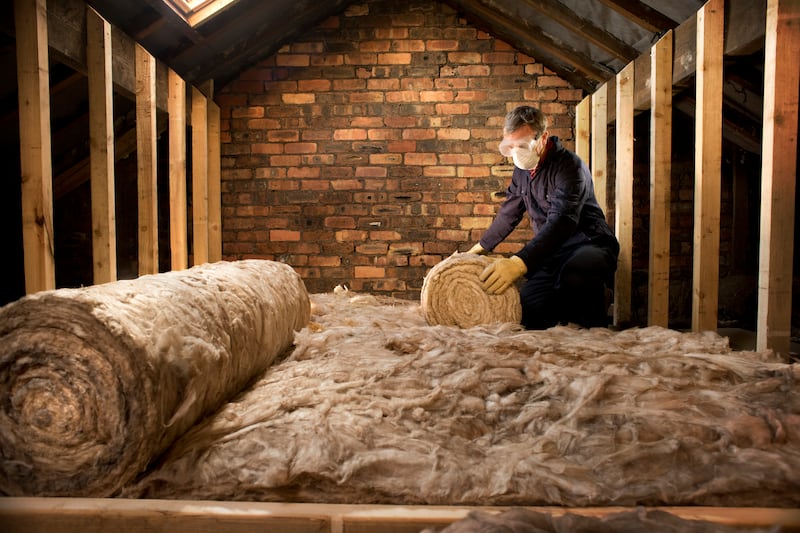 If you don’t have the budget for a deep retrofit, there are many affordable measures you can take to save energy. Photograph: iStock
When he spoke to this newspaper it was during a cold snap, but he was wearing a short sleeve shirt at home and the app was showing that the heating had not turned on in the kitchen. It kicks in when the temperature drops below 18 degrees.
“The thermostat is reading that the kitchen is already warm enough. The heat in the kitchen is coming in through the glass. That solar gain even reaches the concrete floor and that’s a bit of a heat store. And every time you use the oven, it lets out a bit of heat.”
He says it’s difficult to accurately compare the cost of running the house before and after the work.
“All our energy inputs are electrical now and I sold my diesel jeep and bought an electric car, which is our biggest draw on electricity. By the time I had all the works done, we were out of Covid but then inflation hit, and the war in Ukraine and more inflation, so we never saw really low energy bills.”
But, he says if he hadn’t done the work, he’d still be footing diesel and maintenance bills for the car, higher road tax, and oil and solid fuel bills for the stove, which they removed. “And of course I’d have inflated electricity bills.”
After crunching the numbers, he says it’s marginally cheaper to charge the electric car at night time to avail of the night saver rate, thus allowing him to sell more electricity back to the grid during the daylight hours.
Given his vast experience working in this area, you would think that upgrading his home would have been an easy task, but even he acknowledges the amount of work involved. The Sustainable Energy Authority of Ireland (SEAI) has a range of grants available for homeowners who do energy upgrades. He says the grant application for a deep retrofit project is very detailed and technical and so you need to use the One Stop Shop service offered by the SEAI to apply for the grant. It offers a directory of contractors who do this work. He then used his own SEAI-registered contractors to carry out the building work.
“There was a fair bit of work involved with me co-ordinating the contractors and making sure everything lined up with SEAI specifications. And then there was a lot of work afterwards in all the documentation of everything we did.” He says the SEAI grants covered about 30 per cent of the cost of the retrofitting.
If the upgrade involves a home extension, as his project did, the new build is not covered by the grant, so that element must be excluded.
“There is a lot involved in it and the more complex the project, the more complex the retrofit. If you just want to improve the Ber of your house, then definitely the One Stop Shop is ideal to do all that work. They will assess it, go through the grants and liaise with the SEAI.”
If you don’t have a budget for a deep retrofit, he says there are many affordable measures you can take to save energy. Getting rid of draughts around windows or doors or cracks in masonry is an easy win.
“You can seal draughts with silicone if it’s around a window. You can seal draughts with an airtightness tape, which you can just buy in a builders’ merchant or a hardware store. For a very big crack you might fill it with expanding foam or a bit of sand and cement. If you have pipes under a sink or bathroom, they are often areas where draughts get in and they are easy to fill. But it’s always important to make sure any vents that are there to create a little bit of active ventilation in your room aren’t sealed up.”
[ We have to talk about home heatingOpens in new window ]
And if you have a small budget and can do one thing, what would he recommend?
“Insulate your attic. Warm air rises, so that’s the first place you want to be getting remedied and it’s the easiest and most cost-effective insulation to get installed and get a grant for. But if you are insulating the attic, make sure all your tanks in the attic and all your pipes leading to the tanks are then insulated because it becomes a cold space.”
If you are considering a big-ticket item, such as external insulation, he advises caution if it materially alters the look of your house. “I’d get advice from an engineer or architect or send a letter to your planner saying, ‘I’m thinking of getting this work done. Am I okay with that?’
Whether you want to install solar panels, insulate your attic or do a deep retrofit, the Sustainable Energy Authority of Ireland has a grant for that. Between 2015 and October 2025, the measures most in demand for grant aid were solar panels, attic insulation and cavity wall insulation. During that period, SEAI grants supported 317,311 home upgrades, with almost 81,00 homes achieving a Ber of B2 or higher.
The National Home Energy Upgrade Scheme offers grants for a complete home energy upgrade, managed by the One Stop Shop service with the grant deducted from the cost of works upfront. If you want to take a step-by-step approach, the Better Energy Homes and Solar PV scheme offers individual energy upgrades.
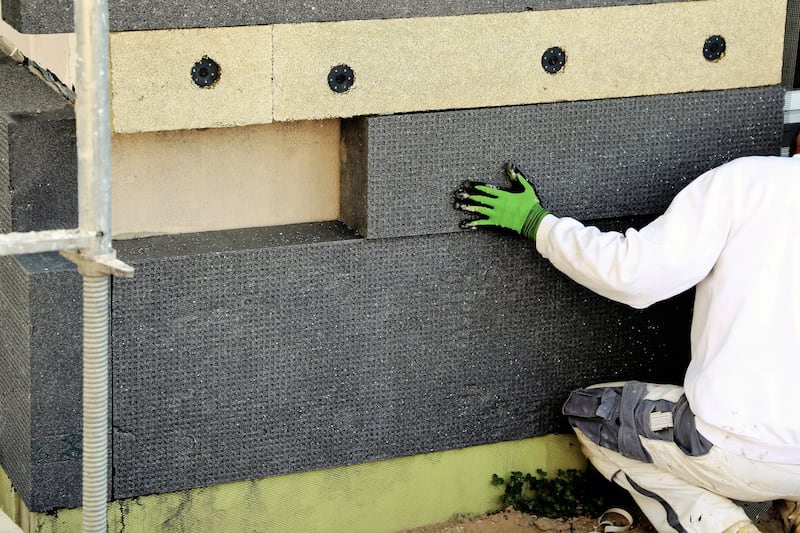 External insulation blocks applied to the outside walls. Photograph: iStock
For example, the grant for external wall insulation for a semidetached/end of terrace house is €6,000 while SEAI figures show that the median cost of this work is €23,333. Insulating the attic of the same house attracts a grant of €1,300 while the median cost of this work is €1,983. The solar panel (up to 4kWp) grant for a semidetached/end of terrace house is €1,400 – €1,800 while the median cost of this work is €8,600.
Source: The Sustainable Energy Authority of Ireland. See seai.ie for the full list of grant supports for home energy upgrades