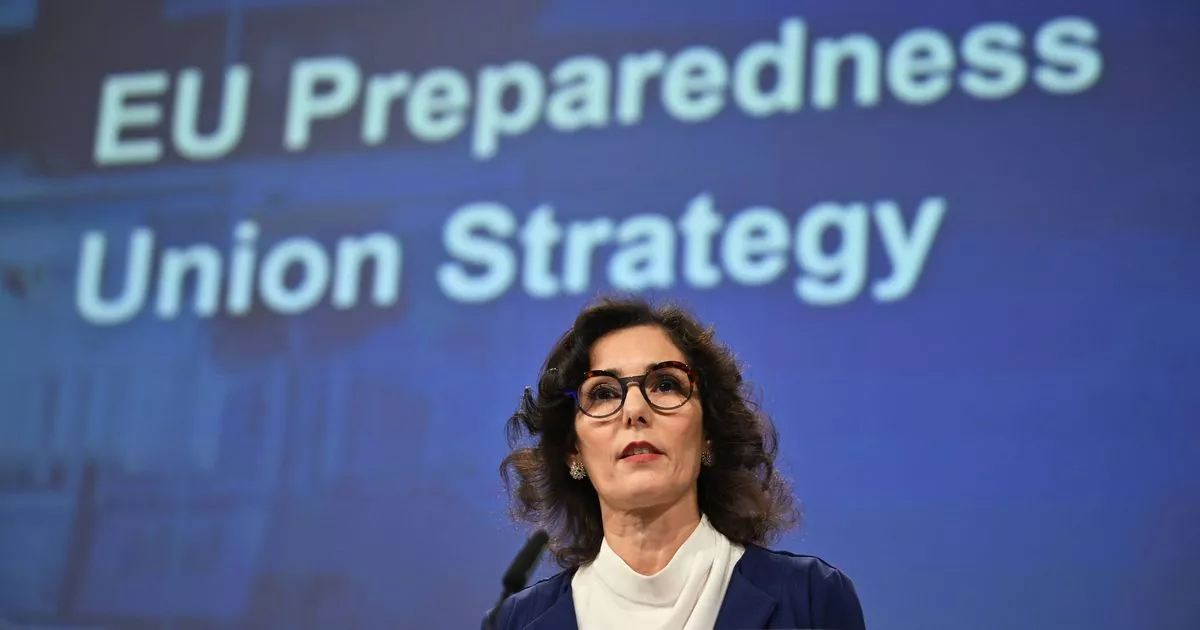
The European Union has urged households to stockpile at least 72 hours’ worth of essential supplies, including food, water and medicine, in case of a crisis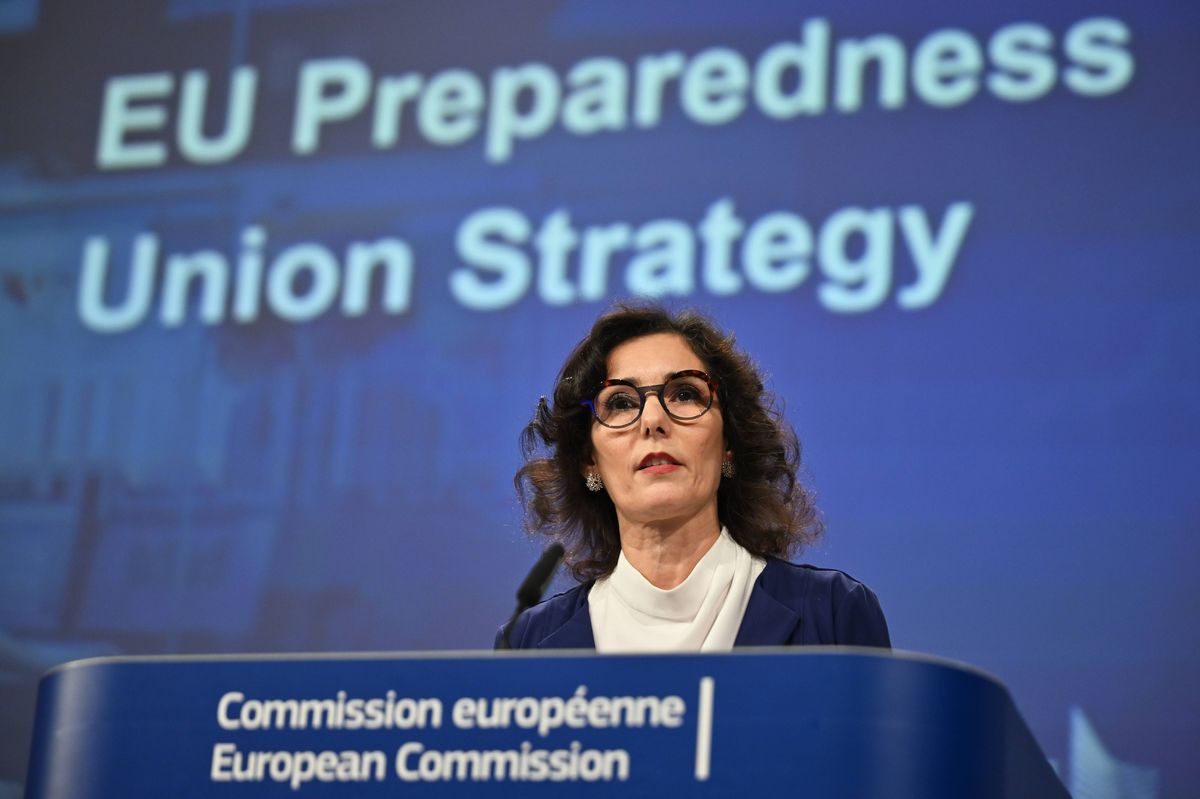
March 26, 2025 – European Commissioner for Preparedness and Crisis Management Hadja Lahbib hold a press conference in Brussels, Belgium urging all EU citizens to start stockpiling essentials(Image: Dursun Aydemir/Anadolu via Getty Images)
Irish households are being urged to have at least 72 hours’ worth of essential supplies on hand as global instability concerns persist.
This call to action was initially made by the European Union in March 2025 and remains pertinent today, given the escalating tensions between Russia, the United States and other world powers.
People are advised to ensure they have basic necessities such as food, water and medicine to prepare for any unexpected crises – ranging from wars and cyberattacks to energy disruptions or disease outbreaks.
Hadja Lahbib, the Preparedness and Crisis Management Commissioner, outlined the EU’s new strategy for handling future disasters, stating: “Today’s threats facing Europe are more complex than ever, and they are all interconnected.”
While not wishing to cause undue alarm, Lahbib emphasised the importance of being prepared “to make sure people have essential supplies for at least 72 hours in a crisis”, reports the Irish Mirror.
At present, geopolitical tensions continue, including renewed conflicts in Ukraine, heightened rhetoric between Russian President Vladimir Putin and NATO, and the ongoing influence of US President Donald Trump on global politics.
NATO Secretary General Mark Rutte cautioned last year that Russia could potentially launch another attack in Europe by 2030.
Lahbib recommended households to stockpile six key items: Food, water, torches, ID documents, medicine and shortwave radios.
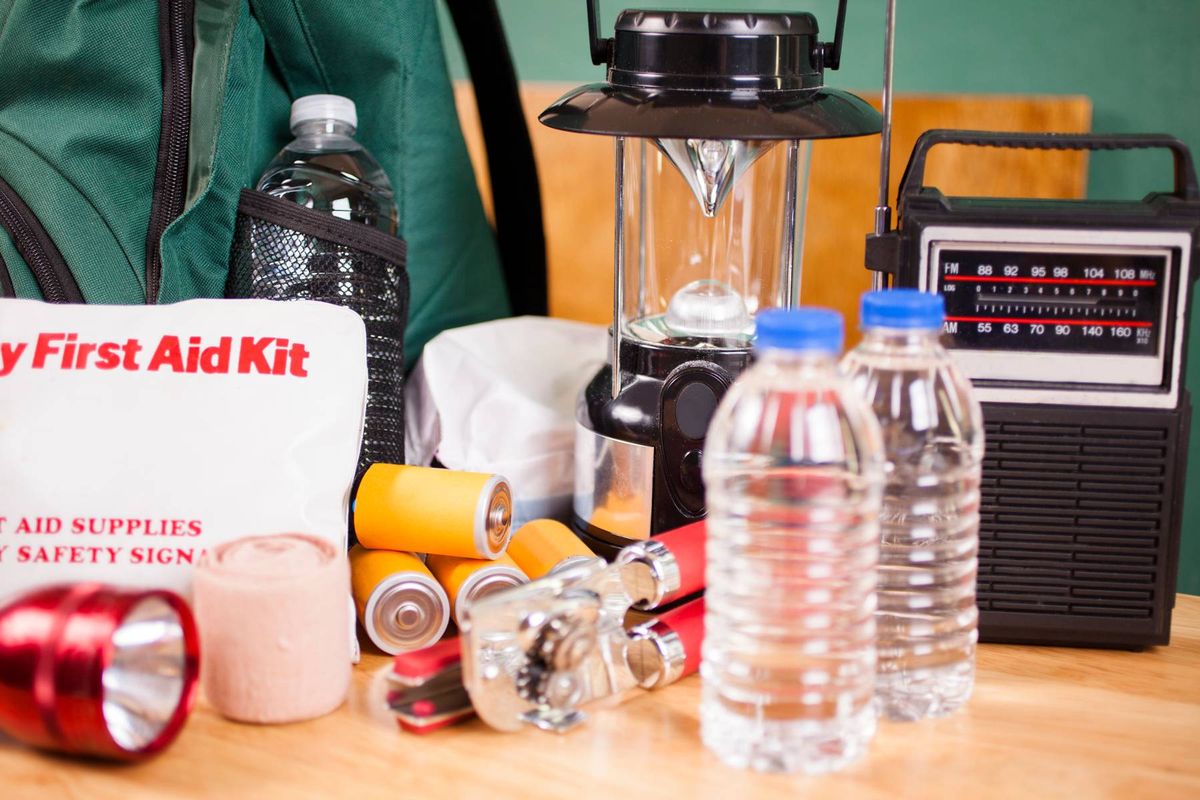
Households are urged to have a survival kit(Image: Getty Images/iStockphoto)
She also emphasised the need for EU-wide coordination, advocating for a “strategic reserve” of essential resources including firefighting aircraft; medical, energy and transport equipment; and specialist assets to counter chemical, biological, radiological and nuclear threats.
The EU’s strategy reflects arrangements already operating in nations such as France, Finland and Sweden. In 2024, Sweden revised its Cold War-era civil emergency guidance “to better reflect today’s security policy reality”, incorporating preparations for a possible nuclear attack.
Nevertheless, the standard of crisis preparedness differs across EU member states, and the commission is pushing for improved coordination to guarantee a swift, effective response to any emergency. Lahbib added: “We can no longer rely on ad hoc reactions.”
Join our Dublin Live breaking news service on WhatsApp. Click this link to receive your daily dose of Dublin Live content. We also treat our community members to special offers, promotions, and adverts from us and our partners. If you don’t like our community, you can check out any time you like. If you’re curious, you can read our Privacy Notice.
For all the latest news from Dublin and surrounding areas visit our homepage.