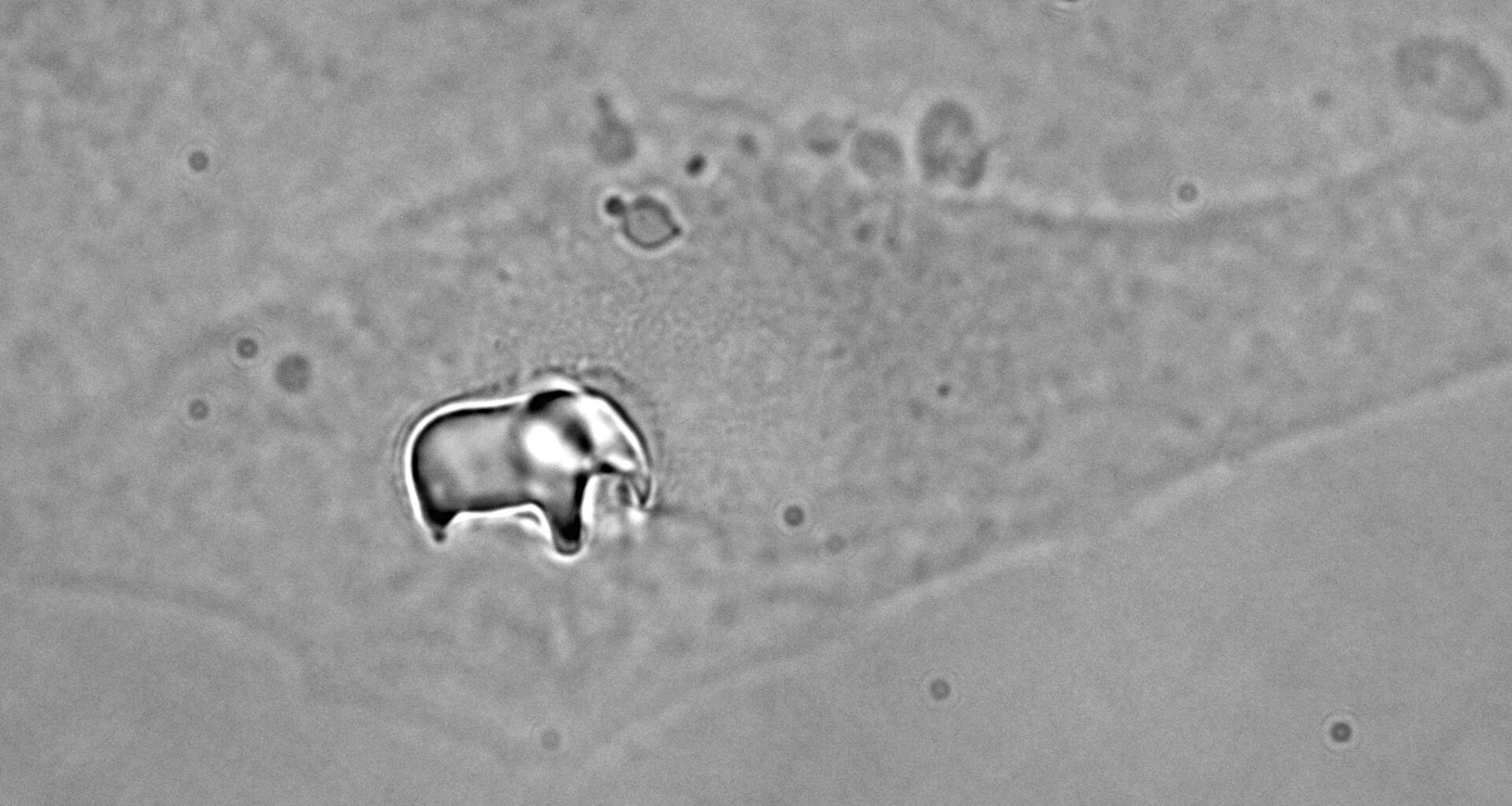
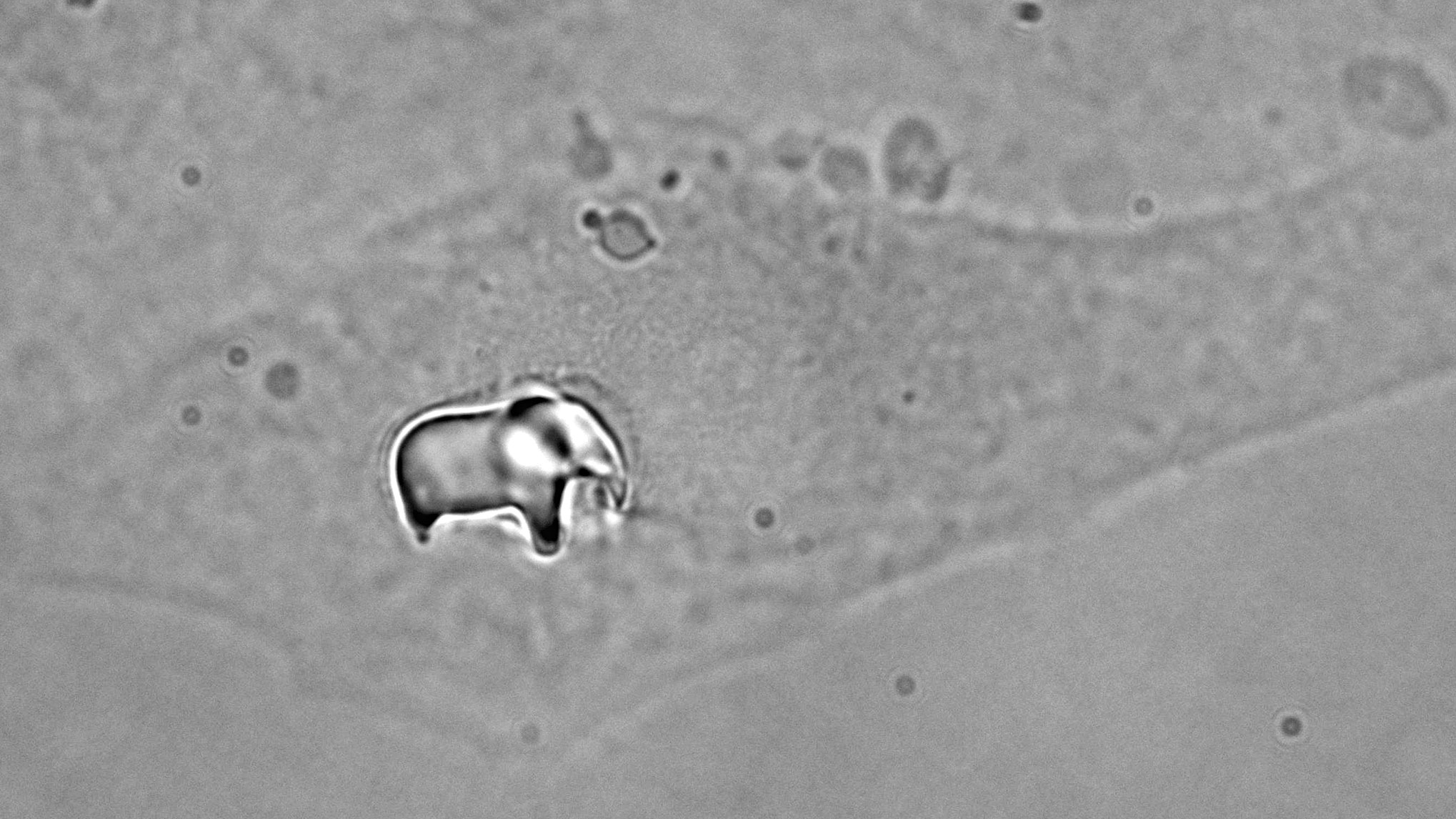
An elephant figure on a grainy gray background.
Credit:
Adv. Mater.
What do you do when you know how to work with biological materials and are experts in 3D printing at small resolutions? Create this 10 µm long elephant inside a living cell, of course. “We were just curious if this can be done because nobody has ever done it before,” says Maruša Mur, a biophotonics researcher and postdoctoral fellow in Matjaž Humar’s lab at the Jožef Stefan Institute.
The team tested dozens of light-curable polymers used in 3D printing and found one that was biocompatible. After injecting a droplet of the material into a cell, they scanned a tightly focused infrared laser beam on it to polymerize it and create a variety of structures, including optical gratings, barcodes for cell tracking, and elephants. Some cells died because their membranes tore, but many lived normally and even divided, passing on the little elephant treasure to their daughter cells.
Credit: Adv. Mater. Read the paper here. (2026, DOI: 10.1002/adma.202519286)
Do science. Take pictures. Win money. Enter our photo contest.
See more Chemistry in Pictures.