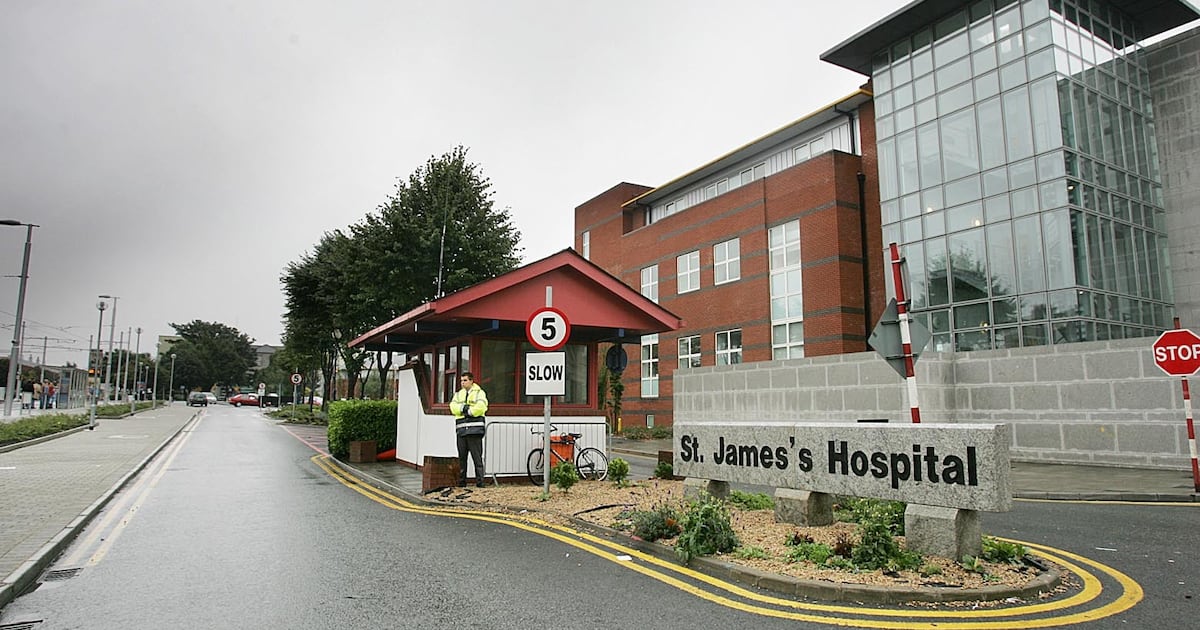
A private radiology group at St James’s Hospital received payments of nearly €5 million since 2017 without a public tender process or a contract, the Dáil Public Accounts Committee has been told.
Eighteen doctors who are employed by the hospital were directors of the private group.
The Comptroller and Auditor General reported last year that €1.4 million had been paid to this private radiology group outside of procurement rules in 2024.
On Thursday, St James’s Hospital chief executive Mary Day said about €4.7 million was paid over an eight-year period.
She said initially the hospital had entered into an arrangement with this private group in 2017 to provide mammography services, as St James’s was unable to meet a 10-day deadline for dealing with patients requiring urgent breast cancer care.
The amounts paid to the group later increased following the Covid-19 pandemic on foot of emergency funding provided by the National Treatment Purchase Fund. She said this funding ceased in 2024.
Ms Day said the private radiology service had a licence to operate from part of the St James’s campus. The committee was told annual rent of about €52,000 was paid.
She apologised to the committee on behalf of the hospital for not following official procurement rules.
Ms Day told James Geoghegan of Fine Gael that governance was not as strong as it should have been, but it has now been strengthened.
“I wish to apologise on behalf of the hospital for the fact that some radiology services in 2024 were not procured through a public tender process. We did not meet the standards expected of us.
“I wish to assure the committee that this was driven by urgent patient needs in cancer, in particular, but also in cardiology, to prevent delayed diagnosis and to deliver the best possible care to our patients.
“Occasionally, due to unforeseen or unpredictable circumstances, we in the hospital have to balance the need for public procurement with the need to respond immediately to urgent demand for scans in order to avoid potentially harmful delays in the diagnosis and treatment of our patients.
“For example, in 2024, there were 28 adverse incident reports at St James’s Hospital related to delayed diagnosis associated with constrained access to diagnostic imaging,” said Ms Day.
She said the demand for diagnostic scans was growing exponentially. She said the hospital needed an additional 12 consultant radiologists.
Prof John Kennedy, medical director of the Trinity St James’s Cancer Institute, told the committee there has been a 15 per cent increase in the population over the last decade and a 36 per cent rise in people predominantly aged over 65 who developed cancer.
He said there was a great success story to tell regarding survival rates for patients with cancer, but there was also a relentless increase in demand, particularly in relation to radiology and pathology.
Ms Day said there was a mismatch of about 30 per cent between demand and capacity at St James’s.
“We do not have enough capacity in the system to meet the exponential increase in patient demand for diagnostics,” she said.
Ms Day said 12 of the 18 consultants who were directors of the private radiology group did not include these details on their annual ethics declaration. The other six did not make returns.
She said it was regrettable that declarations of interest were not submitted by everyone in the commercial company concerning payment for the radiology services, but this was later corrected.
Ms Day said the consultants concerned had increased their core activities and saw more patients during their public working hours.
“The radiologists did not have any influence over which patients had access to outsourced diagnostics. This was allocated by the hospital’s scheduling office, which focused solely on time-sensitive referrals, particularly for cancer staging.
“Patients were selected transparently on the basis of clinical need. The additional capacity created by these services has been vital in providing timely and effective access for patients on cancer pathways, in particular.”
Separately, it emerged that St James’s Hospital paid €179,000 in 2023 as a termination payment to an employee following a disciplinary process.
Questioned by Joe Neville of Fine Gael, the hospital said there was a process and the payment was governed by a confidentiality agreement.
St James’s chairwoman Catherine Mullarkey said: “We felt it was in the best interest of the hospital for a termination payment to be made.”