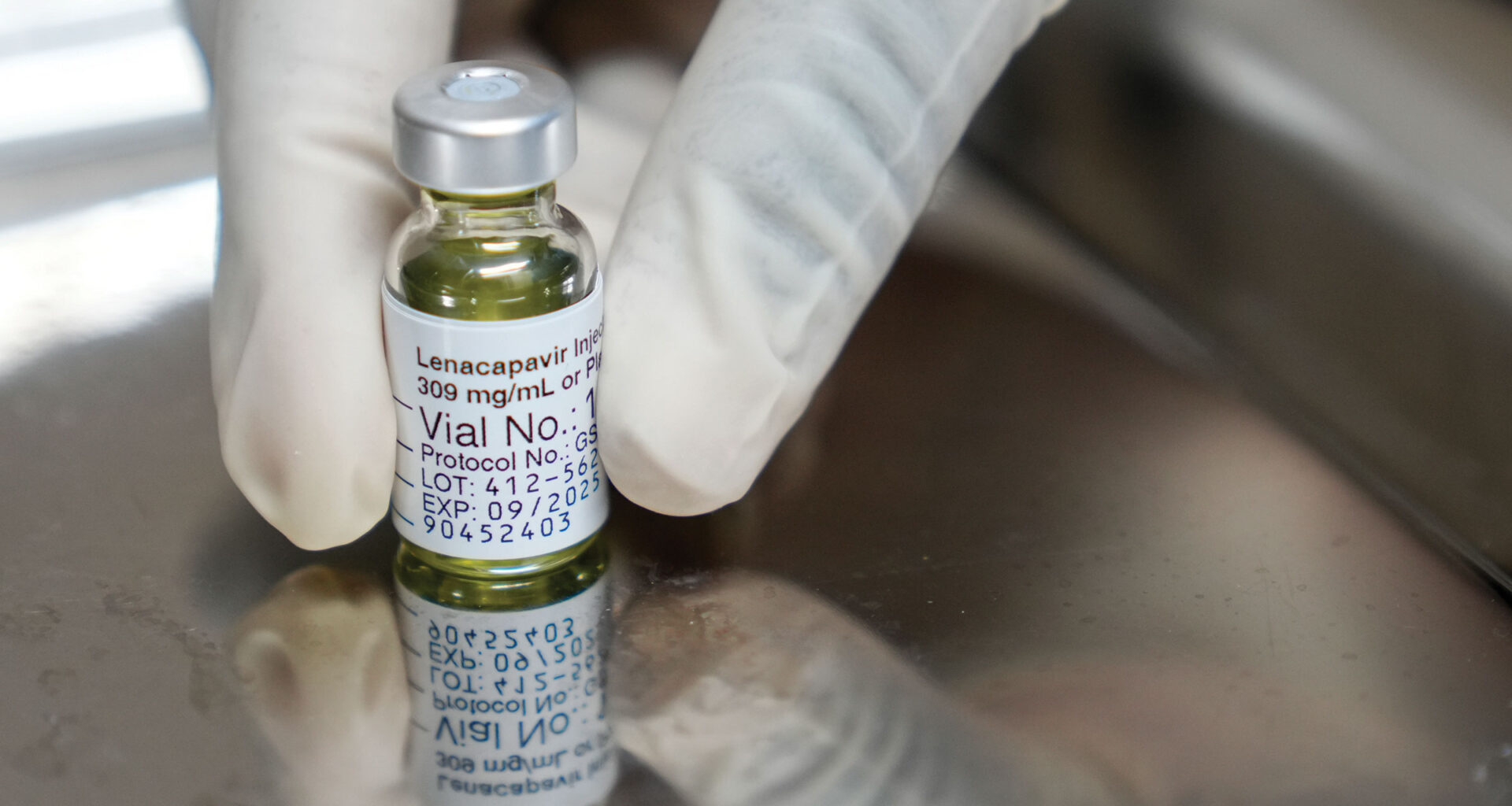
Since its first approval in 2022, Gilead Sciences’ lenacapavir—a twice-yearly injectable—has come to be a potential game changer for preventing HIV and for treating multidrug-resistant HIV, where it’s used in combination with other antiretrovirals. The drug targets the HIV-1 capsid protein and inhibits viral replication.
Still, during clinical trials and in in-vitro studies, clinicians and researchers noted the emergence of resistance to the drug. “Across all of those [trials], resistance has been a rare outcome,” says Jared Baeten, senior vice president of clinical development and virology head at Gilead Sciences. Now, in a recent study, Gilead scientists and coauthors found that when resistance occurs, it frequently results in a less fit virus with substantial replication defects (Sci. Transl. Med. 2026, DOI: 10.1126/scitranslmed.aea0947).
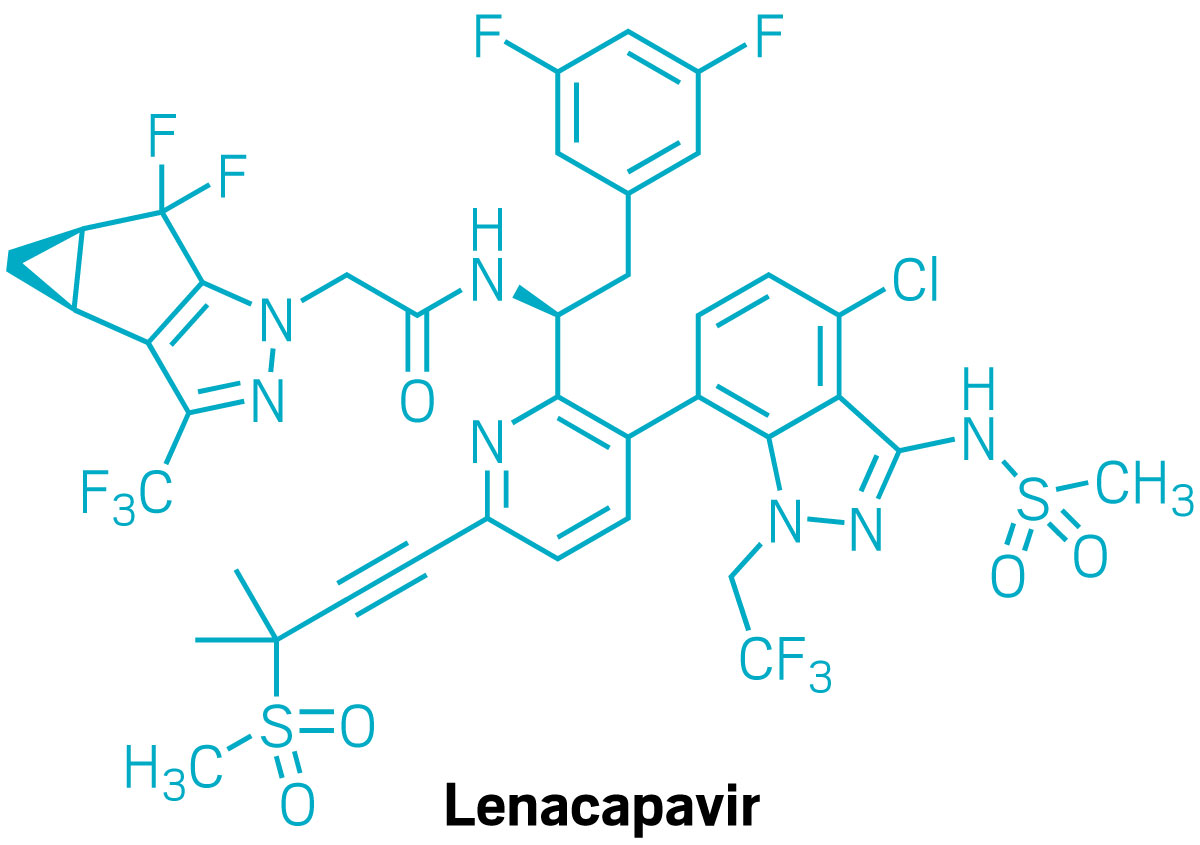
Structure of lenacapavir.
While that’s reassuring, “The most important thing for an individual patient living with HIV is to keep their viral levels undetectable,” Baeten says. But the findings of the study can help scientists develop the next generation of drugs with improved resistance profiles “because we always want to stay ahead of the virus,” he adds.
The research team notes that the main risk for developing resistance was nonadherence to antiretrovirals that patients needed to take daily alongside lenacapavir for HIV treatment. In the journal paper, the researchers characterized resistance-associated mutations in the virus’s capsid protein and found that the M66I mutation, for instance, reduced the virus’s replication capacity to 17% in one trial participant. But over time, accumulation of additional mutations, N74D and A105T, restored viral fitness to 34%.
In a commentary accompanying the study, virologists Manish Chandra Choudhary and Jonathan Li at Harvard Medical School, who weren’t involved in the research, note that lenacapavir resistance “is not static but a moving target.” They also highlight the importance of using companion active antiretrovirals consistently during HIV treatment and the need for resistance surveillance and testing.
Gilead’s researchers are currently working on developing longer-acting drugs that can be used in combination with lenacapavir. Their hope is to overcome the adherence challenge posed by antiretrovirals that need to be taken daily.

Priyanka Runwal is an associate editor and an award-winning environment and health reporter at C&EN.
Chemical & Engineering News
ISSN 0009-2347
Copyright ©
2026 American Chemical Society