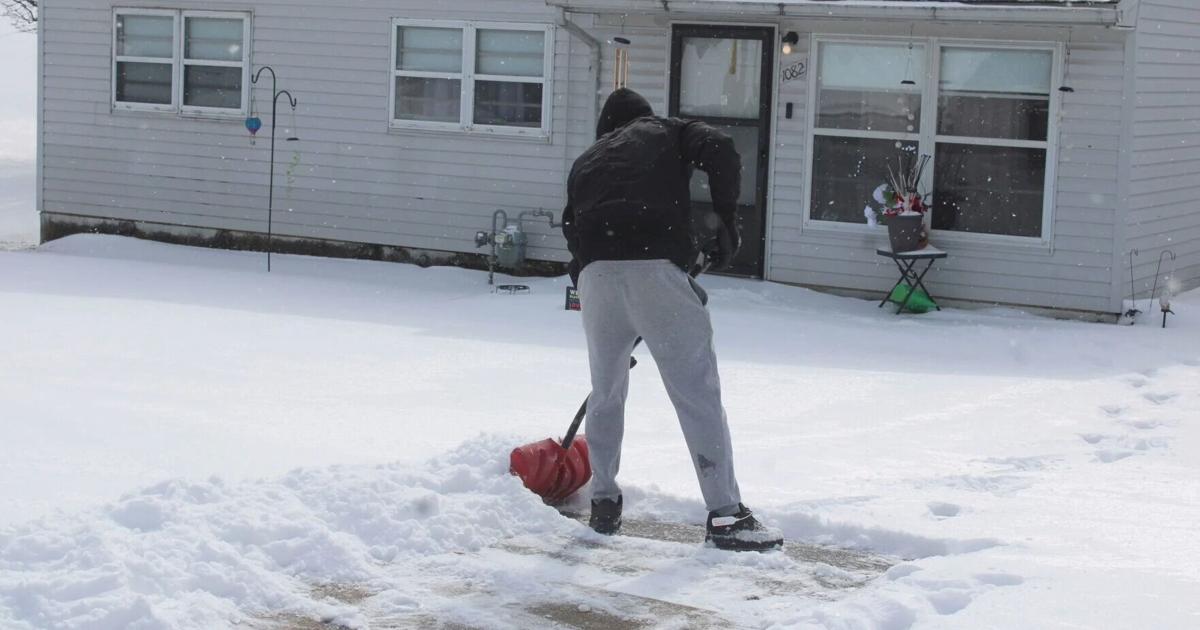


Donovan Wilson shovels snow in a driveway in a Paducah neighborhood on Feb. 19, 2025. This common winter chore can pose a variety of health risks, from slips and falls to heart concerns for those over 40.
WILL SPENCER | Sun file
With a large winter storm set to bring freezing temperatures and snow, it is important to prioritize your health and stay warm.
Dangers to the body, like hypothermia and frostbite, can appear when someone spends too much time outside during cold weather. These injuries occur when much of the body’s circulation goes toward important organs, due to the body’s need to stay warm to function correctly.
While the organs may stay safe, the outer parts of your body, like hands and feet, have an increased chance of damage due to the cold. Sometimes, due to decreased feeling in the cold, you might not even feel the danger coming.
While the risks to exposed parts of your body are high, they are not the only risks to your health when you go outside during extreme cold.
Dr. Timothy McDermott, the medical director of Mercy Health – Lourdes Hospital’s cardiology department, warns that the extreme cold can affect your health in more ways than you might think.

The cardiology department is located on the fourth floor of the Mercy Health Medical Office building.
MAX DAVIS | The Sun
“Cold, like the type they’re planning for this weekend, affects the body in numerous ways,” McDermott said. “Number one, your lungs. If you have any type of chronic lung disease like asthma or emphysema, [chronic obstructive pulmonary disease], you’re going to be more susceptible to more wheezing. Bronchioles constrict, making it harder to breathe, and increased work of breathing. That kind of thing also makes you more susceptible to forming blood clots in this cold weather, platelets and other things in the blood tend to stick together more frequently and more cohesively than they do when it’s all nice and warmed up.”
These types of constrictions make for more heart attacks and other heart problems during the cold. McDermott warns against excessive activity during this weather, especially if you have preexisting heart issues or are older.
“From a heart standpoint, you know, in this type of weather, you’re having to work that much harder, heart rate may increase, like if you’re out shoveling snow, heart rate increases more than it would normally,” McDermott said. “Blood pressure may go up, and all of these factors may affect your heart all at once. And you know, people may experience a higher likelihood of having a heart attack in weather like this. So it’s important to stay nice and warm, and it’s important, you know, if you’re not accustomed to vigorous physical activity, that maybe this is not the time to start going outside and doing any, you know, vigorous chores. Maybe leave that for a later time.”
If you have to go outside, but you have a preexisting condition like heart disease, COPD, asthma or emphysema, McDermott advises being more careful than normal and trying to stay warm.
“Be more sensitive and aware of those types of things, especially in this winter, because in this type of weather, there will be many people who get caught who may end up in the hospital having some significant issues with their heart,” McDermott explained.
McDermott also warned of nerve damage caused by the cold. Dangers like trench foot and gangrene are more likely in winter events like these, when people may stay outside for too long.
“Just to be very sensitive and aware of that, that if you start having any pain or discomfort or altered feeling, then you may need to seek medical attention for that,” McDermott said. “People don’t always think about that so much. And there are a lot of patients out there who have poor circulation in their legs who need to be especially careful in this type of weather.”
McDermott warns that if ignored, the neurological damage can affect your body long-term.
“If you had gangrene, and you don’t end up losing your digits or your toes, but people can have residual neurological effects,” McDermott said. “You know, numbness, tingling, doesn’t feel right, chronic discomfort and sensation altered because of those type of things. So that’s something that could affect you in a long term manner.”