Financial markets are showing signs of stress, with concerns about the rise in stock market valuations based on the AI bubble.
They dipped due to transatlantic trade tensions caused by US president Donald Trump’s move on Greenland and new tariff threats. And they have revived today as Trump withdrew his tariff threats.
Who knows what happens next, but more volatility seems certain, both because of the US president’s unpredictability and the bubble valuations of AI-related shares and many other assets.
And, as well as the “unknown knowns” – such as what will happen to share prices – there are hidden corners where risk is lurking.
The International Monetary Fund’s (IMF) 2025 annual report on global financial stability, published late last year, warned that stability risks remain “elevated.”
In its latest financial stability report, the Central Bank of Ireland pointed to “a clear disconnect between economic uncertainty and the pricing of risk in financial markets.” The regulators, in other words, feel that even if markets remain buoyant, warning lights are flashing orange.
Here is what to watch.
Gold and precious metals
Gold is the classic contra-indicator. When it shoots higher, get worried. It hit the headlines during the Greenland crisis, heading to record highs, trading close to $4,900 (€4,187) per ounce on Wednesday, and on Thursday it has eased just slightly to about $4,850.
This is up 12 per cent so far this year and 75 per cent ahead of one year earlier. And despite the dialling-down of tensions, forecasters feel there is more to come, with Goldman Sachs, the investment bank on Thursday predicting a year-end price of $5,400.
The story here is clear enough. Investors looking for a safe place to put their money – a hedge against uncertainty for their – portfolios are going back to basics.
Normally a “safe haven” would be US treasuries – or government bonds – but Trump’s policies have led to concerns about this market, while inflationary fears have also led to a reversal in the Japanese bond market.
With reliable havens in short supply, gold has prospered. And silver prices have also gone on an extraordinary run, trebling over the past year to about $95 an ounce. Shortage of supply and its use in the manufacture of green technology have also been factors here.
 Old order ‘not coming back’ as Trump overshadows World Economic ForumUS government bonds and the dollar
If real trouble is going to hit, it will be reflected here. The US has a massive budget deficit and needs to borrow money to fund it and roll over maturing debt. Selling treasuries – borrowing money from investors – is how they do this and the cost the US pays for this borrowing is vital for its national finances.
This explains why US treasury secretary Scott Bessent was so touchy when a Deutsche Bank analysts wrote that Europe could sell down some of its massive $8 trillion holdings of US financial assets due to the Greenland political dispute with the US. Bessent said the bank’s chief executive had rung him to say this did not represent the views of the bank.
Some kind of organised, politically driven sell-off of US debt looks unlikely. But there is talk, nonetheless, of a “sell America” trade – speculation that Trump’s unpredictable and destabilising policies are leading investors to gradually move out of US assets over time, weakening the treasury market and the value of the US dollar.
The move by Trump to gain control of the US Federal Reserve Board and thus US interest rates has increased investor concern, as this could spur inflation and damage the value of their investments.
Meanwhile higher returns on Japanese bonds are likely to encourage investors there – also big treasury buyers – to keep more money at home. Wobbles in US treasuries and the dollar affect the world. So this is a vital area to watch, with the dollar already weakening over the past year and US longer-term interest rates edging higher.
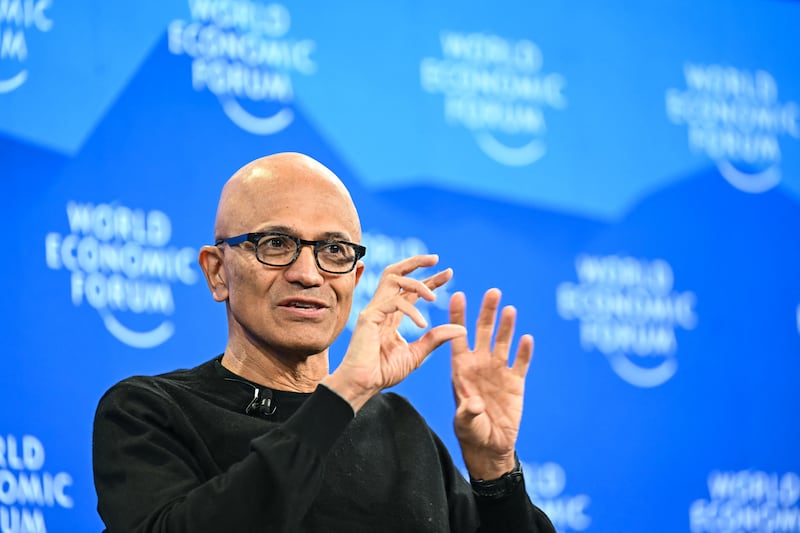 Microsoft chief executive Satya Nadella. Photograph: Fabrice Coffrini/Getty Images) Share prices
Share prices are, of course, the traditional indicator we all watch. There are two key points here. One is that investors are already concerned that prices have run ahead too far based on hopes from the returns from artificial intelligence (AI) for the big companies investing in it.
While no one disputes the importance of AI, how exactly it will boost corporate profitability among users and what companies will benefit from this – and when – still remain in question.
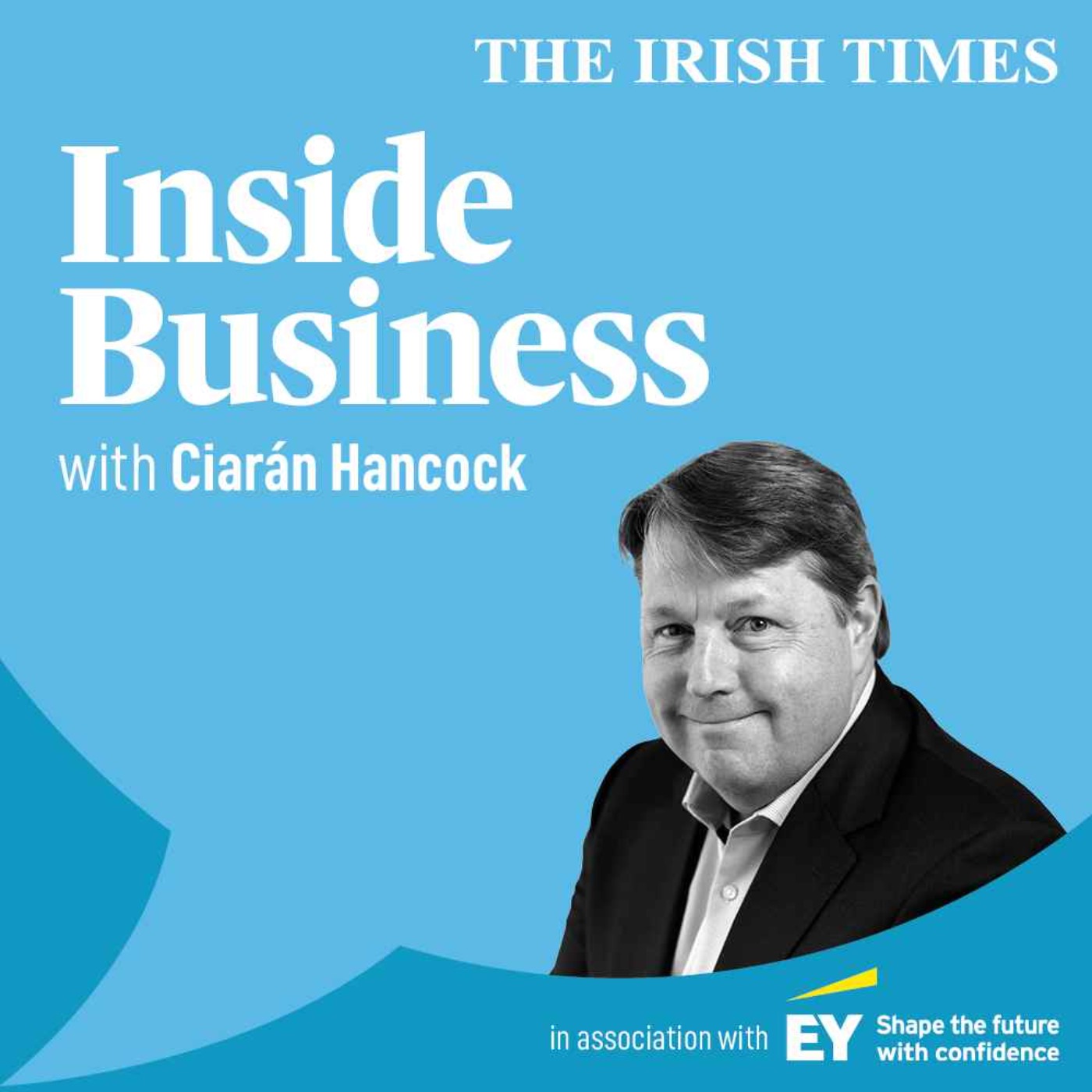
This week Satya Nadella, the Microsoft chief executive, warned that AI could become a speculative bubble unless its use spreads beyond the tech sector and is adopted by companies more generally. The second point about shares is that in times of uncertainty like this the mood can quickly turn and concerns that have been discussed for months suddenly become reasons to sell.
The US president said in his Davos speech that the stock market could “double”. This seems optimistic, to say the least. After wobbling last April and again later in the year in the face of its tariff threats, markets have moved strongly forward. Today they are stronger after tensions eased on Greenland. Tomorrow, who knows?
Crypto
Cryptocurrencies and the companies connected to them are worth watching, not only because of increased investment in the area but also because of their links to traditional finance.
And there have been signs of nerves; the price of bitcoin, for example, has fallen more than 25 per cent from its peak in early October.
The share prices of companies linked to the sector, including several who borrowed and raised equity to invest in crypto and crypto exchanges have – unlike AI shares – not recovered. And crypto tends to take an exaggerated response to political developments – bitcoin jumped 2.5 per cent in the immediate wake of Wednesday evening’s announcement of what Trump called a “framework” deal on Greenland.
Links back to more traditional finance are worth watching, too, including the fortunes of stablecoin, the crypto currency backed by convertibility back to traditional assets, usually the US dollar. Its holders, in other words, are offered convertibility back to the dollar at a set rate.
This has required the issuers of these coins – such as Tether and Circle – to buy large amounts of US assets, typically treasuries, raising fears that a demand from investors to cash in could accelerate a sell-off of dollar assets.
The US has sought to regulate stablecoin through the Genius Act last year, but regulators internationally are still trying to understand the implications and risks.
The biggest player, Tether, is based in El Salvador and ratings agency S&P recently cut its rating to weak, arguing that it held too many high-risk assets such as Bitcoin and its finances were not sufficiently transparent. The company, not surprisingly, disagreed. But if trouble hits the markets, this new world of digital currencies is an area to watch.
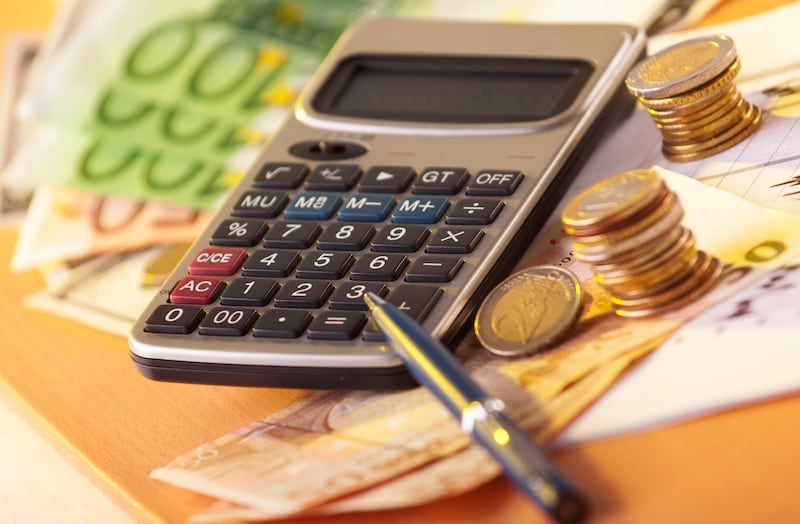 Non-bank lenders supply more than a third of the financing requirements of Irish SMEs. Photograph: iStock Non-bank finance
The last few years have seen strong growth in the non-traditional financial world, including firms that operate as homes for investment – such as property or share investment funds and those who lend to businesses or other financiers.
Non-bank lenders supply more than a third of the financing requirements of Irish SMEs through traditional loans and asset finance arrangements.
Here, too, regulators worry about risks building up through leverage and possible liquidity mismatches – companies facing demands from investors but unable to unwind longer-term investments to pay them. On the lending side, non-bank financiers would cut lending much more quickly then traditional banks if trouble hits.
The IMF reports said the spread of non-bank financiers and their role in retail investment “raise the spectre of excessive risk taking and interconnectedness in the financial system”.
The Irish Central Bank, in its report, wrote: “More broadly, in light of elevated leverage or liquidity mismatches, certain segments of the NBFI sector have the potential to amplify adverse market shocks, given they provide funding for banks, hold sovereign debt and are significant investors in global equity markets.”
The key point is that banks are heavily regulated after the financial crash, but there may be gaps in the regulation of the non-bank financial sector.