Used car valuations have long been a dark art. A dealer circles your car and, like a Shaman, delivers a monetary value.
No workings are shown, no mercy pleas heard. You are expected to accept it on faith.
That’s the consumer side of the business, but surprisingly, within the motor trade itself, opaque valuations have long existed. Trading used cars has its roots at the mart, dependent on an experienced eye that can price a bull – or a hatchback – at 20 paces.
Just like agriculture, it’s a market clearly ripe for data mining. Instinct is finally being weighed, measured and contradicted by numbers. The experienced eye is meeting the age of AI.
Instead of woolly estimates, valuations are now a cold series of figures on a spreadsheet, built up from thousands of data points and photos you took of your own car.
Of course, software is fallible. But it has introduced something this industry has often lacked: a clear basis for trust.
That matters particularly in Ireland, where, unlike the UK, there was never a deeply embedded used-car pricing bible like Glass’s Guide.
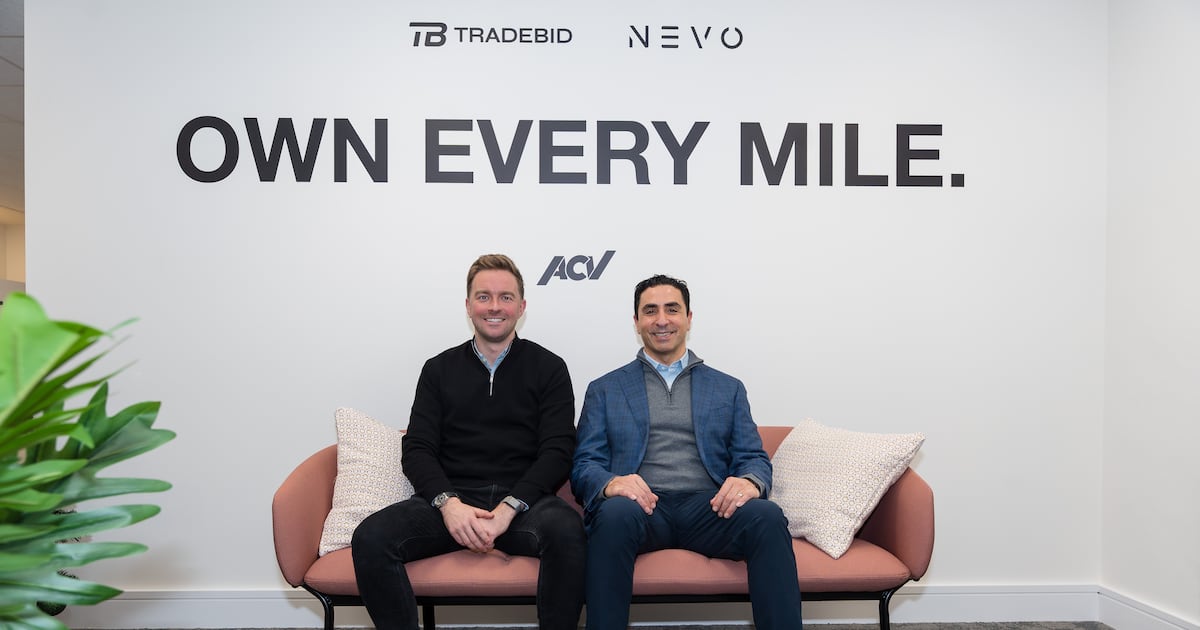
Enter Irish motoring start-up TradeBid, founded by Conor O’Boyle and Shane Ennis in 2021, aiming to move wholesale car trading fully online.
You probably haven’t heard of them, but for many of Ireland’s dealerships and retail groups, it’s the TradeBid system that delivers the valuation on your trade-in.
The customer is sent a dealer-branded link, follows the instructions, uploads images, and answers about 10 questions on noises, smells and the like. Via the TradeBid system, the dealer gets a history check on the vehicle, a full AI-driven condition report and, most importantly of all, a data-based valuation.
By the time the customer arrives in the showroom, the sales staff have a defensible valuation to work from when negotiating the deal. Haggling over the final cost of change may still happen, but from a clear reference point.
It’s the same within the trade for dealer stock or excess stock at national distributors or fleet firms. Instead of having to visit physical auctions or haggle privately, TradeBid lets car dealers upload a vehicle’s details and images, and then auction it online. The seller can accept the best offer, and TradeBid helps handle the paperwork and payment, making the whole process quicker and more straightforward.
Across the Atlantic, US tech entrepreneur George Chaumon has been busy building a similar data-led model, albeit on a much larger scale. As chief executive of ACV Auctions since 2016, his focus has been on using tech to allow dealers to trade used car stock with confidence.
 George Chaumon, chief executive of ACV. Photograph: Fiona Madden
So, it wasn’t a big surprise when, in 2024, ACV Auctions bought TradeBid parent Drive Inc. While the company refuses to disclose the purchase price, industry sources estimate it to be just over €20 million.
[ Who are Ireland’s 11 billionaires and what are they worth?Opens in new window ]
“ACV stands for ‘actual cash value’,” Chaumon says. “You have data on each vehicle – every scratch, every dent, all the data that helps you understand the vehicle’s value. Then you have another set of data, like bid activity, how many dealers are looking to bid on this vehicle? What’s the interest level? It allows you to really become the market maker.”
That capability is becoming increasingly important as car makers explore the so-called agency model, selling new cars directly to consumers. Mini already operates this way in Ireland, with BMW due to follow next year. Under the agency approach, buyers can complete the entire car purchase transaction online, and that includes getting a valuation on their trade-in car.
“Confidence is only possible if the consumer feels like they can trust the dealer,” says Chaumon. “Our product, by removing friction, is enabling that trust.”
TradeBid’s approach is also about saving time. Co-founder Conor O’Boyle says it can provide a price on a car within 30 minutes. “You’re getting a solid price, not an estimate,” says Chaumon.
While ACV’s US operation still relies heavily on on-site physical inspections, Chaumon recognises the real opportunity is turning to technology.
That drove ACV’s first European acquisition in 2022, when it bought Paris-based software firm Monk, whose AI-powered imaging and vehicle inspection software automates damage detection using computer vision.
Monk’s technology is now embedded in ACV’s marketplace, improving its vehicle condition reporting.
“We started to see that Europe was actually a bit more progressive compared to the US in self-inspection,” says Chaumon.
So, after Monk, ACV’s attention turned to Dublin. “When Conor started to build Tradebid in a way to allow for self-inspection here, we had our eye on it. The team here in Ireland was trying to do it with limited resources, so we could scale it and take it to additional countries.”
Tradebid is now active across Ireland, the Netherlands and the UAE, with Dublin set to become its European hub. Of the company’s 3,000 global staff, 40 are currently based in Ireland. Chaumon says they are preparing for a large UK offensive, but the timeline has yet to be confirmed.
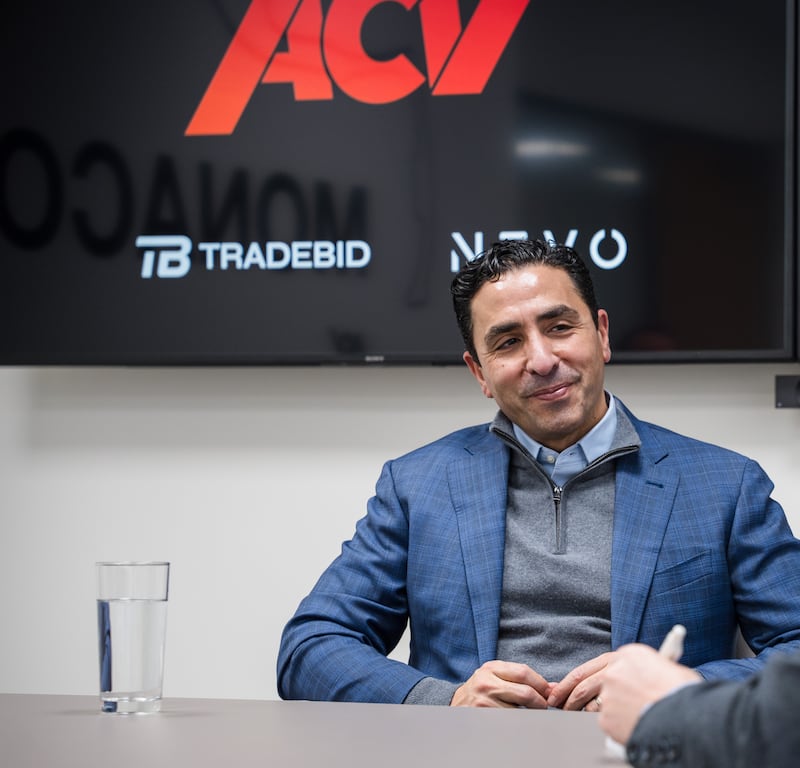 George Chaumon, chief executive of ACV. Photograph: Fiona Madden
“The auction business is our core revenue stream, but what we find in these marketplace businesses, it’s really the data that’s key.”
To make the most of this, ACV is working on advanced vehicle inspection hardware, including its so-called Virtual Lift technology, which creates a detailed 3D rendering of a vehicle. Buyers can zoom in on everything from undercarriages to wheels, and even pipes; this is important in markets where winter road salt increases corrosion.
Similar technology can be used in service workshops. Cars can be driven through the scanner, delivering a full condition report and valuation. Use cases of this tech also apply to car rental companies, checking vehicles on return.
Further down the road, when self-driving taxis arrive, this tech could allow the vehicles to be regularly inspected before returning for duty.
[ AI will make Dublin’s MetroLink obsolete, says Dermot DesmondOpens in new window ]
The hardware is just in pilot phase and is only being used at present by ACV’s own inspectors. However, Chaumon plans for it to be on the market in 2026, though there are no immediate plans to bring this tech to Europe. “The current model, where the dealer or consumer just walks around the car taking images, is working extremely well for us here in Europe,” he says.
Chaumon is loath to describe ACV as simply another artificial intelligence company.
“We didn’t wake up and say we’re an AI company. We’re here to solve automotive challenges. We happen to be one of the best in the world at AI in our category.
“It’s so fun to talk about artificial intelligence. We love talking about it, but this is really using it to reduce core friction. That’s what is fun for me. It’s really good to see where you can eliminate challenges and problems.”
In the US market, software is working hand-in-hand with the vehicle inspectors. One is teaching the other.
“When you’re doing over a million inspections, you see a lot of scratches and dents, car by car. That’s the core tech. You could apply that core tech anywhere in the world,” says Chaumon.
In combination and through machine learning, they give customers a pre-auction price and if it falls below that price, ACV will cover the difference. That’s how confident they are in their pricing tech.
Chaumon’s says his modus operandi since college has been in spotting needs in the market chain and using tech to fill the void.
He admits it was his passion for technology rather than cars that brought him into this sector, “but it’s hard not be a fan of vehicles and all the tech around vehicles these days”.
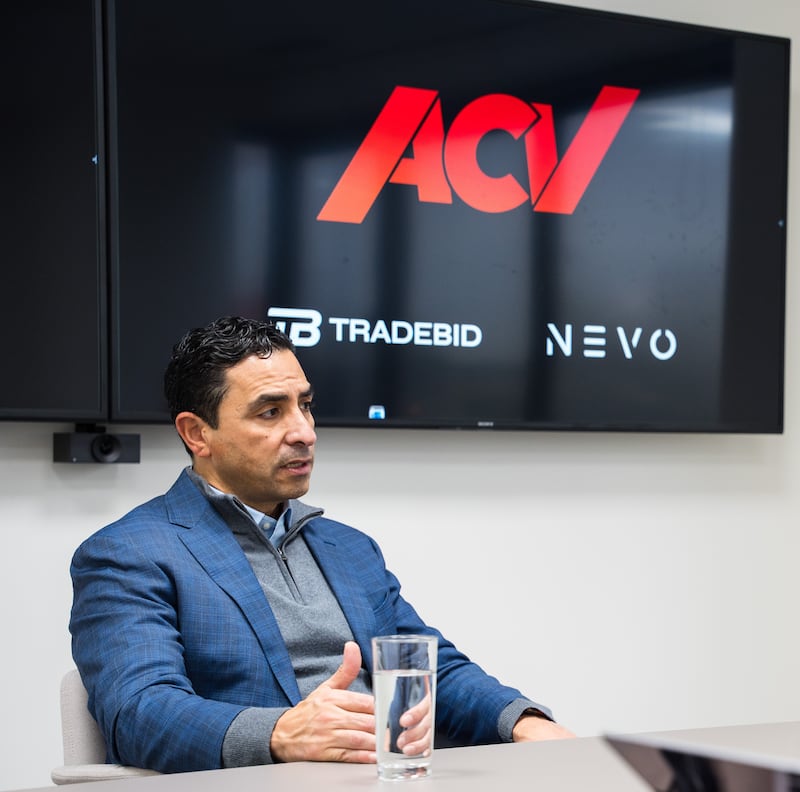 George Chaumon, chief executive of ACV. Photograph: Fiona Madden
Chaumon describes his upbringing as humble. “My parents were from Lebanon. They moved to upstate New York in the early 1970s and were in the restaurant business. They ended up with a franchise for the Canadian Group Tim Horton, but my dad’s health wasn’t doing so well, and we sold the business, probably 15 years ago. Sadly, my dad passed away some months back.
“I got to pay to go to university as a student athlete through wrestling, the Greco-Roman kind, rather than the WWE. I was very blessed to go to university and school. I was supposed to go to law school, but I didn’t go. Instead, I put my hat in the ring with one of those dot.com companies.
“I was really fortunate that I got to start a company out of college in the late 1990s,” he says.
That company, which Chamoun and his college roommate created in 1998, ultimately became Synacor, a software company providing digital identity authentication and video collaboration tools. It was listed on the Nasdaq in late 2011 before being taken private by an investment company in 2021. It was later acquired by iMedia Brands.
As to missed opportunities, Chaumon says: “I don’t do the ‘could have, should have, would haves’. There are a few of those moments where you think about how we could invest a little bit more intelligently going into the next year. You take those lessons into the next annual operating plan and refine it. You try to have all your colleagues share each of their lessons learned. That’s really what a team is. So, you look at it less as one ‘big bang’ moment and more of this constant iteration of these course corrections.”
As for his leap into ACV, Chaumon says: “You don’t really imagine doing this a second time, but this was such a significant opportunity.”
“I love businesses that take hard tasks that were just almost impossible to solve and make them easier,” he says. “What the teams’ doing here out of our Dublin office is just making the friction go away.”
One of the biggest sources of friction in the used-car market right now is the battery health of electric cars. Buyers and dealers alike want reliable certification of battery health. It’s something ACV’s teams in Dublin and the US are actively developing.
Chaumon says dealers in countries where ACV isn’t yet operating are reaching out to access its technology. They see the benefits of the speed and certainty of its valuations.
Again, he returns to the same three words: confidence, speed and trust.
He says the motor trade only works if the consumer feels like they can trust the dealer and the process.
“Our products, by removing friction, enable that trust. And that’s when transactions happen.”
CV
Name: George Chaumon
Age: 51
Position: Chief executive of ACV Auctions, which in 2024 acquired Irish start-up Drive Inc and its TradeBid business
Family: Married to “an amazing wife” and with two children – ages 20 and 18
Something you might expect: He studied engineering at Cornell
Something that may surprise: He got to university as a student athlete through wrestling, the Greco-Roman kind rather than WWE.