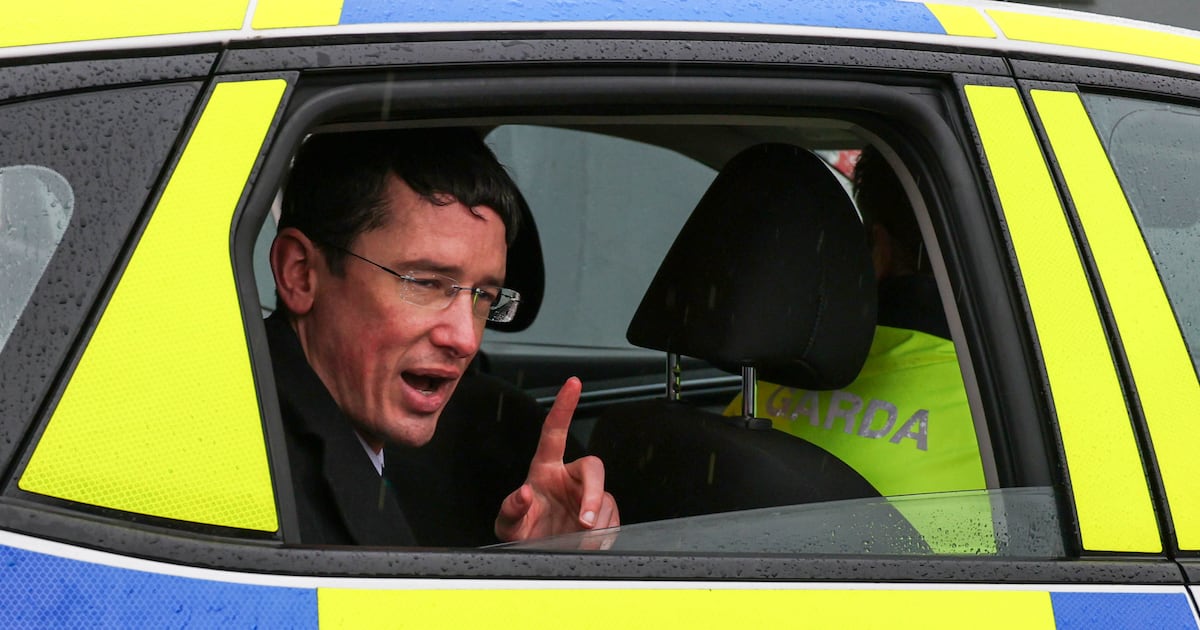
To free or not to free Enoch Burke? That is the question haunting the courts as the teacher was again returned to prison this week for continuing contempt of court orders to stay away from the midlands school where he wants to continue teaching.
Burke, the Co Mayo man known for his strongly held evangelical Christian beliefs and socially conservative views, was sent back to jail on Monday by the High Court after he turned up at Wilson’s Hospital School in Co Westmeath on January 15th after Mr Justice Brian Cregan had directed his release less than 24 hours earlier.
Having spent more than 560 days behind bars, Burke’s time in prison for civil contempt far exceeds that of others jailed for civil contempt in modern times.
The record time spent in prison for contempt predates Irish independence: an Ellen Ryan was detained for 759 days between 1898 and 1900 for failing to pay money into court as ordered by the Master of the Rolls.
In the early 1900s, a man named Patrick Kavanagh was detained for 602 days before being moved to a psychiatric facility.
More recent jailed “contemnors” – people found in contempt of court – include businessman Seán Quinn snr and his son Seán jnr, jailed for nine weeks and three months respectively in 2012 for contempt of orders not to put assets beyond the reach of the State-owned Irish Bank Resolution Corporation.
Five men known as the Rossport Five, who breached an injunction restraining interference with works on their lands in Co Mayo associated with construction of a gas pipeline by Shell Ireland, were freed in 2013 after 94 days. They were released without purging their contempt after Shell asked the court to lift the injunction and the court decided there was no purpose to their continued imprisonment.
Some farmers and property owners have, in separate recent cases, spent periods in jail for contempt of orders restraining interference with bank-appointed receivers, including more than 100 days in at least one case.
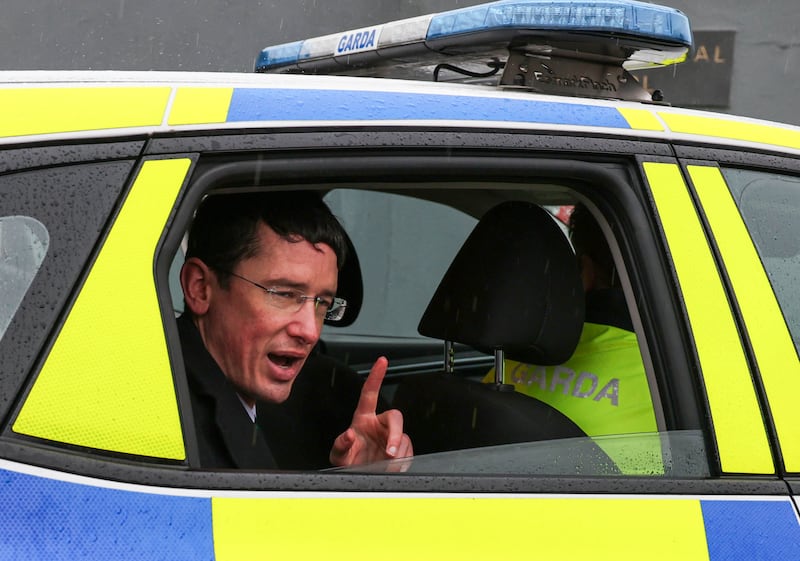 Enoch Burke’s continued refusal to comply with court orders poses a real dilemma for the courts and the rule of law. Photograph: Colin Keegan/Collins Dublin
Burke’s time in jail pales in comparison with an American contemnor who spent more than 14 years in prison in a dispute with his ex-wife over the disposal of $2.5 million assets.
Burke’s fines are also a lot less than the £2 million fine imposed in 2021 on an Italian princess, Camilla de Bourbon des Deux Siciles, after Jersey’s Royal Court held she had failed to disclose the location of assets making up her multimillion-pound fortune.
She appealed but last October, despite a settlement of an underlying trust dispute, the court refused to fully discharge the contempt finding
None of that is likely to be of any comfort to Burke, the school or the Irish courts.
The Burke case poses a real dilemma for the courts and the rule of law. “What to do about Enoch?” is a difficult subject much discussed in legal circles and wider society, but no solution has emerged to date.
Burke maintains his imprisonment is rooted in his opposition to “transgenderism”, while the school, and the courts, have repeatedly said it has nothing to do with this and is due to his breach of court orders of August 2023 requiring him to stay away from the school pending the outcome of a disciplinary process.
That process arose from his conduct at a school religious service towards the then principal, who had earlier requested teachers to refer to a particular student by their preferred new name and the pronouns “they” and “them”.
Lawyer Gary McCarthy SC, who has represented the Revenue Commissioners and receivers in civil contempt matters, said the Burke case was “really difficult and really rare”.
Being jailed delivers a “short, sharp shock” resulting in compliance by most civil contemnors, he said. In more difficult cases, he has seen the courts devise “creative” ways to achieve compliance, including seizing assets of the contemnor.
In Burke’s case, various penalties have so far proved unsuccessful. Imprisonment, daily substantial fines and a March 2025 conditional court order appointing a receiver to collect more than €79,000 in accumulated fines from his €48,000 annual teacher’s salary have all not forced Burke to comply with the courts.
The many judges who have dealt with the case have “bent over backwards” trying to be fair and to accommodate Burke but to no avail, said McCarthy.
“I don’t envy the court, it has tried absolutely everything. When someone refuses to comply, what can judges do? At the end of the day, the law must be obeyed. People cannot just say: ‘I’m going to live by my rules’, and ignore court orders.”
Mediation is not an option because that requires people to shift from their positions, said McCarthy.
“Burke sees himself as a martyr, this is his cause. The only thing that will satisfy him is to give him his job back and that is not going to happen,” he said.
A judge cannot “give in” to Burke, said McCarthy. Public policy requires the law must be obeyed and the school is entitled not to be subject to the disruption and costs resulting from Burke’s contempt, he said.
There is a “competing” public policy, “not to have people languishing in jail indefinitely”, and the court’s job is “to find a balance”.
That balance, he suggested, might be achieved by reviewing the situation at fixed periods, perhaps every two or three months, and possibly releasing Burke during school holidays.
“The court has to uphold the law, unpalatable as it is to have someone languishing in jail. There can be only one winner in this.”
Another lawyer with contempt law expertise, who declined to be named, said the Burke situation was “very difficult”.
“It’s like the U2 song: he’s stuck in a moment he can’t get out of but he’s got to get himself together.”
The lawyer believes a point has been reached where the High Court, as “a court of equity”, might consider restraining a separate case by Burke.
That concerns a hearing before a disciplinary appeals panel (DAP) of his appeal over the school’s decision dismissing him from his teaching position. His salary continues to be paid pending the outcome of that appeal.
After Burke successfully challenged the composition of an earlier DAP, the panel was reconstituted but Burke, in his latest challenge, claims one of its members is objectively biased.
 Enoch Burke seems to see himself as a martyr. Photograph: Brian Lawless/PA Wire
Mr Justice Cregan had ordered his release from prison last week to give him an opportunity to prepare that case, which, the judge said, raised “credible” points. Burke responded he intended to go straight back to the school and did not require time to prepare for his case, which, he said, was “black and white”. That, the judge remarked, amounted to his “usual bluster”.
The lawyer said a person seeking orders from a court of equity is required to come to court with “clean hands” and there is an issue whether Burke can seek reliefs from the court when he himself is in “serious contempt” of its orders.
There was an issue whether Burke should be required to purge his contempt in order to have standing to pursue any relief from the court, he said.
Any “generosity or good grace” shown to Burke by the courts has been “abused”, he said. Unless Burke purged his contempt, there was “no option but to leave him in jail”.
Solicitor Simon McGarr, whose firm McGarr Solicitors represented one of the Rossport Five, said the “quandary” judges find themselves in “is the clash between rules based on the presumption of rational actioning by an individual and a person who does not place rationality at the centre of their world view”.
“In the circumstances, the court has no choice but to continue for its part to behave rationally,” he said.
“At some point, we are going to have to recognise that the presumption of rationality cannot be taken for granted when it comes to people appearing before the courts.”
McGarr said Burke’s case was “based on misplaced religious convictions”.
“But in the future we may also find people who have been misled by conspiracy theories, misinformation, disinformation or AI [artificial intelligence] psychosis into acting contrary to any rational behaviour and against their own interests as well as those of society,” he said.
The case of Burke continues to highlight the limitations of the law when it comes to dealing with a litigant intent on pursuing their own cause irrespective of court orders and penalties.
That has led to mounting concern in legal circles that Burke’s stance might encourage others despite prison and/or fines having proved a strong disincentive in most cases.
To date, the court has been unable to devise a solution to the Burke contempt other than the obvious solution of him purging it.
Burke, as Mr Justice Cregan said this week, “has the keys to his own prison”.