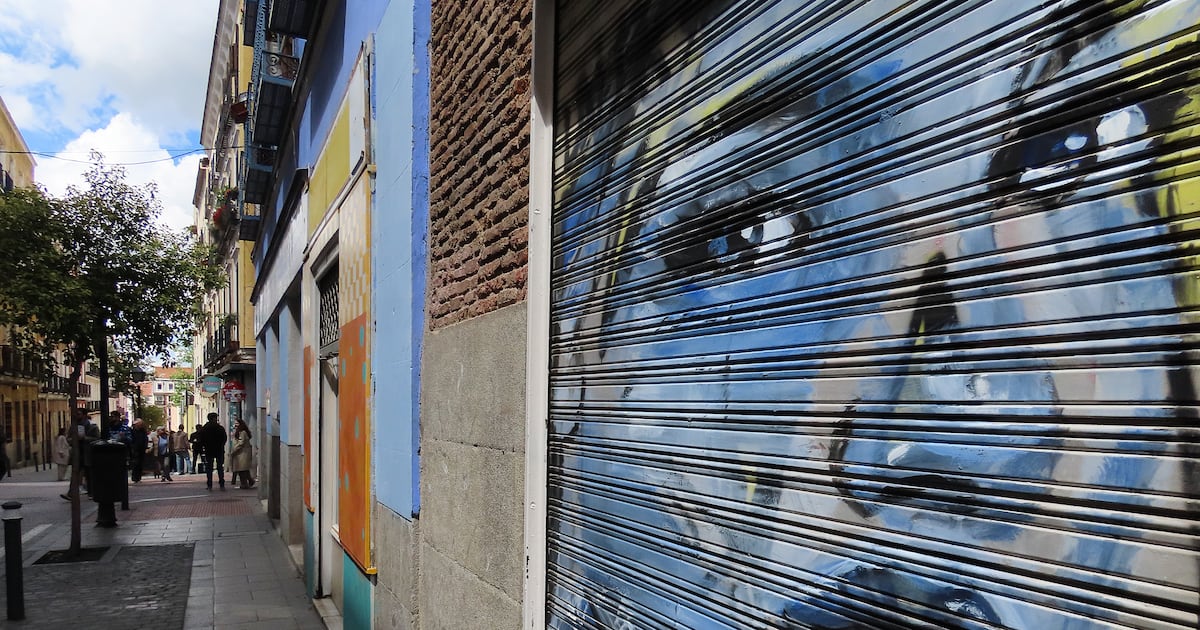
Nueva Visión is a small bar in central Madrid, with “Ramones Fan Club” spray-painted on its outside shutters.
It is just one of dozens of establishments in the Malasaña district of the city.
But what sets Nueva Visión apart is that it was at the centre of an apparent deep-state plot involving upstart left-wing politicians, senior police officers and outlandish claims about a hoard of cocaine.
Ten years on, this plot, along with others casting elements of the Spanish security forces in a sinister light, have finally reached the courts.
In early 2016, the new left-wing party Podemos had just won 69 parliamentary seats in the general election, making it the third-biggest force and breaking the duopoly of conservatives and Socialists which had lasted for four decades.
In January of that year, the police’s terrorism and organised crime unit opened an investigation into Miguel Urbán, one of the co-founders of the party, leader of its anti-capitalist wing and an MEP, on suspicion of selling a large quantity of cocaine in a flat above the Nueva Visión bar one evening.
According to one witness cited in the police report, Urbán celebrated the deal afterwards by throwing “a bag of cocaine on to the bar and inviting anybody who wanted some [to consume it].”
The same witness is quoted as saying: “Urbán said he had done Spain a favour, that he had sold 40 kilos of cocaine from Venezuela and that it was to pay off party expenses.”
However, the allegations turned out to be completely false. Urbán says he has never been to the bar in question, which has since closed, or to Venezuela and was on a European Parliament trip when the supposed deal happened.
“They spent a year putting together this farce, according to which they claimed I was the boss of an international drug-trafficking ring between Venezuela and Spain,” Urbán told The Irish Times. “They might at least have tried to frame me with something a bit more realistic.”
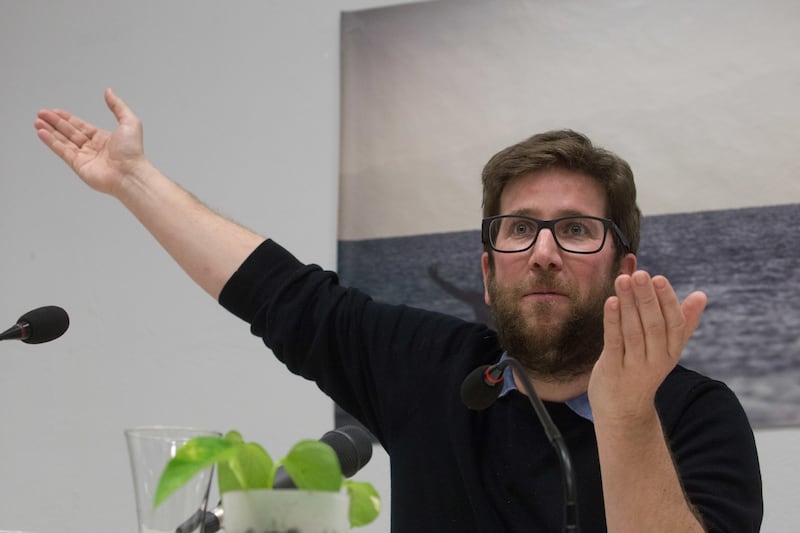 Former MEP Miguel Urbán. Photograph: Lito Lizana/SOPA Images/LightRocket via Getty Images
The drug probe was closed six months later due to lack of evidence. However, those behind it could, finally, be facing the consequences.
This week, Urbán appeared as a witness before a national court judge who is investigating allegations that the police fabricated the case against him. Several former senior police officers also faced questioning.
Urbán believes the drug investigation was an attempt to discredit Podemos, whose meteoric success had sent shock waves through Spain’s government and other institutions.
“When you start to question or touch the foundations of the privileged who are in power, those in power defend themselves,” he said. “And they defend themselves extrajudicially, illegally, and outside the bounds of democracy.”
[ Bittersweet birthday for Spain’s PodemosOpens in new window ]
This may sound like paranoia. But the bogus cocaine case was just one of several police probes into the leadership of Podemos at the time, all of which turned out to be baseless.
“What we suffered in those years no political organisation in this country has suffered,” said Urbán, who has not been an MEP since 2024 and is no longer in Podemos, whose support has dropped substantially.
The same month that the probe into Urbán began, the police also opened an investigation into the then leader of Podemos, Pablo Iglesias, for allegedly receiving payments worth €2 million from the Iranian government, a claim that also turned out to be false.
In addition, the police investigated Iglesias for allegedly receiving a payment of $272,000 from Venezuela’s then president, Nicolás Maduro, to a bank account in a tax haven in the Grenadine islands. Officers travelled to New York to interview a former member of the Venezuelan government as a potential witness, but again the accusations proved to be false.
In each case, some media were also involved, publishing the false allegations as fact.
José Luis Olivera, head of the terrorism and organised crime unit at the time, and who is due to testify as part of the probe, has denied any wrongdoing. Last year, he told a congressional committee investigating the alleged smear campaign: “You will never see me put false evidence before a judge or a court, knowing that it was false.”
However, the probe into these activities has already suggested a link with the People’s Party (PP) government of then prime minister Mariano Rajoy.
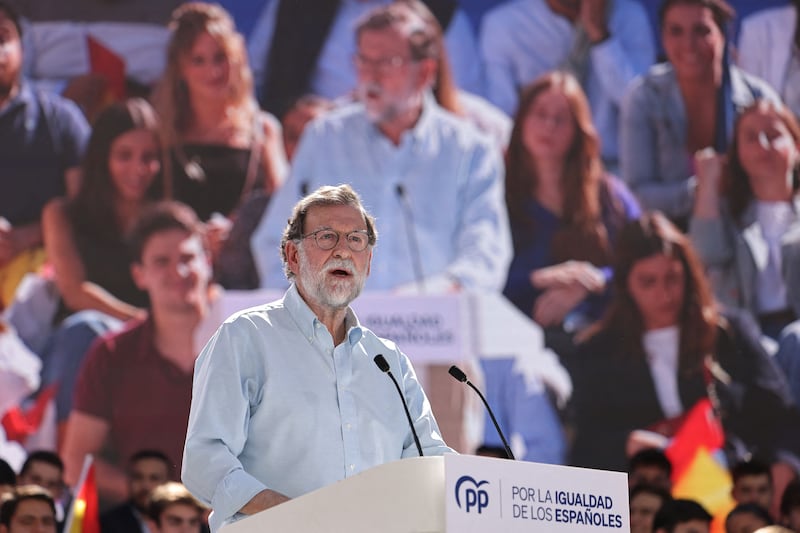 Former Spanish prime minister Mariano Rajoy. Photograph: Thomas Coex/AFP/Getty Images
Text messages which have come to light show Francisco Martínez, the then secretary of state for security, urging a senior officer to trawl through the past of Podemos’s 69 congressional representatives, saying: “One of them has to be dodgy”.
Martínez and his boss, the former interior minister Jorge Fernández Díaz, are due to go on trial in April for a separate case in which they and several former police officers, including Olivera, are accused of attempting to steal evidence that implicated the PP in systemic corruption.
Meanwhile, a parliamentary committee is investigating claims that Rajoy’s government attempted to undermine the Catalan independence movement by seeking or fabricating damaging material about separatist leaders.
Ignacio Escolar, editor of elDiario.es, a left-leaning news site which has reported extensively on Spain’s deep-state apparatus, described all these activities, as being part of “a corrupt and efficient network”.
“It was something that should be unacceptable in a normal democracy,” he said.