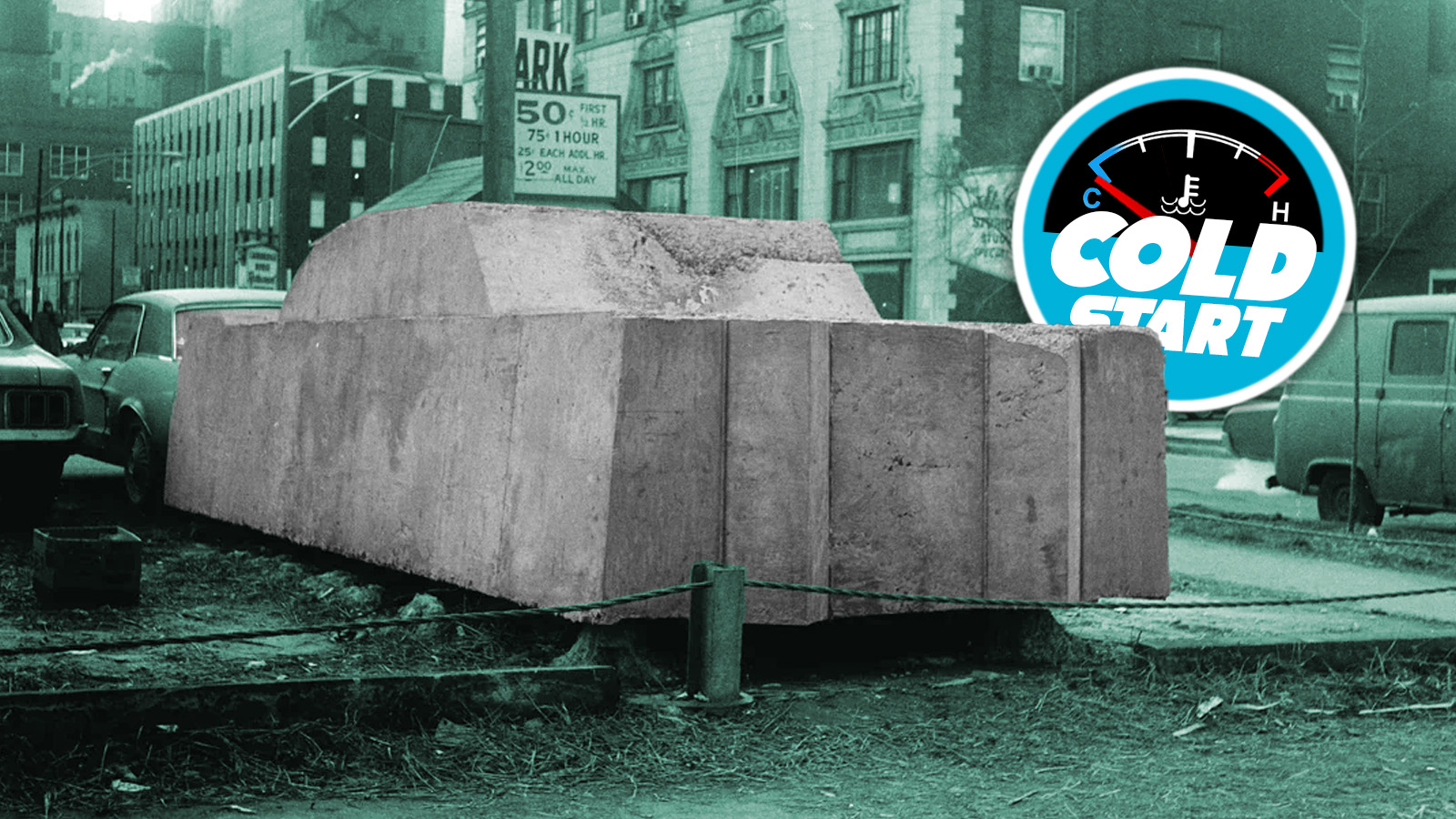
There’s an interesting anniversary happening today, one that straddles the automotive, art, concrete, and pay-parking lot worlds. On this day, in 1970, a fascinating artwork was completed: Wolf Vostell’s Concrete Traffic, a 1957 Cadillac Sedan DeVille that was encased in a concrete shell while sitting in a parking space in a pay lot near Chicago’s Museum of Contemporary Art. The work is brutal and wry, especially given its initial site of construction and display, just a regular parking lot in the middle of a busy city. Happily, it still exists today, as it was restored in 2016 after being forgotten for decades, and currently resides in a parking spot in a parking structure owned by the University of Chicago.
Vostell was part of an artistic movement known as Fluxus, which took a less serious and formal approach to art, preferring the playful and the public, and sought to more tightly integrate art into normal, everyday life. It’s an approach to art that I personally find very appealing; art should just be mixed into the busy stew of living, not segregated into museums and formal events. It’s just part of what it means to be human, and as such should be anywhere.


Fluxus emphasized the process of creating art over the outcome, and placed emphasis on the overall experience instead of just the object, though the physical result was important too. That’s why Vostell described Concrete Traffic as an “instant happening,” though, to be fair, it wasn’t really all that instant. The plywood mold for the concrete was made before the “happening,” and the Caddy was prepared by being framed in rebar and wire. It was towed to the public parking lot in Chicago, the mold placed over it, and then a cement mixer came to pour the cement. Six days later, the mold was removed, and the entombed car was revealed.
The process was documented; you can see the magic happen here:
There’s also some good photos of the car prior to its transformation; here you can see the rebar-and-wire structure over the car itself to hold and reinforce the concrete as it sets:
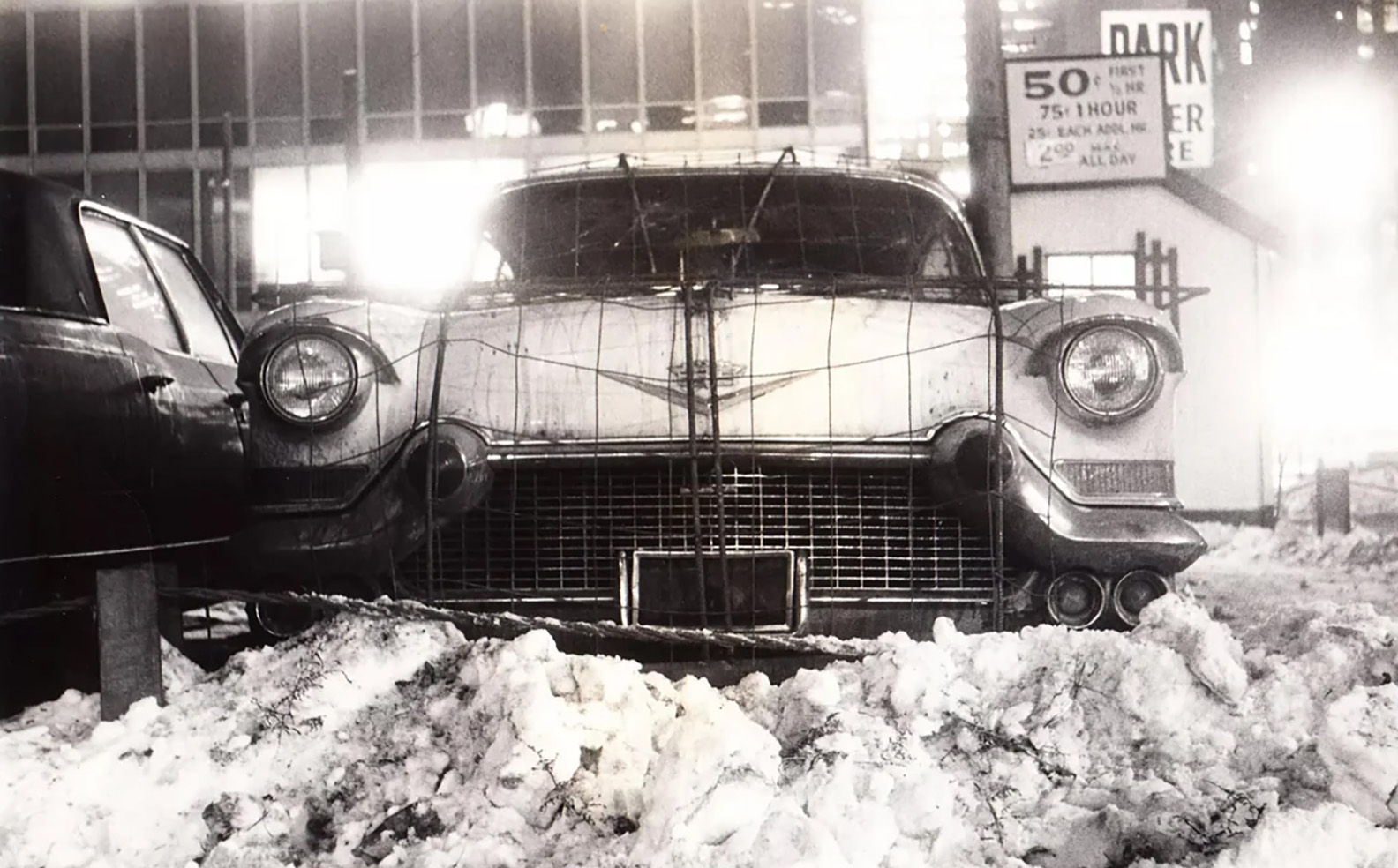 Image: MCA Chicago
…and here’s the plywood-and-2×4 mold:
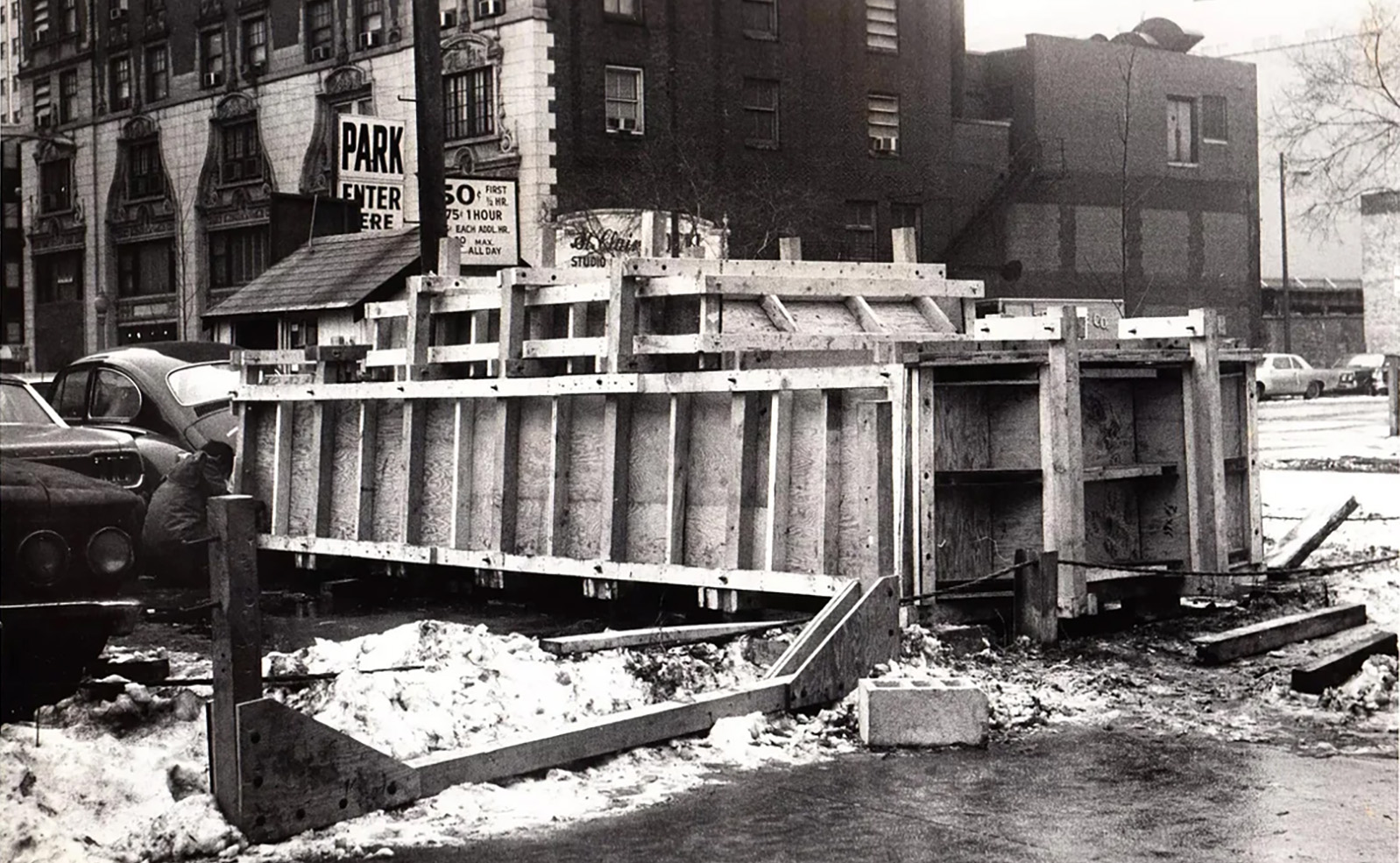 Image: MCA Chicago
The mold was fairly simple and perhaps even crude, but the resulting form that came out of it was pretty striking, and somehow even managed to retain some essential bit of Cadillac-ness:
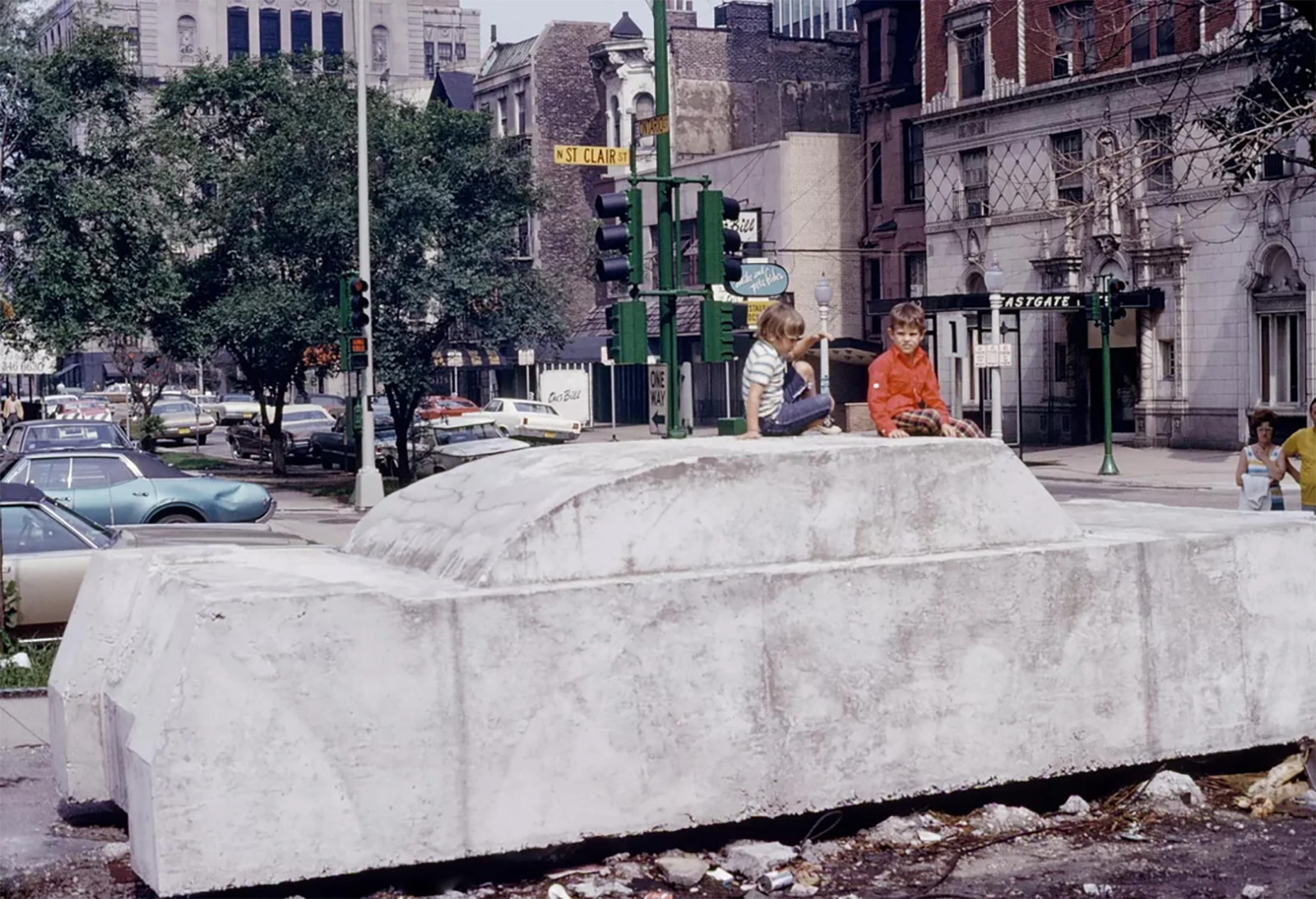 Image: MCA Chicago
The concrete Caddy stayed in that parking spot for five full months, where it could be seen by passers-by and interacted with by anyone who felt like interacting with a huge concrete car, like those kids in that picture up there. I also wonder if this sculpture may have influenced Jaguar’s designers and inspired Jag’s new design direction?
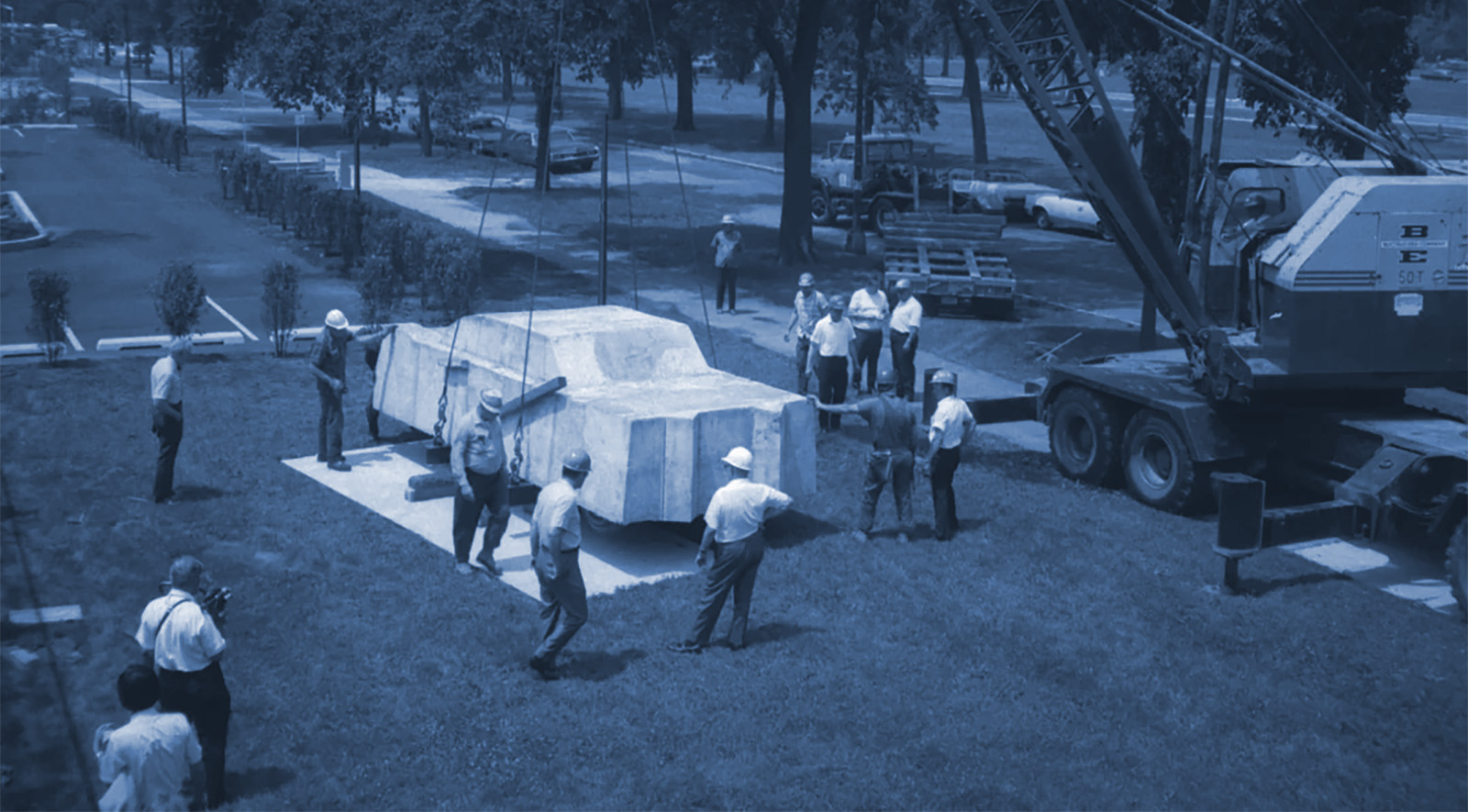 Image: University of Chicago Arts Archives
It was then moved to a location on the University of Chicago campus, where it sat for about 40 years until being moved to storage, and then its restoration in 2016.
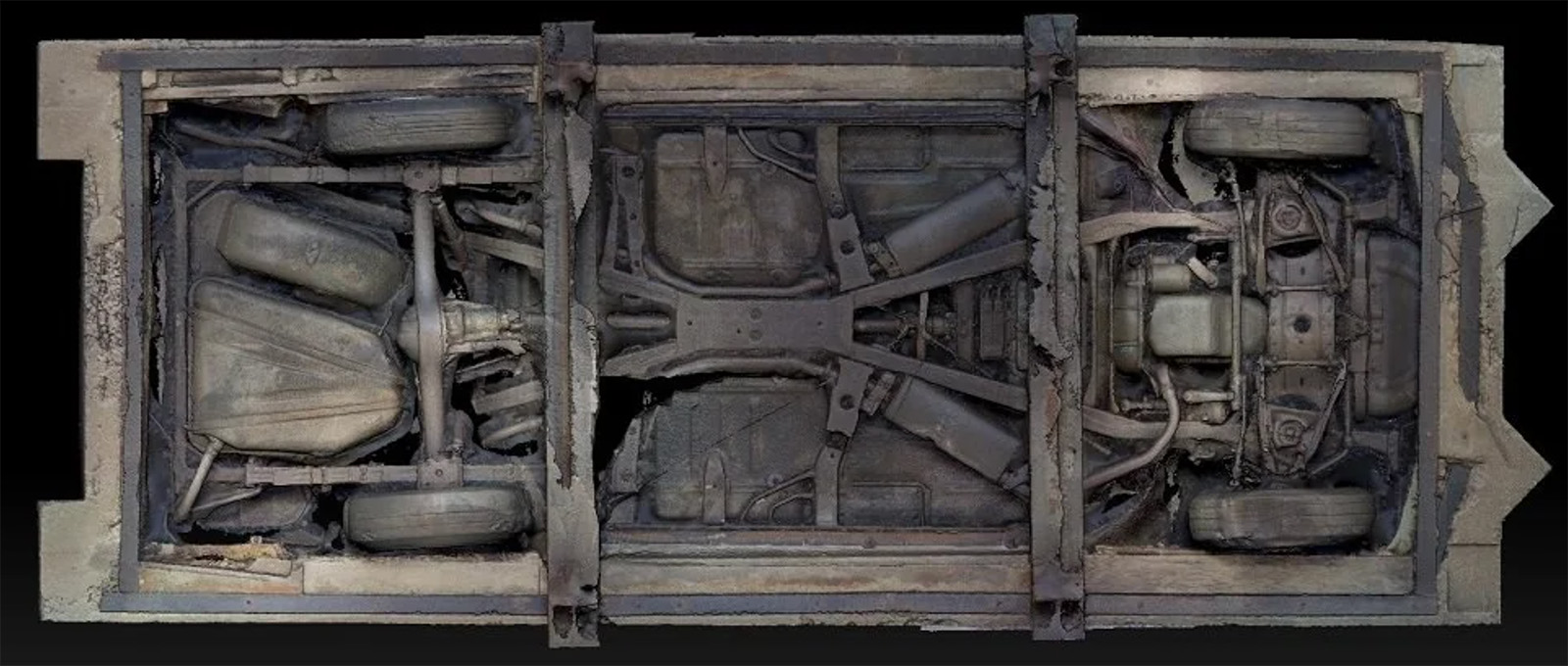 Image: MCA Chicago
Though it’s not normally visible, I think the underside of the work is the most interesting, as it really conveys the idea that this massive concrete shell ensconces a real, actual car. You can see the Caddy dramatically overburdened chassis from below, and I have to say I’m impressed that the suspension seems to be bearing the weight of 27,000 pounds of concrete fairly well.
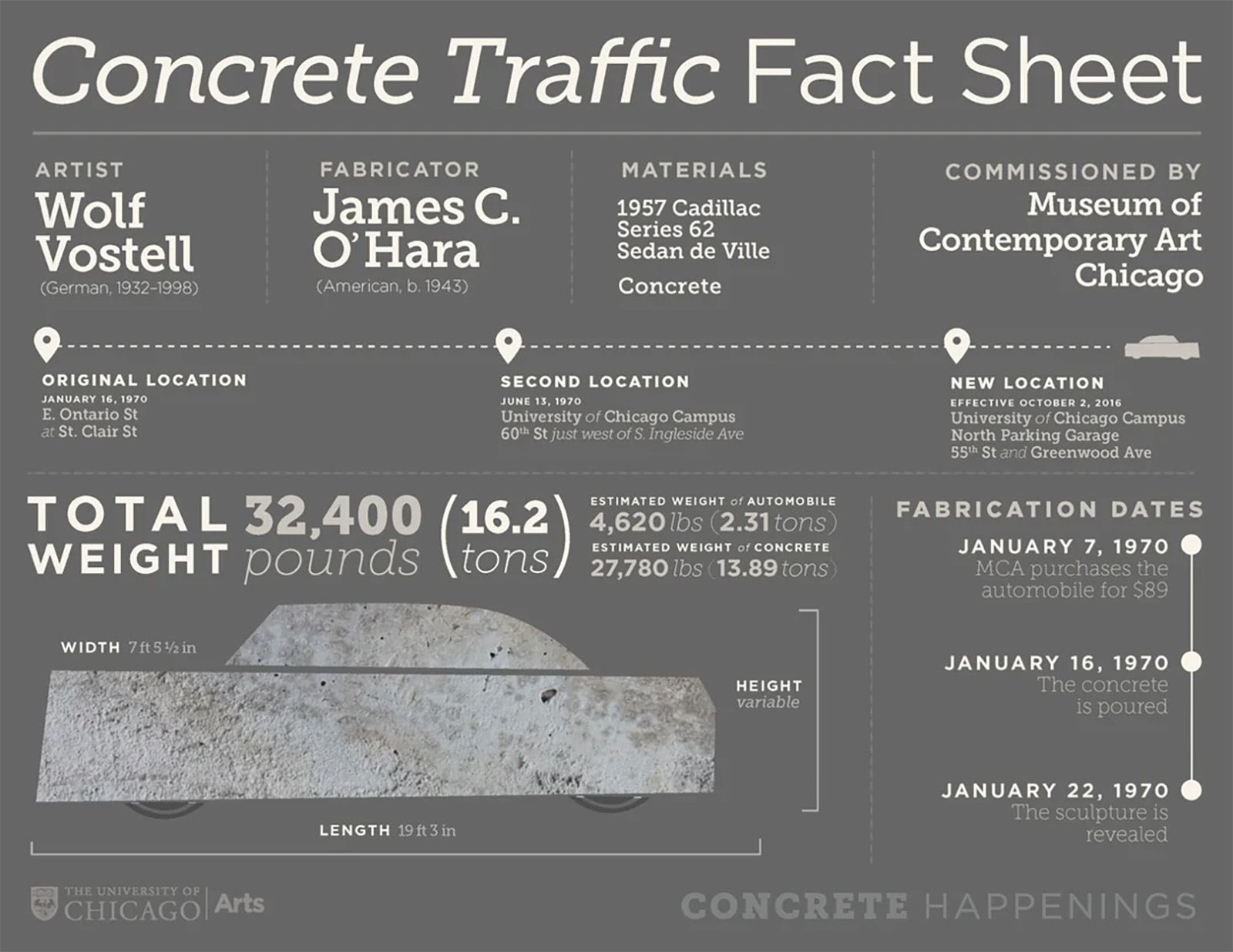
The University of Chicago made this handy fact sheet about the work, which has some fascinating details, like how the Caddy was bought for only $89 in 1970! That’s only about $743 today! A steal!
 Graphic: University of Chicago Arts
Also, the height being listed as “variable” is interesting; is that factoring in the sagging suspension and degradation of the tires?
Happy 56th birthday, Concrete Traffic! One day I hope to park next to you in person.