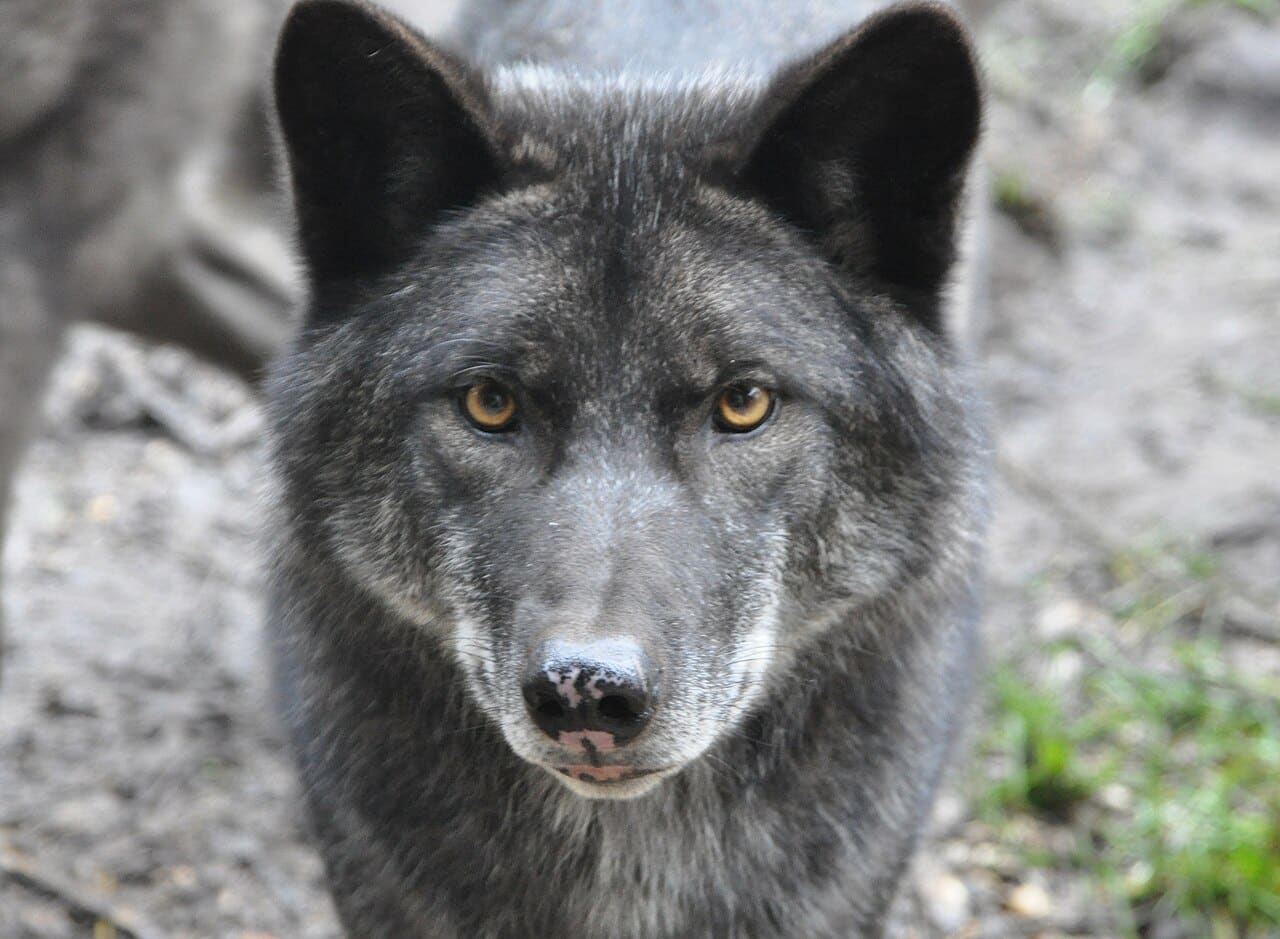
The recent wave of “urban wolf” sightings has shocked residents in Greece from Macedonia to Attica. Credit: Quarti, Wikimedia Commons, CC3
For decades, the Greek wolf (Canis lupus) was a creature of remote mountain peaks, pushed to the fringes of Greece’s mountain ranges. However, a series of startling encounters recently has signaled a dramatic shift in the country’s wildlife dynamics.
The wolf has officially entered the urban fabric of Greece’s two largest cities, sparking a tense debate over conservation and public safety.
The wolf in Greece: From the north to the capital
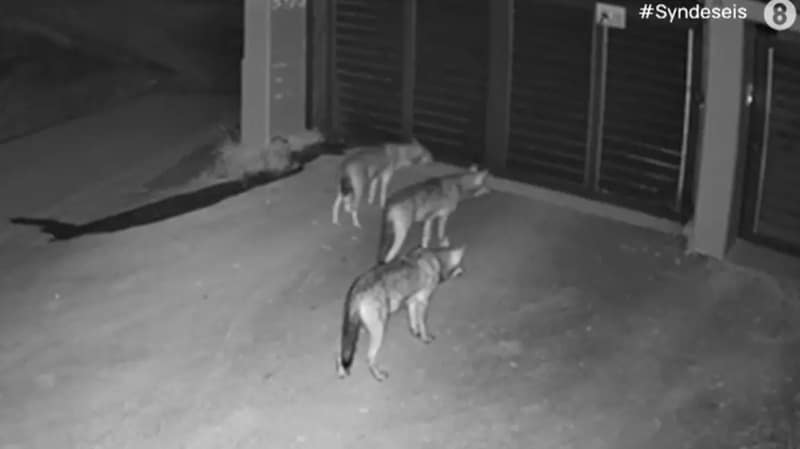
A pack of wolves appeared outside a house in Panorama, Thessaloniki, this week. CCTV camera/Public Domain
The recent wave of “urban wolf” sightings has shocked residents in Greece from Macedonia to Attica. In Panorama, Thessaloniki, stunning video footage recently captured wolves reaching the doorsteps of residential homes, highlighting how comfortable the predators have become in high-end suburban settings.
The alarm has moved south to the capital as well. In Western Athens, the neighborhoods of Haidari and Egaleo have seen a spike in activity. Perhaps the most distressing report occurred in Egaleo, where a wolf attacked a domestic dog just 100 meters (328 ft) from a school. These are no longer isolated incidents of “stray” animals; they represent a bold expansion of territory into densely populated zones.
The “perfect storm” of urban encroachment: The wolf in Greece
Experts point to several ecological drivers for this migration:
- The wild boar connection: An explosion in the wild boar population has acted as a “food bridge,” leading wolves from the mountains directly into suburban fringes.
- Habitat loss: Devastating forest fires in the Attica region have destroyed traditional hunting grounds, forcing packs to scavenge in human-dominated landscapes.
- Food habituation: Wolves have learned that urban environments offer easy calories in the form of unsecured trash, pet food, and stray animals.
The challenge of coexistence
The sightings have triggered warnings from authorities and local municipalities, urging residents to secure waste and avoid walking pets after dark. While the wolf is a protected species under EU law—a status that successfully brought the species back from the brink of extinction—its presence near schools results in a palpable sense of fear.
Conservationists argue that culling is not the answer, as it can disrupt pack hierarchies and lead to more erratic behavior. Organizations like Callisto (among the leading organizations for large carnivore management in Greece) stress that, while the sight of a wolf is shocking, the animals are usually scavenging, not hunting people.
“Wolf appearances in urban centers are rare and usually linked to easy food sources. While we urge caution and suggest residents avoid approaching the animals, we must understand that a wolf in a city is looking for trash or a stray animal, not a human encounter,” Callisto says.
Wolves’ protected status “should not be downgraded”
Recently, twenty Greek environmental organizations (including WWF Greece, Arcturos, and Hellenic Ornithological Society) signed a joint letter to the EU and the Greek government. They are fighting against the 2025 decision to downgrade the wolf’s status from “strictly protected” to simply “protected.”
“Protecting the wolf in Europe is not only a matter of ecological importance but a reflection of our commitment to values of coexistence. The return of the wolf is a conservation success that must not be jeopardized by political pressure,” the letter reads.
Arcturos and ANIMA argue that human-wildlife conflict is often the result of human behavior. They point to the “habituation” of wolves. “Wolves are intelligent and adaptable. If they find overflowing bins or pet food left outside, they will lose their natural fear of humans. We don’t have a ‘wolf problem’ as much as we have a ‘waste management‘ and ‘wild boar’ problem.”
Related: Greece’s Large Predator Comeback Brings Conflict Between Wildlife Recovery and Rural Fears