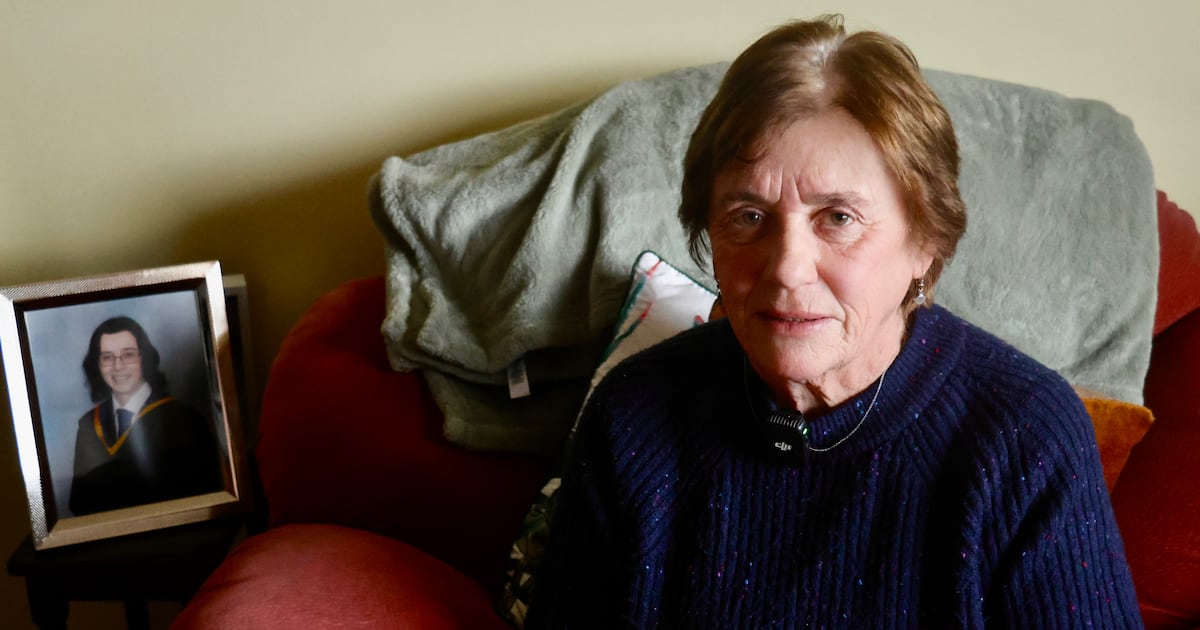
On the night Storm Éowyn landed last year, Joan Comer woke at 3am and realised that the baby monitor she was using to keep watch on her dying son was not working.
The power had gone out in the family home in Dunmore, Co Galway, in the early hours of January 24th and would not be restored for eight days.
Her son Rory (29), a primary schoolteacher, had been diagnosed with brain cancer in 2019 and the family was told it was terminal in December 2024.
There is no good time for the storm of a century to hit, but the timing could hardly have been worse for Joan, Rory and his partner Danielle Devlin.
She spent the rest of the night of Storm Éowyn sitting in the bedroom with a torch. There was no phone signal, no light, no heat. “That was the start of our nightmare.”
A nurse from Galway Hospice arrived in person on the afternoon of January 24th after the storm had passed. She couldn’t contact the Comers because there was no phone signal, so decided to call out on spec. The nurse had to drive for miles to get a signal to call the hospice doctor to see what was needed and then drive back again to the Comer home.
The local pharmacy and GP practice were also out because of the storm. Her son could not listen to music, watch television or play his PlayStation with friends – his small comforts as his health deteriorated.
“The storm took away the last few things he enjoyed. His world really narrowed down,” she recalls a year later. “It made life so difficult for us. Everything we depended on from day to day just wasn’t available any more.”
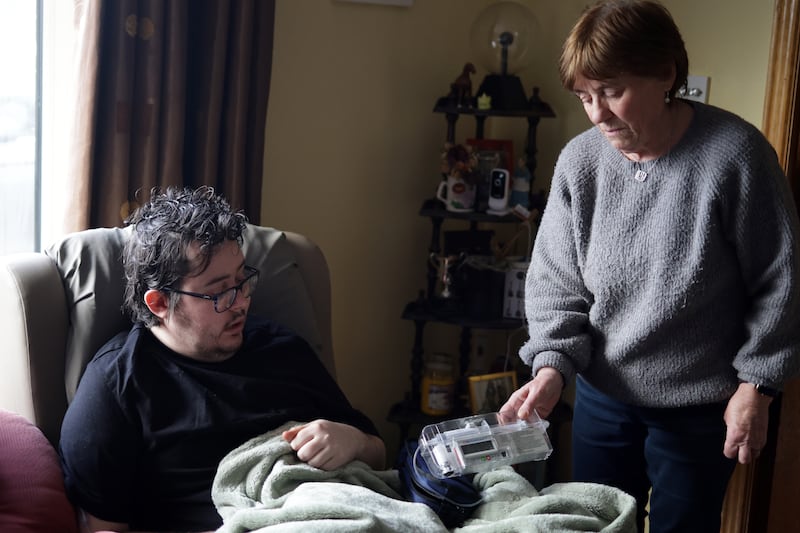 Rory Comer at home with his mother, Joan. Photograph: Chris Maddaloni
Rory Comer died on March 7th last year. “The stress of that situation definitely impacted on his final weeks,” his mother says.
“For those last few weeks we were on edge again. The power would flicker on and off. Every time, if we hear about a storm, it comes flooding back.”
Her son was named after the guitarist Rory Gallagher, and he lived up to the name. The music room is left as it was when he died, valuable guitars in racks, a pedal board, effects pedals, a drum kit and shelf after shelf of vinyl. There’s a poster on the wall of a line-up from the 2019 Rory Gallagher Festival in Ballyshannon.
Rory Comer played that festival every year, his mother says. After he died, many people contacted her to tell her how much his music meant to them.
[ Storm Éowyn costs ESB €100m in network repairsOpens in new window ]
She has counted 20 power cuts since Storm Éowyn. “We haven’t got any explanation as to why it happened. It could be for an hour for a day. We don’t know if it is demand. Maybe it is because we are in a not-so-remote place in rural Ireland – we seem to have been forgotten about. Whatever damage was done hasn’t been properly repaired.”
The highest wind speed ever recorded in Ireland – a 184km/h gust in the early hours of January 24th last year – was noted at Mace Head, Co Galway.
Storm Éowyn divided the country in two. On the east coast the damage was short-lived and people returned to normal living within two days; along the west coast – from Galway through Mayo, Roscommon, Leitrim and Sligo – a trail of devastation ensued. At the peak of the storm, 768,000 electricity customers were affected. According to ESB Networks, approximately 10 per cent of customers (about 75,000) were left without power for more than week.
In its annual review, Met Éireann stated that the strength of Storm Éowyn was partially down to climate change and that more powerful storms could be expected in the future.
Many people still bear the psychological scars of Storm Éowyn. It was a time when hundreds of thousands of people were stripped of the necessities of modern living, and many for prolonged periods of time. Electricity, heating, water, internet and telephone connections all went down.
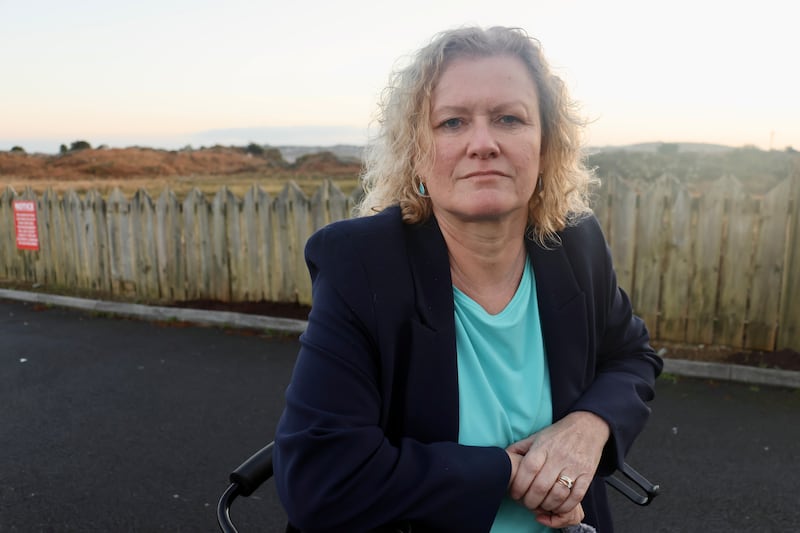 Connemara resident and broadcaster Máirín Ní Ghadhra was left without power for eight days following Storm Éowyn. Photograph: Ronan McGreevy
The well-known broadcaster and Connemara resident Máirín Ní Ghadhra was trapped in her home for three days, with trees down on both laneways. She couldn’t get to work in Raidió na Gaeltachta or even text the station to say she couldn’t come in.
“It was quite literally a perfect storm. People did not understand after the fact why more help did not come quicker. It took off the blinders for many of us,” she says.
“We hear local politicians on a regular basis saying that not enough has been done. Where are the emergency hubs we have been promised?”
The Government is drawing up plans for 400 such emergency hubs across the country capable of keeping communities going during extreme weather events. A pilot programme was put in place during Storm Amy (October 3rd, 2025), when eight hubs were established in Donegal. Every local authority has been furnished with a guide to community support centres, and the Government will be putting plans in place with all local authorities in March. These hubs cannot come quickly enough for communities fearing the next big storm.
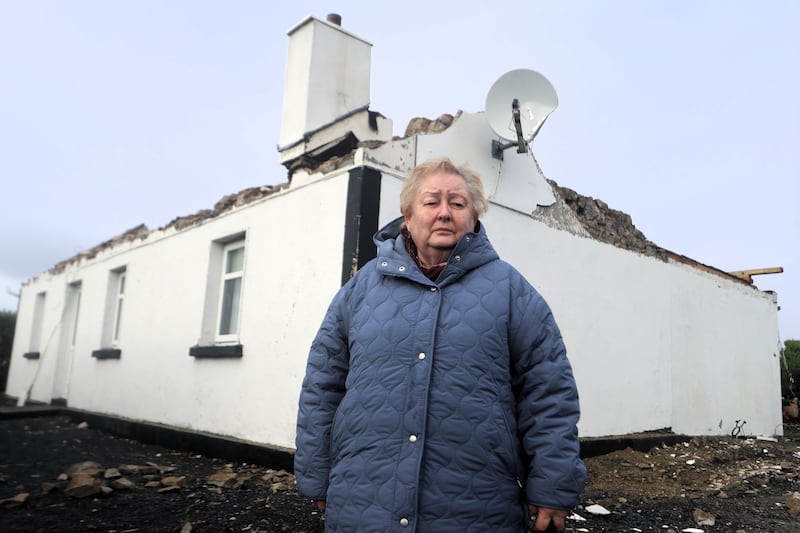 Maureen Folan lost the roof off her home in Carna, Co Galway during the storm. She has lived in the same house for 43 years. Photograph: Ronan McGreevy
 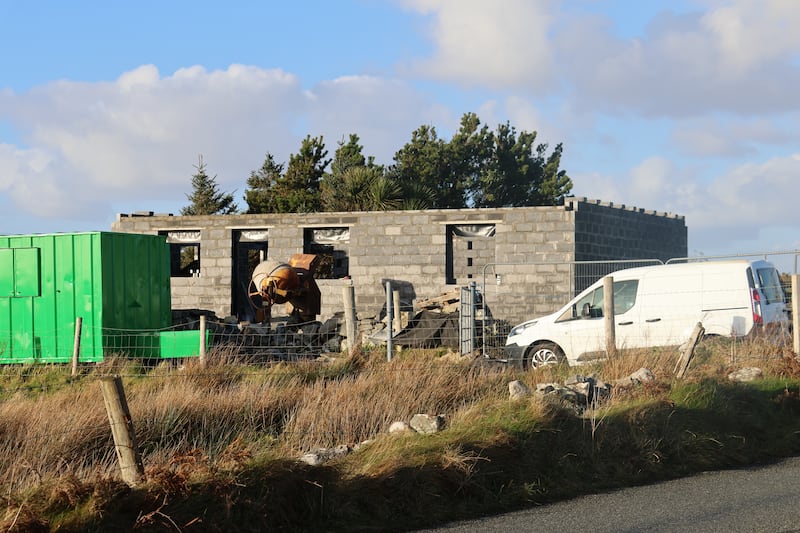 Maureen Folan lost the roof of her home in Carna, Co Galway, during Storm Éowyn. A year later, the house is being rebuilt. Photograph: Ronan McGreevy
One of the worst-affected places was the village of Carna in Connemara. During the night of the storm, the roof of Maureen Folan’s house blew off. In an exercise in digital Meithéal, a GoFundMe account started by a friend raised more than €100,000 and the house is now being rebuilt.
In the offices of Údarás na Gaeltachta in Carna, Máirín Ní Choisdealbha-Seoige, manager of Forbairt Chonamara Lair Teo, is already prepared for the next storm.
Blankets, water bottles, hot water bottles, torches, power banks, tea flasks and soup flasks are packed into crates waiting for distribution to vulnerable residents in the event of an emergency. They have been paid for with a National Lottery grant.
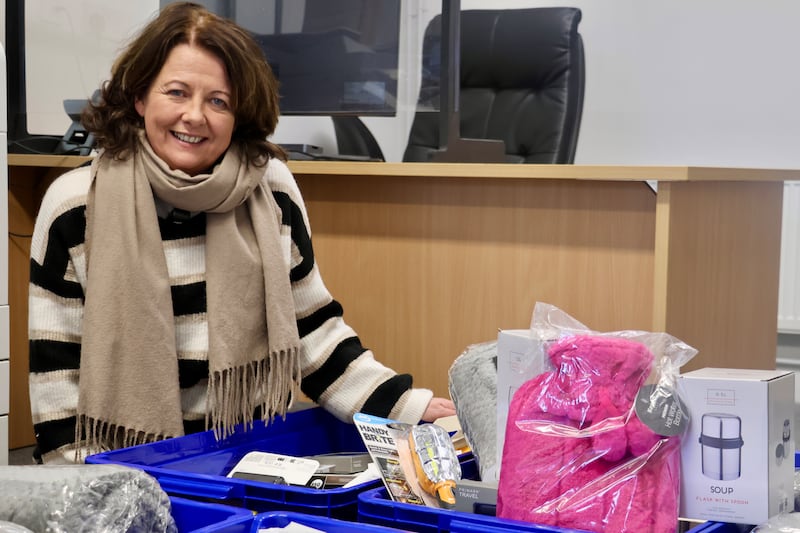 Máirín Ní Choisdealbha-Seoige with crates of emergency supplies for future storms. Photograph: Ronan McGreevy
“We were reactive rather than proactive the last time. I asked about the community hubs and how they will be activated, but it will still be down to the will of the neighbours the next time it happens,” she says.
Kevin Igoe of Igoe Agri and Engineering in Castlerea, Co Roscommon, discounted his last remaining generator before Storm Éowyn because he couldn’t get it sold.
In the immediate aftermath of Storm Éowyn he travelled to Northern Ireland to buy generators. By the time he reached his destination he had 40 orders, but there were only 18 available despite the prohibitive costs involved – a generator can cost €1,400.
“If I had 250 of them I could have sold them,” he says. “After two days I gave up jotting down names. You don’t even need a storm. The power is going out regularly around us.”
One of the worst-affected counties was Leitrim. Some homes were without electricity for 20 days. Much of the blame for the extended outages was put on the proliferation of commercial forestry in the country. Lisa McCrann and her husband and their six year old daughter, who live outside the village of Cloone, were without power for 15 days.
Aerial footage taken by drone shows fallen trees on power lines. The issue of thinning trees around power lines has been raised time and again with local representatives, she says, but “absolutely nothing” has been done to clear trees from the wood near her home.
A tree fell on an electricity line in November last year. “How the wire didn’t break … none of us could figure it out. The trees are growing up nearly touching the lines again,” she says.
“The storms are getting stronger and stronger in the last few years. We had to pay for a generator, we have had an electrician out to wire everything up for us again. We shouldn’t have to when a lot of the issues around here are trees. It’s frustrating.”
According to ESB Networks, almost 60 per cent of all power outages during Storm Éowyn were caused by falling trees. ESB Networks has identified 700 kilometres of power lines that are too close to trees and will need to be managed.
[ Storm Éowyn costs ESB €100m in network repairsOpens in new window ]
Legislation is being prepared to give ESB Networks the power to remove trees along identified corridors, but will it come in time for the next big storm?
The Department of Agriculture estimated that Storm Éowyn brought down nearly 24,000 hectares of forestry – the equivalent of two-and-a-half years of the annual harvest.
Paddy Fahey lost 90 per cent of his 20-acre forest outside Woodford in Co Galway. The wind was funnelled from the river Shannon nearby and the Slieve Aughty mountains, and hit his plantation with full force.
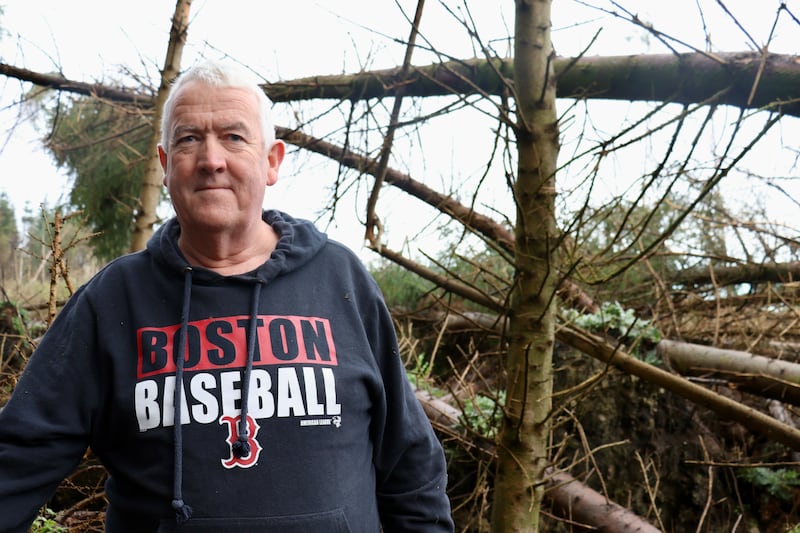 Paddy Fahey’s 20-acre forest was decimated by Storm Éowyn. Photograph: Ronan McGreevy
The forest was planted by his father 25 years ago as a pension fund for the family. The timber from the forest was not due to be harvested for another 10 years, in time for Fahey’s retirement. He waited six months to assess the national picture before applying for a felling licence and it took six months to get the licence. He has a small window to act – he has to remove the timber before March and after September because of the presence of the Merlin locally, a protected bird.
“We drove up the next morning and I knew what we were going to expect. It was all timber of this age that was taken down,” he says.
A year on, the remains of hundreds of Sitka spruce and larch trees remain in a giant tangled mess, their roots vertical to the ground.
A fully mature forest can fetch from €12,000 to €14,000 an acre after 35 years; Fahey can expect just €7,000 to €8,000 for the timber he will harvest this year – and a lot of that will have to go back into the business if he intends to replant.
Galway IFA forestry representative Pat Lyons says the junior minister with responsibility for forestry, Michael Healy-Rae, deserves credit for turning thinning licences into felling licences. Anybody with a felling licence was given the go-ahead.
The Government has been encouraging investment in forestry. He estimates that 15 to 20 per cent of the timber from Storm Éowyn will never be harvested because the cost for small farmers to remove the timber is prohibitive. There has been a psychological toll on private forestry owners too. Many are understandably reluctant to ever plant again.
Barna Woods is a beautiful area of mixed broadleaf woodland outside Galway city. Storm Éowyn flattened more than 100 trees in the wood and felled trees remain scattered throughout the forest floor.
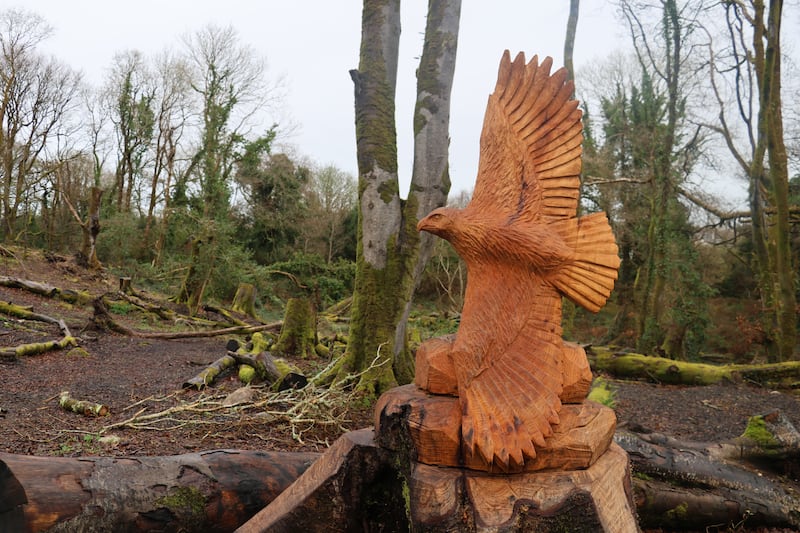 A wood sculpture of an eagle carved from a fallen tree in Barna Woods, outside Galway city. Photograph: Ronan McGreevy
 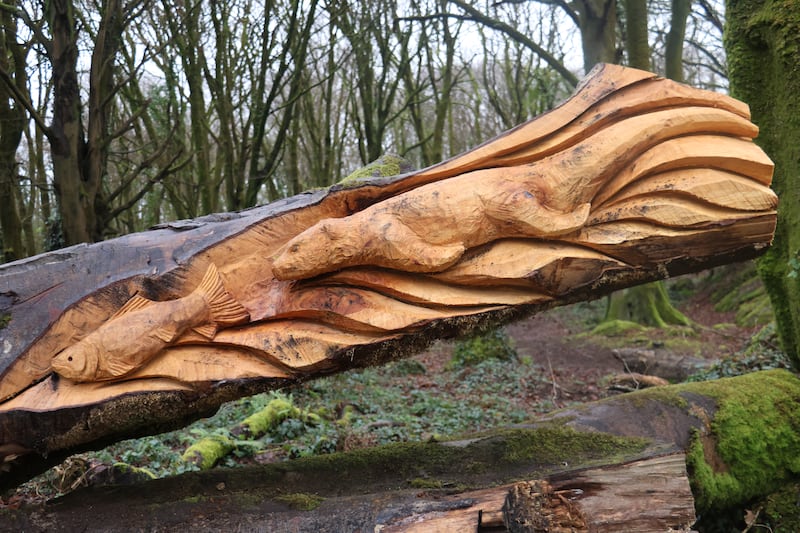 A wooden otter chases a wooden fish in this sculpture carved from a fallen tree in Barna Woods. Photograph: Ronan McGreevy
 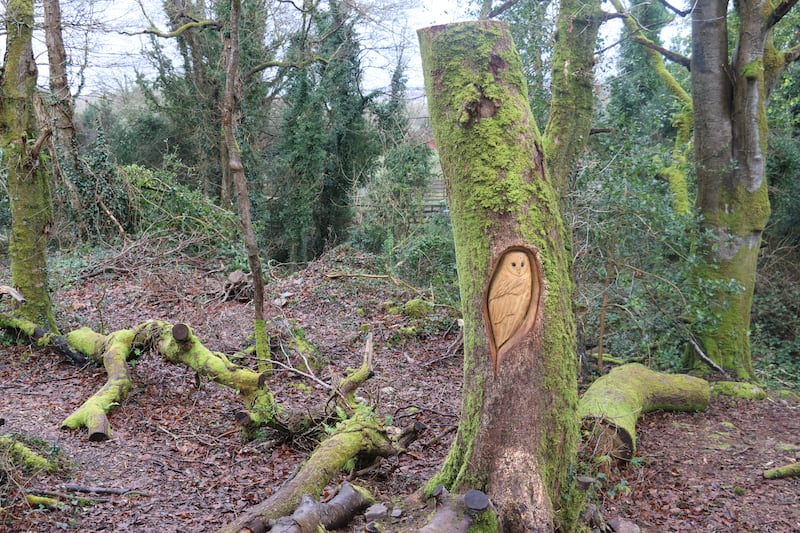 A sculpture of an owl carved from a storm-damaged tree in Barna Woods. Photograph: Ronan McGreevy
Galway City Council opted to turn the disaster of the storm into an opportunity to leave a tangible legacy. It commissioned chainsaw artist Will Fogarty to create sculptures out of fallen trees. He has created an eagle, an owl, an otter chasing a fish, a tree spirit and a tree house from the trunks of trees. These much-admired sculptures are now a tourist attraction.
The collapse of the Connacht GAA Air Dome at Bekan in Co Mayo was one of the enduring images of Storm Éowyn. It was a devastating loss for Connacht GAA and for the 250,000 who were using it on an annual basis.
“It was a huge loss financially to us, but it was also a huge loss to the young people of Ireland,” says Connacht GAA chief executive John Prenty.
A replacement is being built in Slovenia, one that he hopes will be more resilient, with new technology that has moved on since the original was built seven years ago.
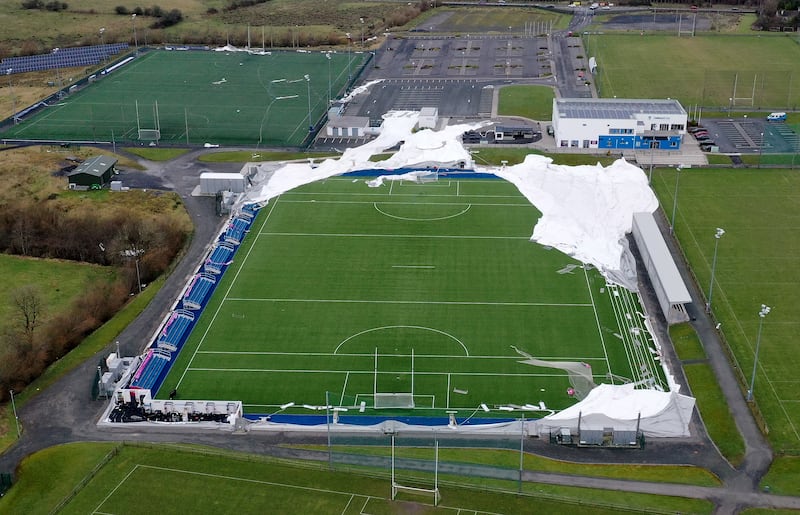 High winds from Storm Éowyn destroyed the Connacht GAA Air Dome in Mayo. Photograph: ©Inpho/James Crombie
“Hopefully, weather permitting, we will be back in business in April. You can’t be sure, but hopefully this storm was once in a generation and we hope it won’t happen again in the next generation. We are happy that the structure is adequate.”
The original cost was €3.5 million and he anticipates its replacement will cost something similar.
Connacht GAA, he says, is no different from the householders and farmers who “just had to get on with it after Storm Éowyn. “We are of the philosophy that anything is possible if you do it right.”