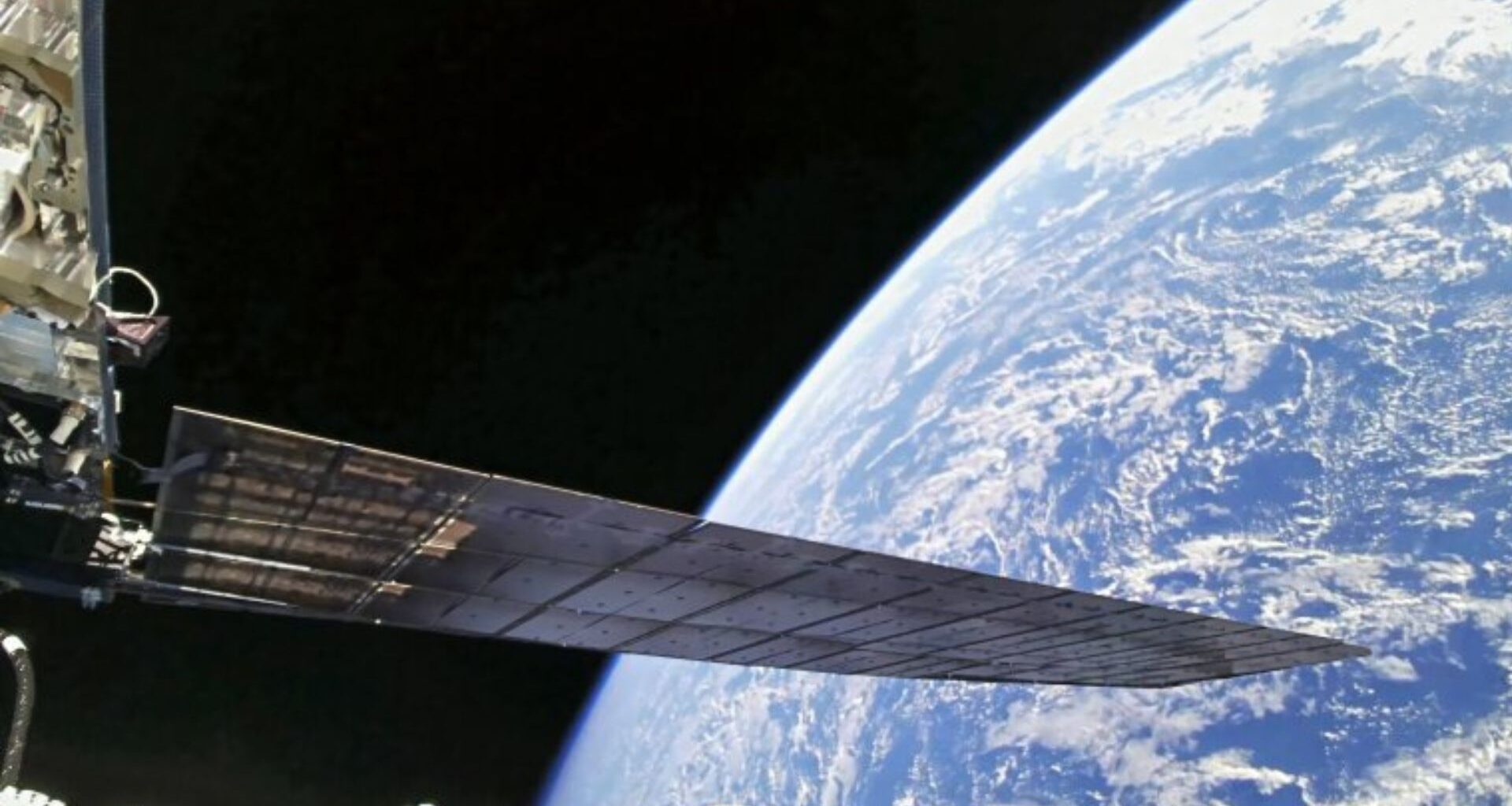
A team of scientists has found that, unsurprisingly, Amazon’s new internet mega constellation, Amazon Leo, has a strong probability of disrupting astronomical research.
The findings are in keeping with reports from astronomers that SpaceX’s Starlink satellites are increasingly ruining their observations. Since the company first started lifting the satellites to space in 2019, streaks of light have botched countless observations.
Amazon’s Leo satellites add to space congestion
Amazon currently has approximately 180 active Amazon Leo satellites in low Earth orbit. The company first started launching its mega constellation, formerly known as Project Kuiper, to space last year.
The new study, which was posted on preprint server arXiv this month, analyzed roughly 2,000 observation of the Amazon satellites. In it, the team behind the study concluded that the satellites exceed the brightness limit recommended by the International Astronomical Union (IAU).
The satellites have an average apparent magnitude of 6.28. While this is too dim to be visible to the naked eye, like SpaceX’s Starlink satellites, it still interferes with astronomy.
Study lead author Anthony Mallama, an astronomer at the IAU Center for Protection of the Dark And Quiet Sky, and colleagues have previously studied SpaceX’s Starlink megaconstellation. With roughly 9,500 satellites in orbit, it is by far the worst offender when it comes to disrupting astronomical science. However, new constellations like Amazon Leo and AST SpaceMobile’s BlueBird satellite arrays only deepen the problem.
It’s worth noting that the problem goes beyond peering into the cosmos. In 2022, NASA warned that SpaceX’s Starlink mega-constellation could impede its “ability to detect and possibly redirect a potentially catastrophic impact” from a near-Earth asteroid.
A growing problem
Though the researchers noted that Amazon’s Leo satellites are slightly dimmer than SpaceX’s Starlink satellites, there is one important caveat. The Starlink constellation is in Earth’s shadow for most of its orbit, making it less disruptive than it would be otherwise.
What’s more, Amazon’s satellites are likely to be more disruptive in the future. The first operational batch of satellites, launched atop a United Launch Alliance (ULA) in 2025, are orbiting Earth at an altitude of 391 miles (630 kilometers). Future Leo satellites will orbit at lower altitudes of around 366 miles (590 km), the scientists said. This will increase their brightness and make them more visible in astronomical observations.
Amazon eventually aims to grow its Leo constellation to more than 3,200 satellites. In an interview with Space.com, Mallama did state that Amazon has been cooperative in engaging with astronomers to work on mitigating the problem.
Though SpaceX and Amazon are both working on mitigating the problem, critics still state that the best fix would be drastically reducing the number of satellites flying to low Earth orbit. In a 2022 interview with IE, Meredith Rawls, an astronomer at the University of Washington, said the Starlink problem is completely “unsustainable”.
“We all share the sky,” Rawls continued. “I think it’s essential to broaden the conversation to include much more than just astronomers and satellite companies, to find creative ways to deter unilateral actions.”
What’s more, “If SpaceX were the only company poised to launch (tens of!) thousands of satellites, we’d be staring down a very different situation,” she continued. “As it is, we have only seen the tip of the iceberg.”