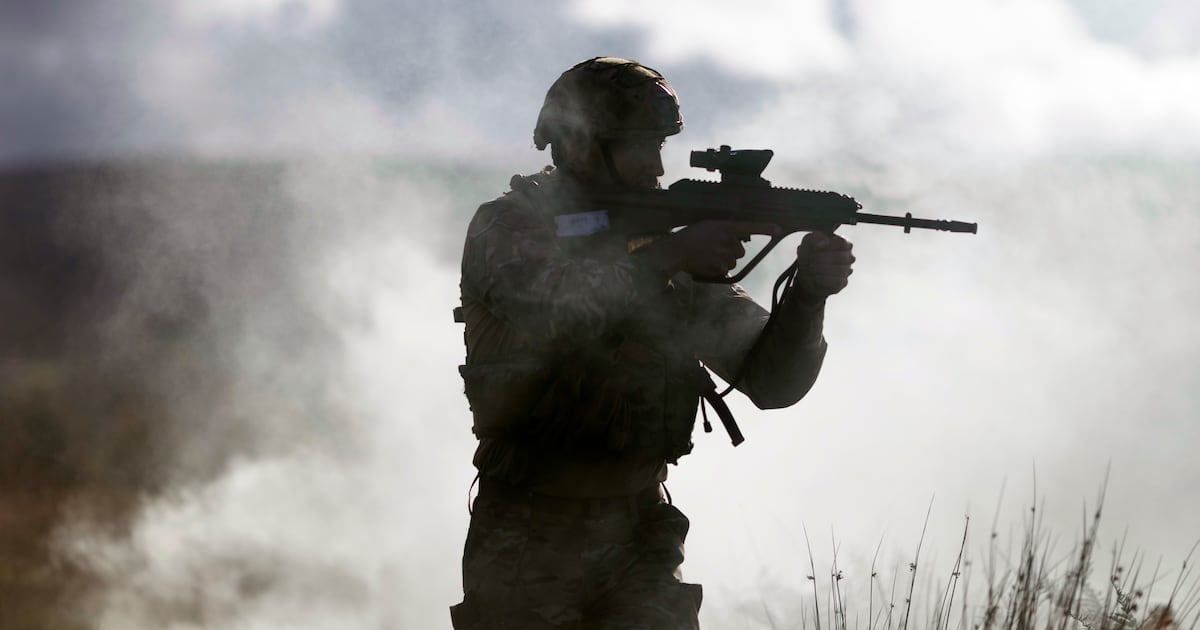
The Government is set to reject a recommendation from an Oireachtas committee to have a “formal legal review” before Irish troops are sent abroad on peacekeeping missions once the triple lock is abolished.
The Cabinet is likely this morning to approve plans to push ahead with the abolition of the triple lock, which requires UN approval before Irish troops are sent abroad on peacekeeping missions.
The Defence Amendment Bill is likely to be brought before the Oireachtas in the coming months, where Opposition parties have vowed to fight the measure, with support from NGOs and campaigning groups outside Leinster House.
The bill, introduced by the Minister for Defence Helen McEntee (who is also Minister for Foreign Affairs) will provide for the removal of the so-called triple lock, which is triggered whenever more than 12 members of the Defence Forces are being deployed outside the State as part of an international force.
It provides that no Irish mission can be deployed without being sanctioned by three bodies: the United Nations, the Government and the Dáil.
The Government has argued that the ongoing deadlock between permanent members of the Security Council has meant no peacekeeping mission has been sanctioned since 2014. It says the requirement for the UN mandate in effect gives a veto to Russia, China and the US on Irish troop deployments.
But Opposition parties and pro-neutrality campaigners argue the abolition of the triple lock will lead to erosion of the Republic’s long-standing policy of military neutrality.
Removal of the triple lock was included in the programme for government agreed last year between Fianna Fáil and Fine Gael.
It is understood the Government may include provision for an annual review of any missions, but senior sources said the proposal of the Oireachtas Defence Committee last year for a “formal legal review” before any troops are sent abroad will be rejected.
One source said this would be “getting rid of one triple lock and replacing it with another”.
The Bill will also increase to 50 the number of Irish troops that may be deployed abroad before a Dáil vote is required.
The Cabinet will also approve plans for this year’s programme of St Patrick’s Day visits abroad. It will be the largest ever undertaken, and will comprise 40 separate visits by Ministers, the Attorney General and the Ceann Comhairle to 52 countries worldwide. Government sources remained adamant that Taoiseach Micheál Martin will visit US president Donald Trump in Washington for the traditional St Patrick’s Day events, despite growing calls from the Opposition to boycott the annual events in the US capital.
Irish officials are understood to be in contact with their US counterparts regarding the events, which typically feature meetings and social occasions in the White House, the vice-president’s residence, on Capitol Hill where the Taoiseach meets Congressional leaders and business-focused events during a week when Ireland enjoys huge prominence in Washington.
But the backdrop to this year’s visit is ever-more strained relations between the Trump administration and the EU – and a new resolve in Brussels after Mr Trump’s rebuffed designs on Greenland to take a tougher line with the US.
Meanwhile, Ministers are due to gather in Farmleigh House this evening for a special meeting to consider priorities for the year ahead, likely to focus heavily on progressing plans for the delivery of housing and other vital infrastructure.
There are also concerns around Government that the EU presidency in the second half of the year will distract Ministers from pushing their departments to make progress, officials say.