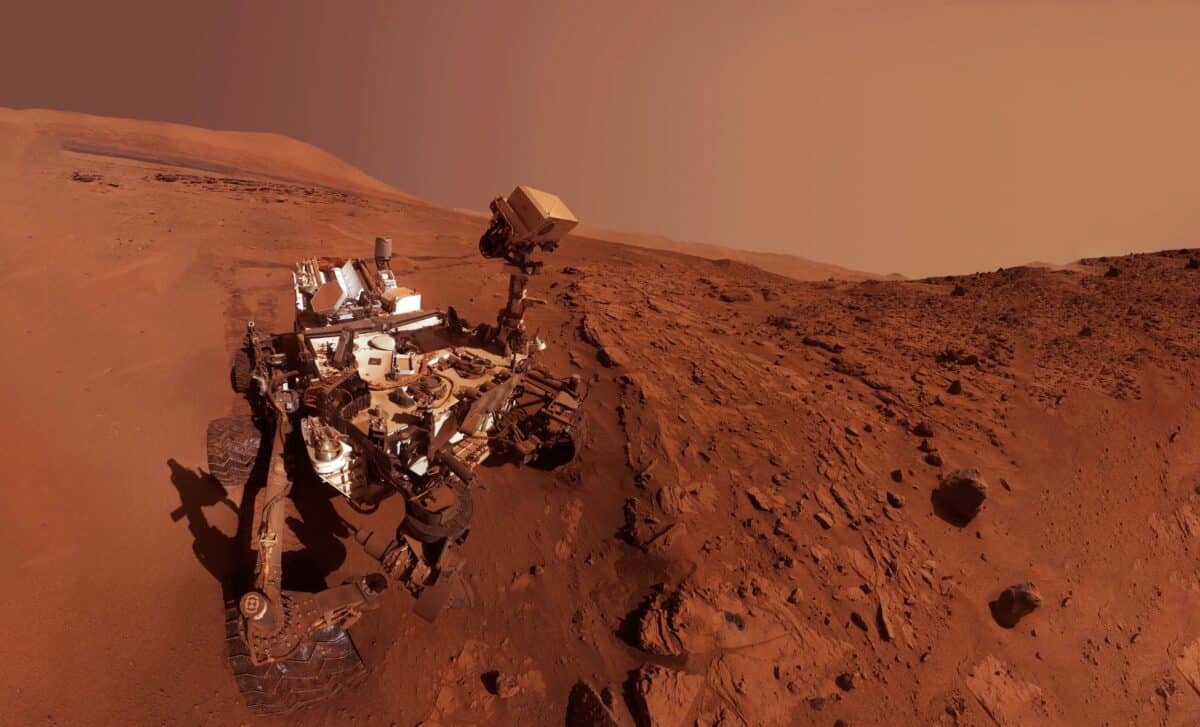
NASA’s Curiosity rover has photographed a bizarre, coral-shaped rock on Mars, believed to have formed billions of years ago. The image, taken in July 2023, captures a formation just an inch wide but rich in geological storytelling, shaped by processes that suggest Mars once had flowing liquid water. This isn’t the first oddly shaped rock Curiosity has found, but it’s among the most visually striking.
Deployed in 2012, Curiosity has been exploring the Red Planet for over a decade, steadily gathering evidence of ancient environmental conditions. Its mission is centered around determining whether Mars ever had the right conditions to support microbial life, and each rock it encounters is a clue in that search.
Erosion’s Billion-Year Masterpiece
On July 24, which marked the 4,609th sol (Martian day) of its mission, Curiosity sent back a detailed image of the small, coral-like structure. Although the rock is only about 1 inch wide, its delicate ridges and curves hint at a long and complex formation history. The visual resemblance to coral reefs is striking, though purely geological.
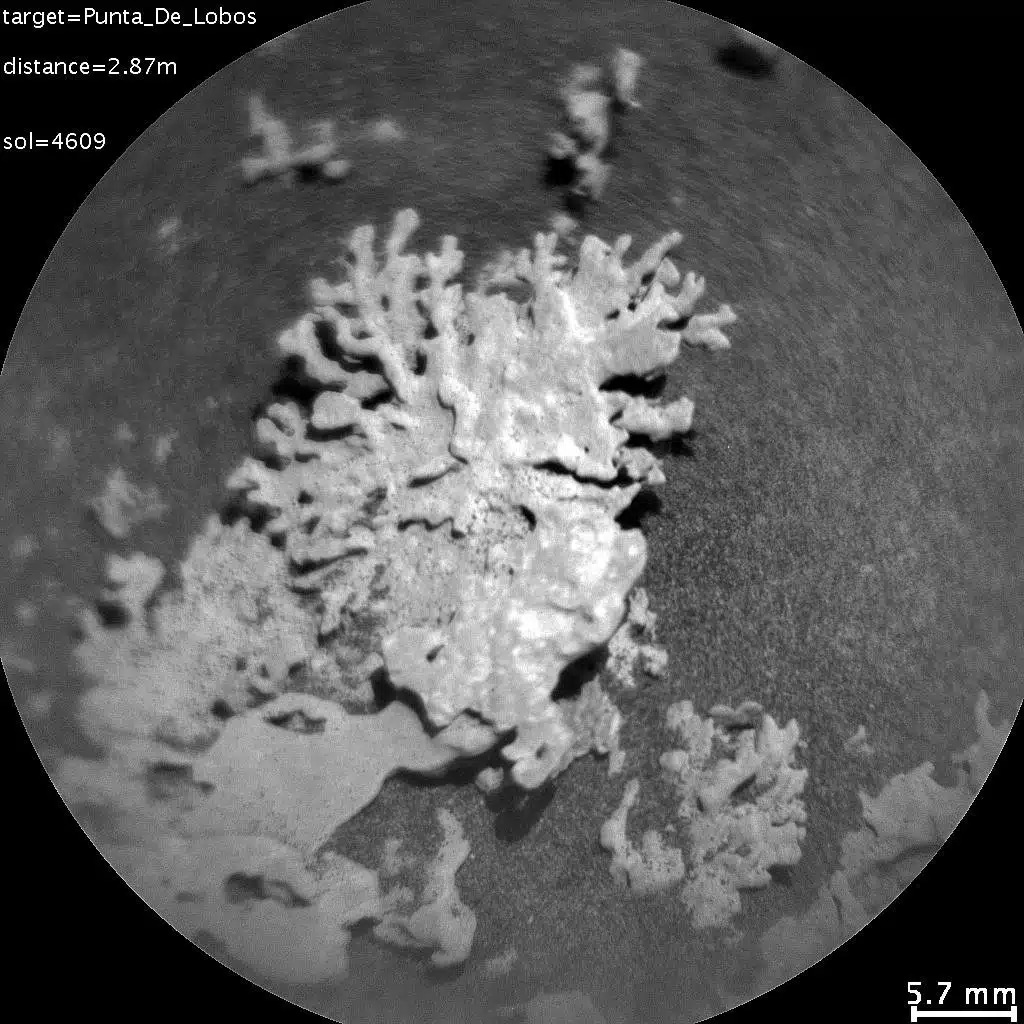 Coral-shaped Martian rock captured by Curiosity on sol 4609. Credit: NASA’s Jet Propulsion Laboratory
NASA reports that similar formations have been spotted before, including a 2-inch rock nicknamed “Paposo” found on the same day. These shapes, while unusual, are not rare on Mars, especially in areas where wind erosion has had free rein for eons. The Space Agency noted that:
“Water carried dissolved minerals into rock cracks and later dried, leaving the hardened minerals behind.”
Curiosity Updates Mars’ Timeline
The unique structure of the rock points to a past shaped by water movement. According to NASA, the coral-like shapes likely originated when mineral-rich fluids flowed through fractures in the Martian bedrock. These fluids deposited minerals that hardened, and once exposed at the surface, they were gradually etched by windblown sand.
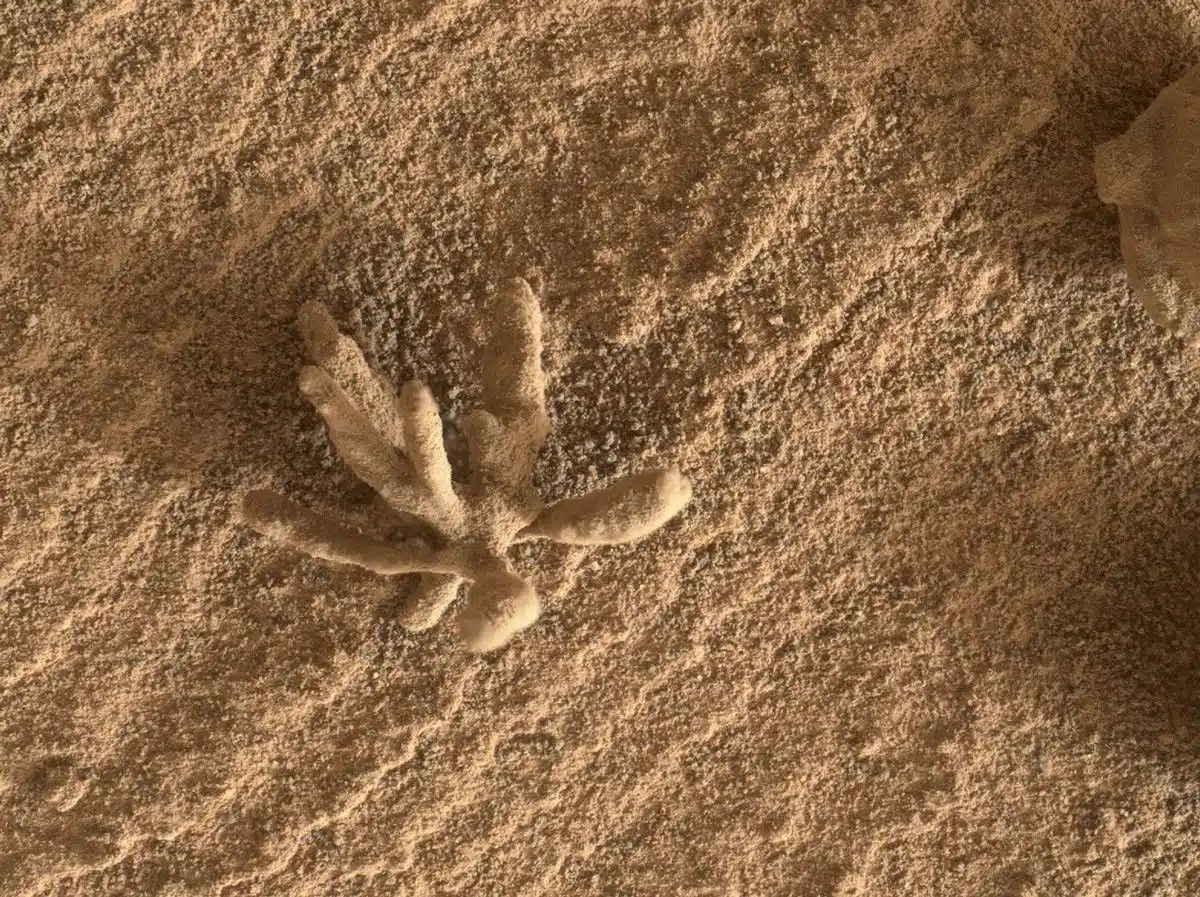 This tiny flower-shaped rock was captured by Curiosity’s MAHLI camera. Credit: NASA
This process is not new to researchers. In 2022, a similarly peculiar flower-shaped rock was documented by Curiosity. NASA linked that find to the same mineralization mechanism, further confirming that underground water movement once played a significant role in shaping parts of the Martian landscape. These repeated discoveries add to the narrative that Mars once had a much wetter climate, even if only temporarily.
Signs Of Ancient Water Systems Locked In Rock
Curiosity, developed by NASA’s Jet Propulsion Laboratory, landed in Gale Crater after an eight-month journey covering 352 million miles. From the start, its mission was focused on examining whether Mars could have supported life. Early on, the rover found chemical and mineral evidence suggesting that habitable conditions existed in the planet’s distant past.
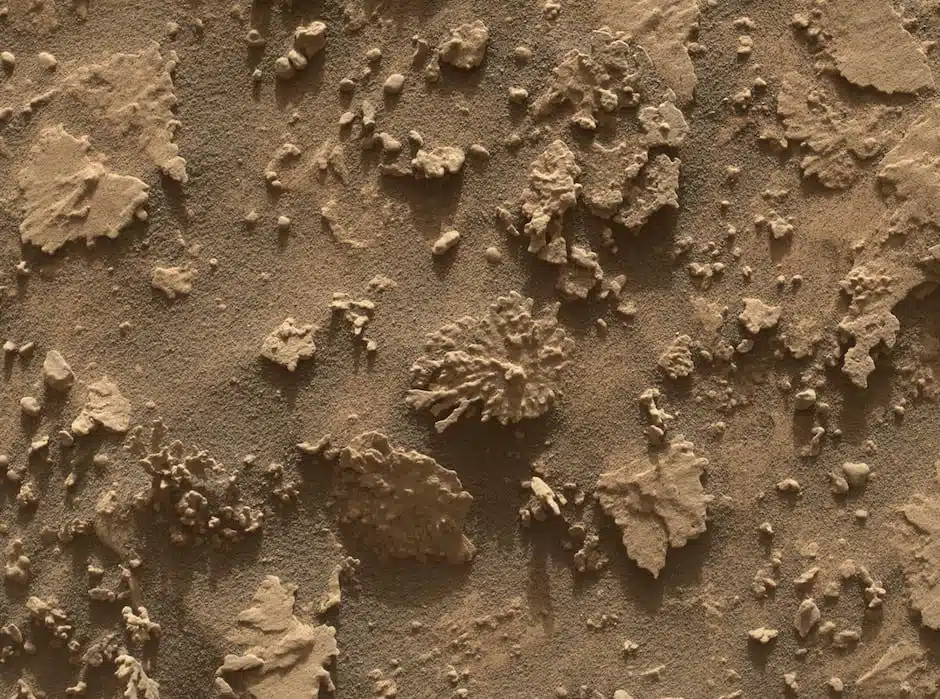 This mosaic of textured rock structures on Mars was imaged by NASA’s Curiosity rover. Credit: NASA/JPL-Caltech/MSSS
As stated by United States’ space exploration agency, the rover has now traveled over 22 miles, collecting rock samples and atmospheric data, all of which contribute to a detailed geological map of ancient Mars. Its exploration continues around Mount Sharp, a central peak within Gale Crater believed to hold layered records of environmental change.
This latest coral-like find doesn’t confirm life ever existed on Mars, but it does reflect a time when the planet’s surface was actively shaped by liquid water, opening up more questions about its long-lost climate and potential biological history.