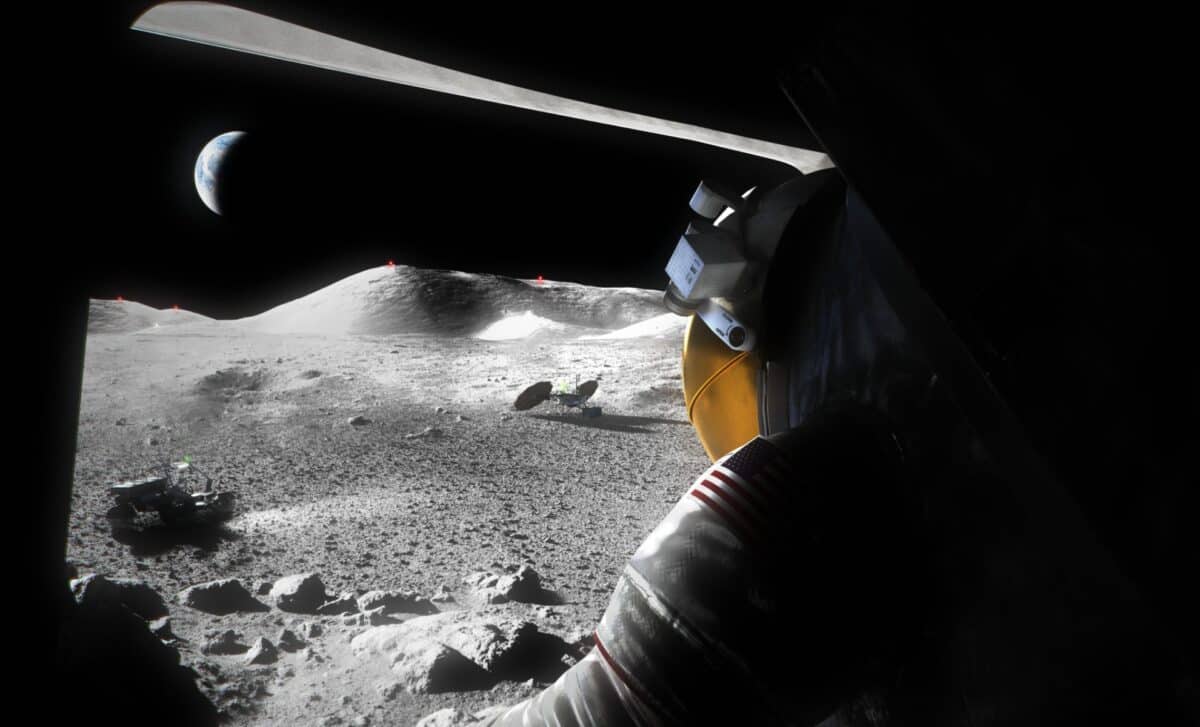
NASA has renewed its push to return American astronauts to the Moon by 2028, placing the upcoming Artemis II mission at the center of its efforts. The agency has framed its progress as part of a broader acceleration in U.S. space activity, with support from the National Space Policy and budget boosts tied to recent legislation.
While this timeline marks a shift from earlier plans, NASA officials say it reflects a sharper focus and increased capacity. With public attention on space exploration rising again, the agency is using recent milestones to underscore its readiness for a new phase of human spaceflight.
Artemis II Positioned As Key Turning Point
NASA is placing high importance on Artemis II, the next major step in the agency’s lunar campaign. Described as the first crewed mission to orbit the Moon in more than 50 years, it is intended to demonstrate NASA’s ability to send astronauts beyond low Earth orbit once again.
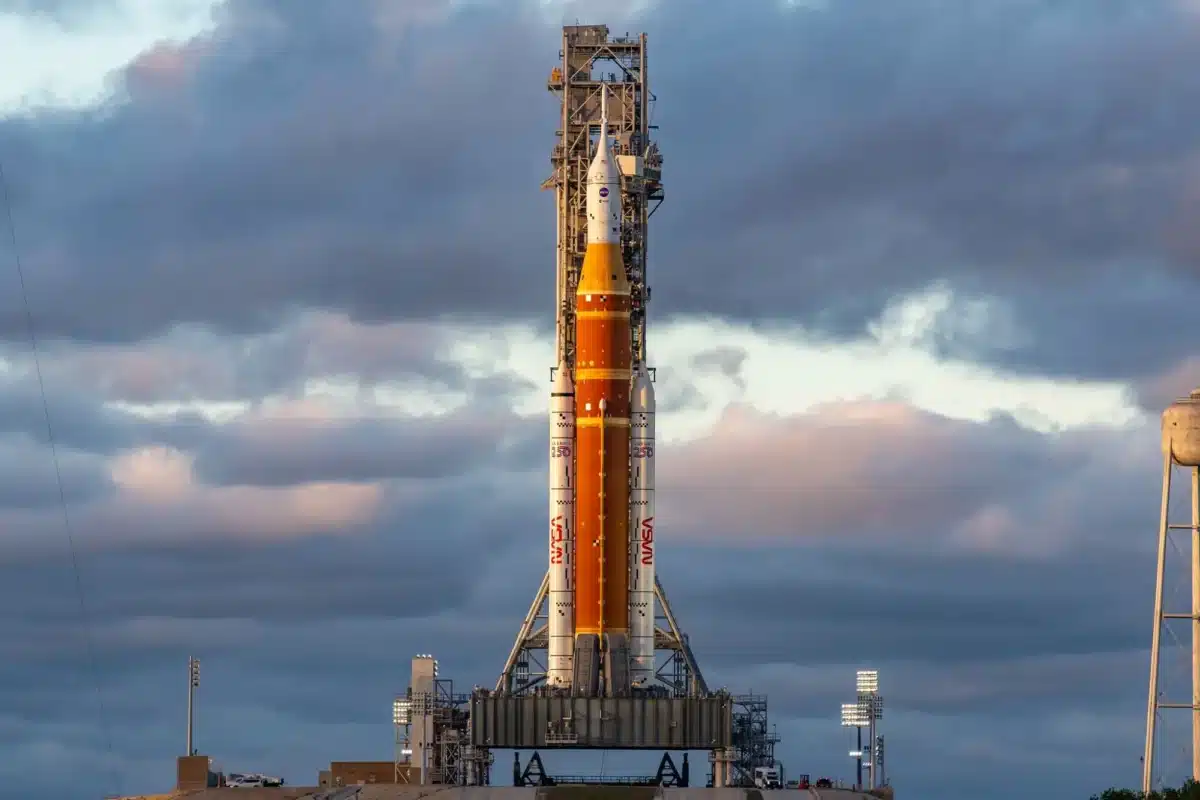 SLS rocket on the pad, set for Artemis launch at dawn. Credit: United Launch Alliance
In a public-facing update, NASA stated that Artemis II is more than a symbolic gesture, it’s a “prove-it” mission meant to set the stage for a permanent return to the lunar surface. According to Earth.com, the agency explicitly tied this progress to groundwork laid during a prior presidential term, including the formation of the Artemis program and the Artemis Accords, which now count 60 nations as signatories.
A Faster Tempo Across Missions and Technologies
The agency’s latest report highlights a year marked by significant activity: two human spaceflight missions, 15 science missions, and the test flight of a new experimental X-plane. The Space Agency describes this tempo as an outcome of “reduced friction,” a result of what it calls “clarity, purpose, and momentum” in its operations. As Jared Isaacman, NASA Administrator, stated:
“From strengthening our focus on human spaceflight and preparing for the first deep space exploration by NASA astronauts in more than half a century, to accelerating innovation across science, technology, and national capability, the President has provided the clearest executive direction for NASA since the Kennedy era.”
This acceleration spans multiple domains: Earth science, planetary defense, and aeronautics, which traditionally progress on separate timelines. By presenting them as part of a unified agenda, the agency appears intent on showing that it’s exceeding the pace expected from a large federal agency.
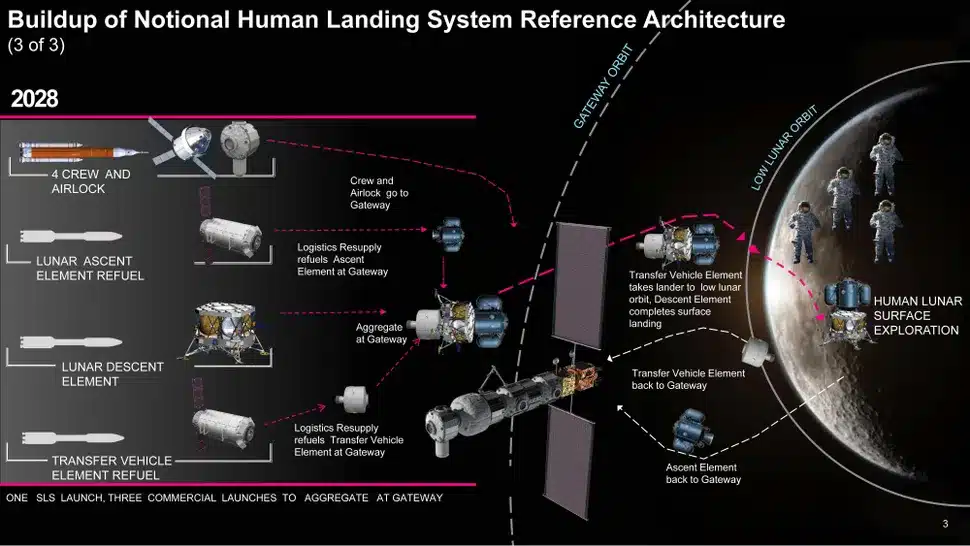 NASA’s 2028 landing system concept shows crew and hardware staging at Gateway before lunar surface operations. Credit: NASA
New Priorities Signal Long-term Intentions
NASA’s message is forward-looking but grounded in near-term action. It confirmed that it expects a human return to the Moon by 2028, followed by the development of a longer-term presence, including infrastructure for a lunar base. The plan also includes preparations to bring the Nancy Grace Roman Space Telescope online before the end of 2026, though alternative launch readiness windows have been acknowledged.
In tandem, the national space program is continuing to promote research into nuclear propulsion technologies, positioning them as enabling tools for deep space travel. While the report does not evaluate readiness, it signals that these efforts are considered key investments with a long runway.
NASA’s latest update, as highlighted by Earth.com, outlines what the agency hopes to drive in the coming years, including steady launches, concrete progress, and technologies built for long-term use.