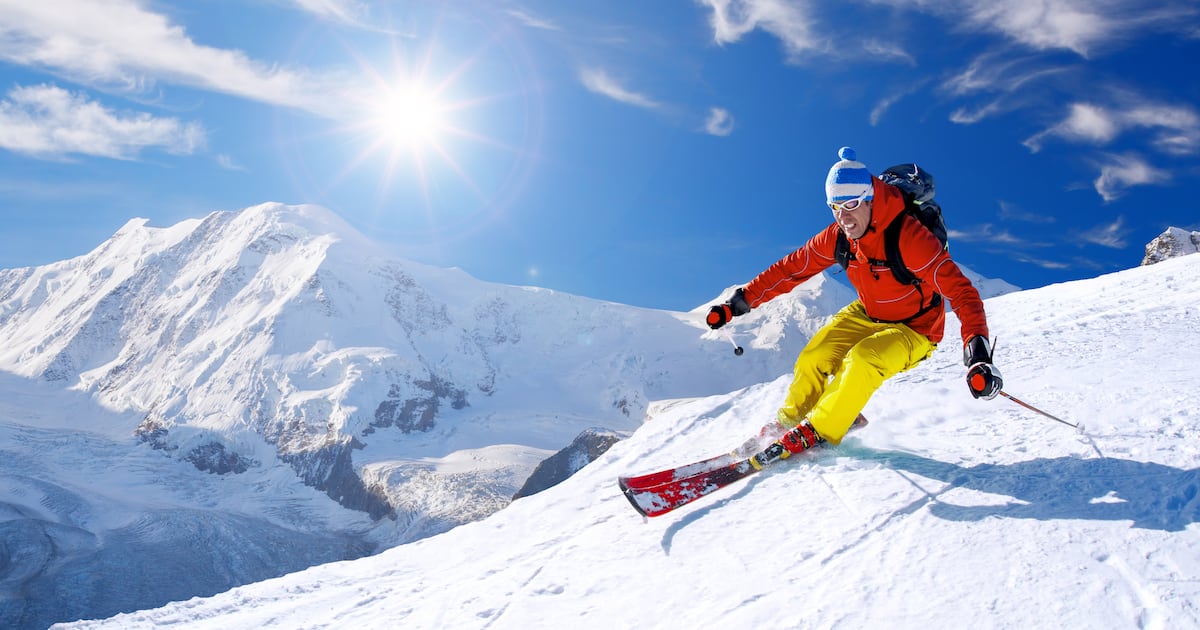
Last week an Irish man in his 50s was pronounced dead as a result of serious injuries he sustained in an avalanche while skiing in the Swiss Alps.
There have been a number of similarly tragic incidents this ski season. Avalanches have had fatal consequences for skiers in Austria, France, Italy and Switzerland; four skiers were recently killed by a snow slide in Salzburg.
According to Swiss police, the avalanche that killed the Irish man occurred in an off-piste area, meaning it was away from the groomed, marked and patrolled ski trails where snow has been levelled for optimal conditions.
Pistes are the slopes used by most skiers, usually positioned beside a ski resort. Off-piste skiing, however, occurs off the beaten track, through untouched terrain where skiers may be impressing the first tracks on fresh snow.
“There’s nothing like it,” says Kathryn Mason of the Irish Association of Snowsports Instructors (IASI). “It’s very hard to explain. There’s a feeling when you come down a ski field, that nobody has skied down, when it’s safe. You go down and you’re doing those turns and there’s a bounce in your skiing – it’s just the most incredible feeling.”
As well as being a board member for the IASI, Mason has been a ski instructor for about 20 years. At the time of speaking, she is beside a resort in the mountains on the Swiss-French border.
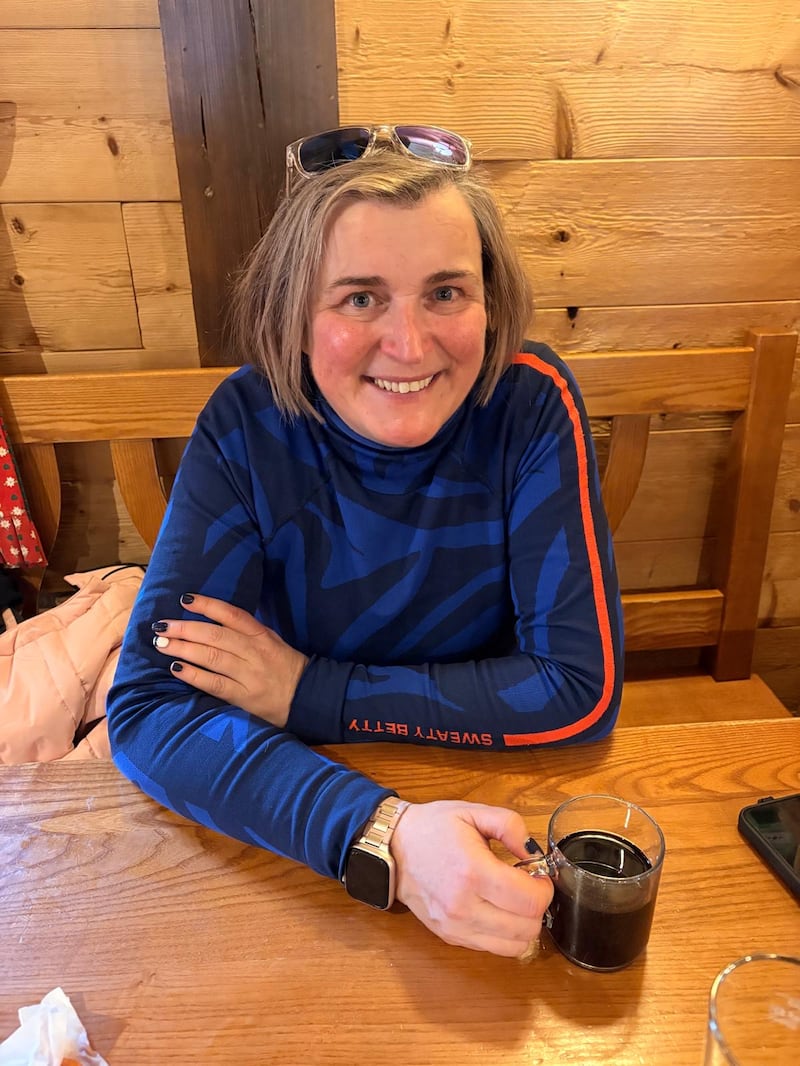 Kathryn Mason of the Irish Association of Snowsports Instructors has been a ski instructor for about 20 years
“I absolutely love it, but I would be always super careful,” she says. “Because of my qualifications, and having done the different modules, I would definitely be more cautious.”
European Avalanche Warning Services say an average of 100 people die as a result of snow avalanches in Europe every year. Skiers account for many of these fatalities. Colder temperatures, wind activity and the amount of new snow in an area can affect the likelihood of an avalanche occurring.
“We’ve had a very odd snow season,” Mason says. “We had a massive amount of snow at the end of November, beginning of December … There was nothing until about 10 days ago when we got another dump. That was it and we haven’t had anything since.”
An avalanche danger scale with levels ranging from one to five is used to forecast a regional risk level. Though level five poses the most danger, the majority of deaths from avalanches occur at level three, when people are more likely to take a risk.
“When it’s level five, nobody goes out off-piste skiing,” Mason says. “Everybody knows that’s mad. [When it’s lower], people take more risks. A level-three day is more risky for people getting caught in an avalanche.”
Avalanches can occasionally affect pistes, but generally speaking they are far more likely to hit off-piste trails. If there is a build-up of snow, ski resorts tend to take matters into their own hands by triggering an avalanche while the slopes are empty.
Piste bashers – large, heavy-tracked vehicles – are also employed when the trails are clear to smooth out the snow and maintain a resort’s slopes.
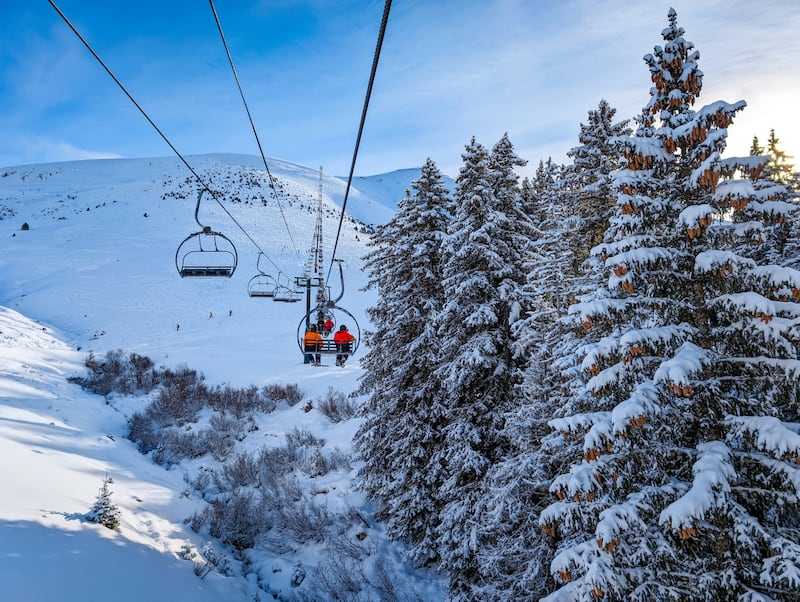 Winter skiing in the French Alps. Photograph: Getty
“Most resorts, every morning at 5 or 6 o’clock, when it’s been snowing, you’ll hear these massive explosions,” Mason says. “They set off natural avalanches, which usually come on to the side of the piste so they can have it cleared before the day starts and before anybody comes on to the piste.”
Donal Murphy is an instructor at Ireland’s only dedicated artificial ski facility, the Ski Club of Ireland, in Kilternan, Co Dublin – a nonprofit organisation propped up by volunteers.
“It would be more experienced skiers [going off-piste],” Murphy says. “What we deal with in the ski club is mainly beginners and improvers. We’d always be going skiing on-piste and we’d advise them always to join the local ski school when they get there.”
Murphy has only gone off-piste skiing once and says he would never attempt it without a local guide. Anyone considering going off-piste needs training and special equipment, including a transponder to locate them in case something bad happens, he says.
Like Mason, Murphy skis in Europe every year, and is just back from a trip to Austria. Though he happy to stick with pistes, he acknowledges the attraction of the alternative for experienced skiers.
“It’s away from everybody,” he says. “You’re out in the country. There’s no noise, no nothing. Untreated snow. So, it’s really attractive for experienced skiers. You really get a feeling of the mountains a bit more than the piste.”