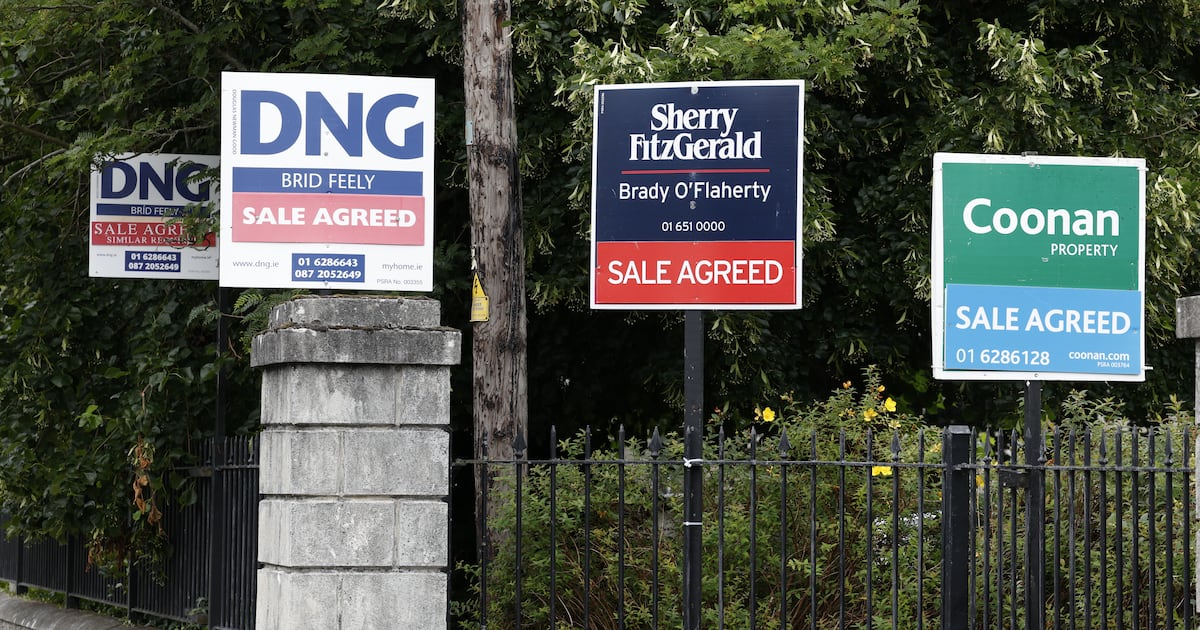
Small landlords will be able to issue an eviction notice at any time during a tenancy where they are selling a property to service a debt or make another payment, under new rules being introduced by the Government.
While officials expect the rules will greatly reduce the number of evictions, there will be circumstances where a smaller landlord – defined as holding three or fewer tenancies – facing financial hardship can evict a tenant before selling up.
Included in the definition of financial hardship will be situations where a smaller landlord intends to service a debt or make another payment with the proceeds of the sale. The payment must be equivalent to at least 15 per cent of the expected sale price.
A smaller landlord seeking to do this will not have to wait until the end of a new tenancy of minimum duration, which under the new legislation must last six years.
The rental market reforms, which went to Cabinet on Tuesday, will come into effect from March 1st.
[ Rent control plan unworkable on current timeline, Ipav saysOpens in new window ]
It is understood that a debt will not have to be in arrears in order to qualify as evidence of being in financial hardship.
It is expected the legislation, which will be made available in the coming days before being debated by the Oireachtas, will also allow for a so-called “vacant possession” sale by smaller landlords in other circumstances of financial hardship, such as bankruptcy.
Tenants will be able to challenge such a step by seeking an adjudication from the Residential Tenancies Board, which will have a significantly expanded remit in enforcing the new regulations.
Smaller landlords will also be able to sell up at any stage using a tenant-in-situ programme.
Minister for Housing James Browne said the reforms will strengthen the rights of tenants, but also help to drive supply and investment in rental properties.
“Our housing crisis is a supply crisis, our rental crisis is a supply crisis, our homeless crisis is a supply crisis. The only way we’re going to solve any of these is by increasing supply,” he said.
Officials expect that average rents will continue to drift upwards after the new regime is introduced, with no time frame available for when they might moderate – which they say will depend on how quickly new supply comes on-stream.
Under the new rules, annual rent increases will be capped at 2 per cent annually or the rate of consumer price inflation, or for new apartments, the rate of inflation only. When a new tenancy is established, landlords will be able to set the rent at a market rate, which will be informed by a rent price register.
This will only be allowed where the previous tenant leaves of their own choice or has breached their obligations, or the property is no longer suitable for the tenant’s need. Rent resets will also be allowed at the end of each six-year tenancy of minimum duration.
Student-specific accommodation is to have its current rent frozen until March 2029, at which point owners will be able to reset for another three-year period.
In the Dáil, Taoiseach Micheál Martin insisted the legislation would bring “an effective end to no-fault evictions”.
[ What is the priority legislation coming before the Dáil this term?Opens in new window ]
He rejected claims by Social Democrats leader Holly Cairns the legislation was “the latest betrayal” of renters and those struggling to buy a home.
He said Ms Cairns forgot to acknowledge that the tenancies of more than 240,000 people currently renting “will not be impacted in any way by this legislation”.
Ms Cairns accused the Government of constantly being focused on protecting landlords’ profits in the middle of a cost-of-living crisis when “rents have already doubled over the last 10 years”.
Mr Martin said what the Social Democrats have proposed for the past two to three years “would dampen supply, disincentivise investment and would not have any significant impact in terms of reducing rent”.
The idea of a rent freeze is “very popular, but it would undermine the rental market very significantly and to such an extent that you would have a depression in supply”.