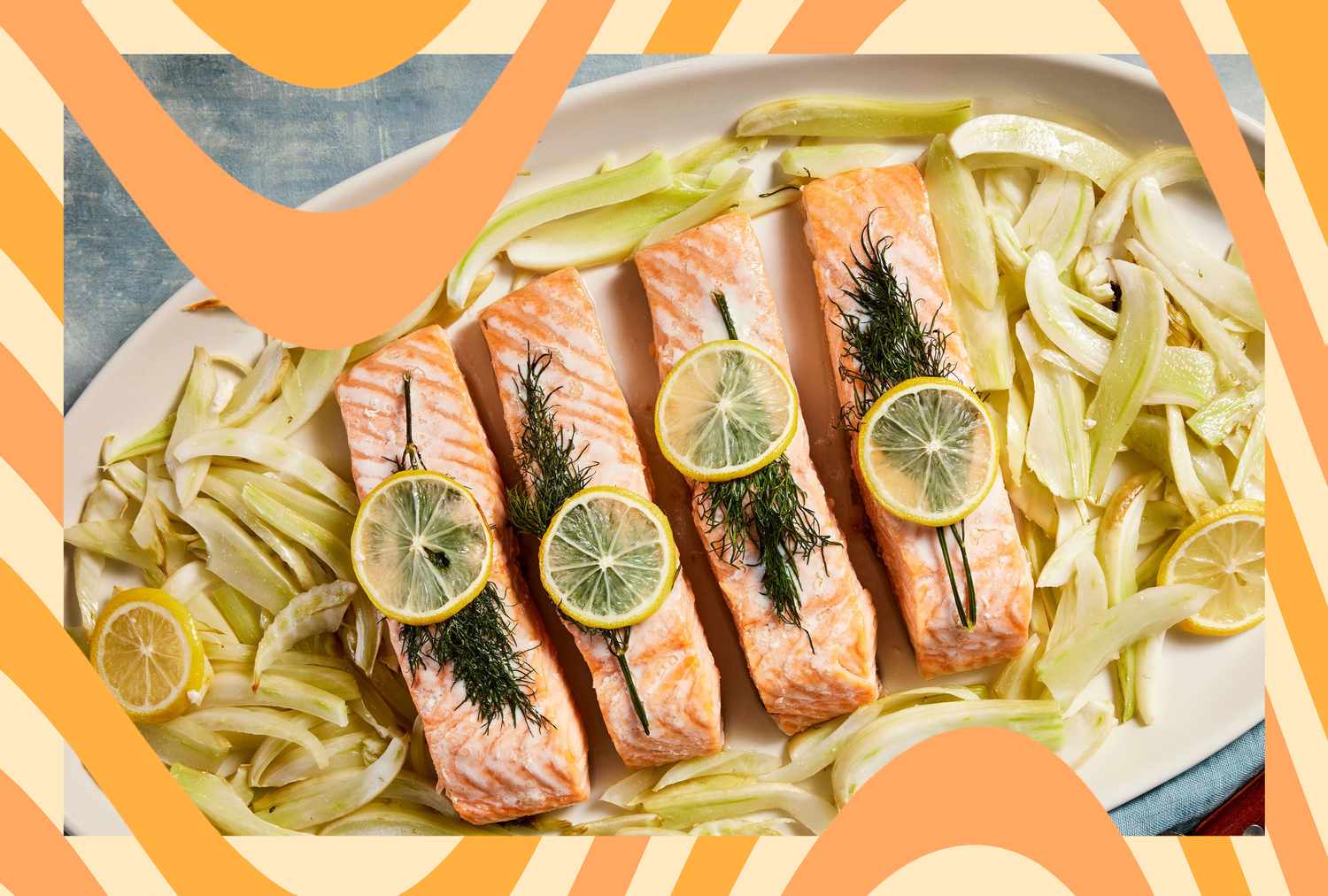
- Cooking methods like baking, poaching and cold smoking can help preserve salmon’s omega-3s.
- Pairing salmon with antioxidants can boost omega-3 absorption.
- Walnuts, chia and hemp seeds are also rich, accessible sources of omega-3s.
Salmon is one of the best dietary sources of omega-3s, an essential fat with a multitude of health benefits. Research has linked consuming omega-3s with a reduced risk of heart disease and inflammation, as well as improved immune health and cognitive function. The Dietary Guidelines encourages people to eat seafood twice a week, emphasizing choices high in omega-3s, but over 90% of Americans don’t hit those recommendations. The adequate intake for omega-3s is 1.1 to 1.6 grams per day, and cooked salmon provides about 1.5 to 1.8 grams per 3-ounce serving. Salmon get their boost in omega-3s by eating plankton, algae and other plant foods. The amount of omega-3s in salmon varies depending on whether the fish is farm-raised or wild-caught, with farmed salmon typically providing more due to their additional fat.
But the way that you cook your salmon can also affect the amount of omega-3s that are retained in the fish. “Research shows salmon still retains most of its omega-3s after cooking, but some loss can occur if exposed to excessive heat for too long,” notes Teresa Maiorano, RD, a registered dietitian and cookbook author.
Here are some of the best ways to prepare salmon to maximize the amount of omega-3s you eat, plus a few other ideas for getting your healthy fats in.
Bake
Baking is a classic way to cook salmon, and a great way to maintain the omega-3s in the fish. Maiorano suggests baking at a moderate temperature of about 350°F. The key to maintaining omega-3s as the salmon cooks is not using really high heat. Some baked salmon recipes call for higher temperatures of 400-450°F, which gives you a crispier fish, but if you put the temperature too high, this could compromise the fatty acid content. Maiorano cautions against overcooking salmon or heavily charring it to preserve as many omega-3s that can degrade with high heat. She notes, “Salmon is best when it flakes easily, but still looks moist inside.” You can play around with different temperatures and timing, but make sure your salmon is cooked to an internal temperature of 145°F. According to our test kitchen, the fish will continue to cook when it comes out of the oven from the residual heat, so you may want to remove it from the oven a bit before it’s ready.
Steam or Poach
Wet cooking methods such as steaming or poaching keep the fish moist and the cooking temperature tame. “Avoiding any high-temperature cooking is a good way to preserve omega-3s,” Sara Haas, RDN, LDN, says. She suggests poaching or steaming as a way to keep the temperatures down and still end up with a delicious piece of salmon. If you want to try these methods, you might enjoy our Citrus Poached Salmon with Asparagus.
Smoke
While we may enjoy smoked salmon at a bagel shop or morning brunch, many of us don’t think of smoking salmon as a way to cook it at home. Jade Taylor, owner of Angel Oak Smokehouse in South Carolina, says, “Cold smoking preserves the highest levels of omega-3s because it requires no heat. Our cold smoked salmon is cured with salt and then smoked at temperatures below 75°F, which allows us to preserve the omega-3 content of the salmon since there is no heat degradation.” You can smoke salmon at home, or leave it to the pros and purchase smoked salmon at the grocery store. Taylor adds that cold smoked salmon is “ready to eat straight from the package, which offers the convenience of premium nutrition without any preparation.”
Pair with Antioxidant-Rich Foods
How you cook your salmon is important, but so is what you cook it with. “Pair salmon with antioxidants like lemon, fresh herbs or vegetables. These not only enhance flavor but also help protect delicate fatty acids from oxidation,” says Maiorano. Think of foods rich in vitamin C, like citrus, or foods rich in vitamin E, like nuts and seeds. Colorful vegetables are also a rich source of a variety of phytonutrients with antioxidant benefits.
Other Considerations for Omega-3 Absorption
Nutrient absorption can be impacted by other factors, like meal timing and nutrients from other foods. For instance, you may have heard to not take iron supplements with milk, since calcium and iron compete for absorption. For omega-3s, if you are eating them as part of a salmon dinner, you’re getting most of the healthy fats into your body. Omega-3s have an absorption rate of 95%, similar to other dietary fats.
But having other fats in your meal might boost omega-3 absorption. A study done on omega-3 supplements found that taking the supplements with a meal with some fat helped increase absorption. Dietary fat is needed to make the omega-3s more bioavailable. This is more of a concern with supplements, rather than eating fatty fish, which is already part of a meal that contains fat. Add avocado, nuts, seeds and olive oil to round out your meal with more healthy fats to help promote omega-3 absorption.
Other Sources of Omega-3 Fatty Acids
- Walnuts: Walnuts contain more omega-3 fats than any other nut. They are rich in alpha-linolenic acid, or ALA, an essential form of omega-3. Enjoy walnuts over yogurt or oatmeal, added to salads, or bonus omega-3 points if you’re making our Walnut-Rosemary Crusted Salmon.
- Chia seeds: Chia seeds are versatile and nutrient-dense, delivering a mix of protein, omega-3s and fiber. They are crunchy on their own, but combined with liquid they become more gel-like. Chia seeds make a delightful snack or meal as chia pudding.
- Other fatty fish: Salmon gets most of the spotlight, but plenty of fish are high in omega-3s, including sardines, herring and mackerel. Oysters, trout, shrimp and tuna also contain omega-3s, but in smaller amounts. Add some variety to your fish choices and try Gochujang-Glazed Grilled Mackerel or Spicy Sardine Linguine.
- Hemp seeds: Another tiny seed delivering big nutrition, hemp seeds are loaded with nutrients like fiber, protein, vitamins and minerals. They have a mild, slightly nutty flavor and work well sprinkled on top of nut butters, in smoothies or mixed into energy balls.
- Fortified foods: Omega-3s are hard to obtain naturally in your diet, especially if you don’t eat seafood, nuts or seeds. Thankfully, you can find foods fortified with omega-3s, such as eggs, bread, juice and yogurt.
Our Expert Take
“Salmon is one of the richest sources of omega-3s, and most gentle cooking methods, like baking, steaming and poaching, preserve these healthy fats beautifully,” states Maiorano. Don’t sweat it if you prefer grilled or air-fried salmon, as you’ll still get beneficial omega-3 fatty acids, but consider adding a few of these cooking methods to your rotation, and enjoy your salmon with antioxidant-rich foods. To get more of those healthy fats into your diet, include other omega-3-rich foods like walnuts, chia and hemp seeds. While omega-3s are a key nutrient, remember that when it comes to your health, it’s about your overall diet pattern and habits, not one specific food.