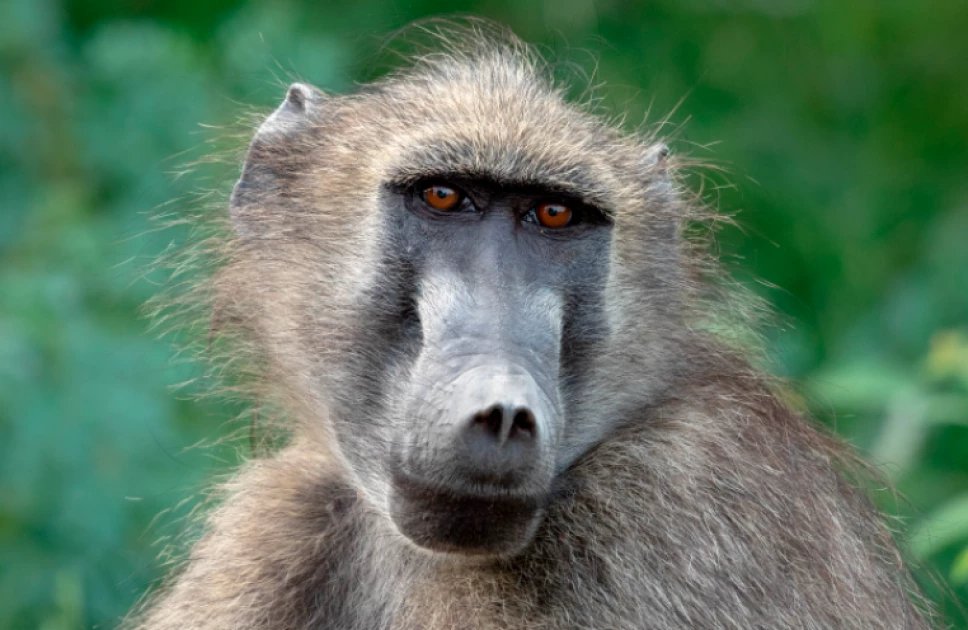
The siege of Kisumu West has taken a dramatic turn as beleaguered residents, pushed to the brink by years of primate terror, have taken matters into their own hands, capturing the marauding baboons that have laid waste to their farms.
For the farmers of Akingli village, this is not a wildlife documentary; it is a war for survival. After watching their maize crops decimated and their homes invaded by “ferocious” troops of baboons, the community, working alongside the Kenya Wildlife Service (KWS), has finally scored a victory. The capture of a dominant male baboon has been greeted with the relief usually reserved for the end of a famine.
“They Even Have Names”
The conflict has become so intense that the villagers have personalized their enemy. Farmers like Nicanor Odongo have named their dogs “Jubilee,” “Nasa,” and “Simba” to fight off the primates. The baboons, described as intelligent and organized, have reportedly learned to evade simple traps, requiring a new level of ingenuity from the KWS.
“We have been reduced to living from hand to mouth,” Odongo lamented. “You plant maize, but you harvest nothing. They eat the chicken, they threaten the children. We are prisoners in our own land.”
- The Strategy: KWS deployed steel cages baited with maize cobs. The hunger in the wild, exacerbated by environmental degradation, forced the primates to take the bait.
- The Threat: Beyond crop destruction, the baboons pose a health risk, with fears of zoonotic diseases spreading through close contact.
- The Solution: Residents are demanding that KWS gazette the area as a game reserve and relocate the humans, arguing that coexistence has failed.
A Losing Battle?
While the capture of a few baboons offers a morale boost, experts warn it is a drop in the ocean. The environmental degradation of the Lake Victoria ecosystem has pushed wildlife out of their natural habitats and into conflict with humans. The baboons are not invading; they are starving.
As the captured animals are carted away to Ndere Island Game Park, the residents of Akingli sleep a little sounder tonight. But in the morning, they will look towards the hills of Nyahera, knowing that the troop is still out there, watching and waiting.
The Human Cost
This conflict highlights a growing national crisis. From elephants in Tsavo to baboons in Kisumu, the human-wildlife conflict is costing billions in lost livelihoods. Until a sustainable balance is found, the farmers of Kisumu will remain soldiers in an undeclared war, armed with pangas and prayers against an enemy that knows no law.