[Editor’s Note: This article contains spoilers for “The Housemaid.”]
One of the reasons director Paul Feig‘s adaptation of Freida McFadden’s bestselling thriller “The Housemaid” has been cleaning up at the box office is that it’s a movie that not only rewards but demands repeat viewings. Rebecca Sonnenshine’s twisty script, like the book, reboots in the middle of the story to reveal that the man we thought was the perfect husband (Brandon Sklenar) is in fact an abusive sociopath — meaning that everything that happens in the first half plays completely differently the second time around.
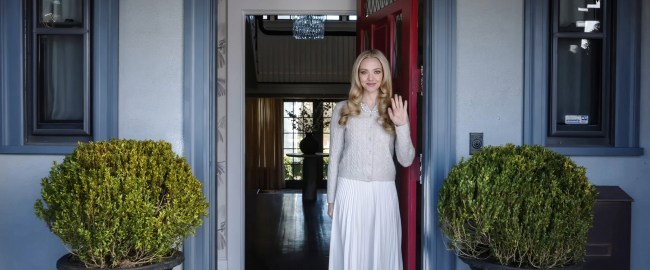
That created unusual challenges for production designer Elizabeth Jones and set decorator Paige Mitchell, who had to create a location — the “Winchester” house in which most of the story takes place — that would seem inviting and luxurious on first viewing but sinister and threatening in retrospect. “The overall approach was this idea of, ‘What if Nancy Meyers did a horror film?’” Jones told IndieWire. “Quiet luxury was our baseline, but then how do we take that to another level and make it more interesting?”


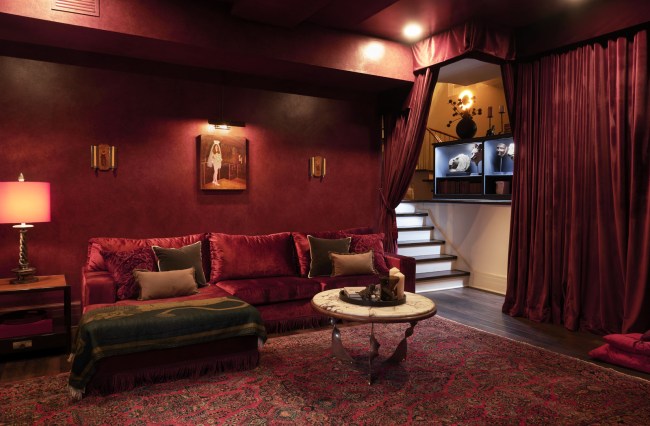
For Mitchell, the key was subtly introducing clues into the environment that hinted at the darkness lurking beneath the surface. “When you initially come in, the rooms are white and minimalistic, but as the movie goes on weirder objects come into play,” the set decorator told IndieWire. Jones added that the use of color was intentionally reserved for private areas like the deranged husband’s home screening room. “We tried to limit color in the more public-facing spaces, but as you get further into the house, we use deeper reds.”
One of Jones and Mitchell’s first conversations was about how the house could reveal the personalities of its inhabitants, something Mitchell does subtly throughout the film with props like a Maria Pergay lamp in the main couple’s bedroom. “At first it appears to be just a normal, beautiful silver lamp, but if you look closer, it’s made from this antler that gives it an ominous quality,” Mitchell said. The key to several of the furnishings and accessories was to make them seem like things only a wealthy person would own — but a wealthy person with something just a bit off.
“On first viewing, everything is nice and cohesive,” Jones said, “but when you look close, there’s something nasty about all of it.” That idea informed the selection of art for the house, which Jones said was chosen largely to express the husband’s true views about women. “We had a lot of Easter eggs. Anyplace where we could portray violence against women, we were trying to do that — we talked a lot about the idea of the male gaze.”
“We wanted to show how [Sklenar’s character] doesn’t really see women as people, but as something for his pleasure,” Mitchell said. For a lengthy scene between Sklenar and Sydney Sweeney in the home screening room, Mitchell selected a piece depicting a Playboy bunny as a bride. “I was trying to signify how he sees the bride as an object and something for him to control and have power over.”
 ‘The Housemaid’Evan McKnight for Lionsgate
Because most of the movie took place in the Winchester house, Jones knew finding the right location was imperative — and it wasn’t easy. “We looked at 75 to 100 homes,” Jones said, adding that she wanted a house like the ones she had read about in books like “Jane Eyre” and “Rebecca,” novels where the central home was a character. The filmmakers ultimately landed on a house they found in an old Zillow listing that not only had many of the characteristics they were looking for but some additional features that informed changes in the script.
“In the original story, Andrew was supposed to be pushed off of a balcony,” Jones said. “Then we saw this elegant spiral staircase, and the producer said, ‘You could throw him down that staircase.’” Feig loved the idea, and after some tests with a dummy, reworked the finale to create the audience-pleasing death scene that now serves as the movie’s climax. Feig’s “more is more” approach was one of the things Jones and Mitchell found most pleasurable about working on the movie.
“He really let us go to town,” Jones said. “There were very few times when he would say, ‘Ladies, rein it in.’” Mitchell wondered at times — as when the art department suggested snake wallpaper in a bathroom — if Feig would think they had gone too far. “He always said ‘No, no, no, keep going,’” Mitchell said. “It really allowed us to push things and get out of that world of same old prop house rentals, which I feel like can really flatten the world of the movie visually. When there’s room to play, it’s a great opportunity.”