7
Artemis II, the next mission in NASA’s Artemis program to explore the Moon, is scheduled to launch from Florida within the coming weeks. The mission will be the first crewed mission to the vicinity of the Moon since 1972, with the four-person crew expected to travel farther than any other human mission in spaceflight history.
During their 10-day mission around the Moon, the crew will perform several demonstrations and science experiments inside Orion. These include communications tests, investigations into the human body’s reactions to deep space, and studies of lunar geology on the far side of the Moon. What’s more, the crew will have the opportunity to manually pilot Orion.
Artemis II is more than a test flight.
The science we accomplish during this pivotal mission will prepare us for what’s next. 🚀
From studying how deep space affects the human body to practicing science operations near the Moon, Artemis II lays the groundwork for returning… pic.twitter.com/zWzxN9Tmxg
— NASA Science (@NASAScience_) January 16, 2026
Artemis II’s demonstrations and science experiments
One of the first objectives for the Artemis II crew will be to manually pilot their Orion capsule, Integrity. Shortly after Orion separation, the spacecraft will perform a proximity operations demonstration with the Interim Cryogenic Propulsion Stage (ICPS), during which the crew will simulate docking procedures. This is a critical demonstration for the Artemis program that will help plan for Artemis III and future landing missions, when Orion will dock with Human Landing System landers. The crew will have an additional opportunity on the sixth day of the mission to manually fly Orion.
On the first day of the mission, the crew will evaluate life support systems on Integrity and exercise using onboard workout equipment. On future long-duration missions to the Moon, crews will need to regularly exercise to prevent bone density deterioration due to microgravity, as well as other health concerns.
After spending roughly 24-hours in an Earth orbit, Integrity will perform a trans-lunar injection burn, sending the spacecraft and the crew on a free-return trajectory toward the Moon. The initial tests the Artemis II crew performs during the first 24 hours of the mission will be vital for ensuring Integrity‘s ability to complete the mission and will inform future crewed Artemis missions.
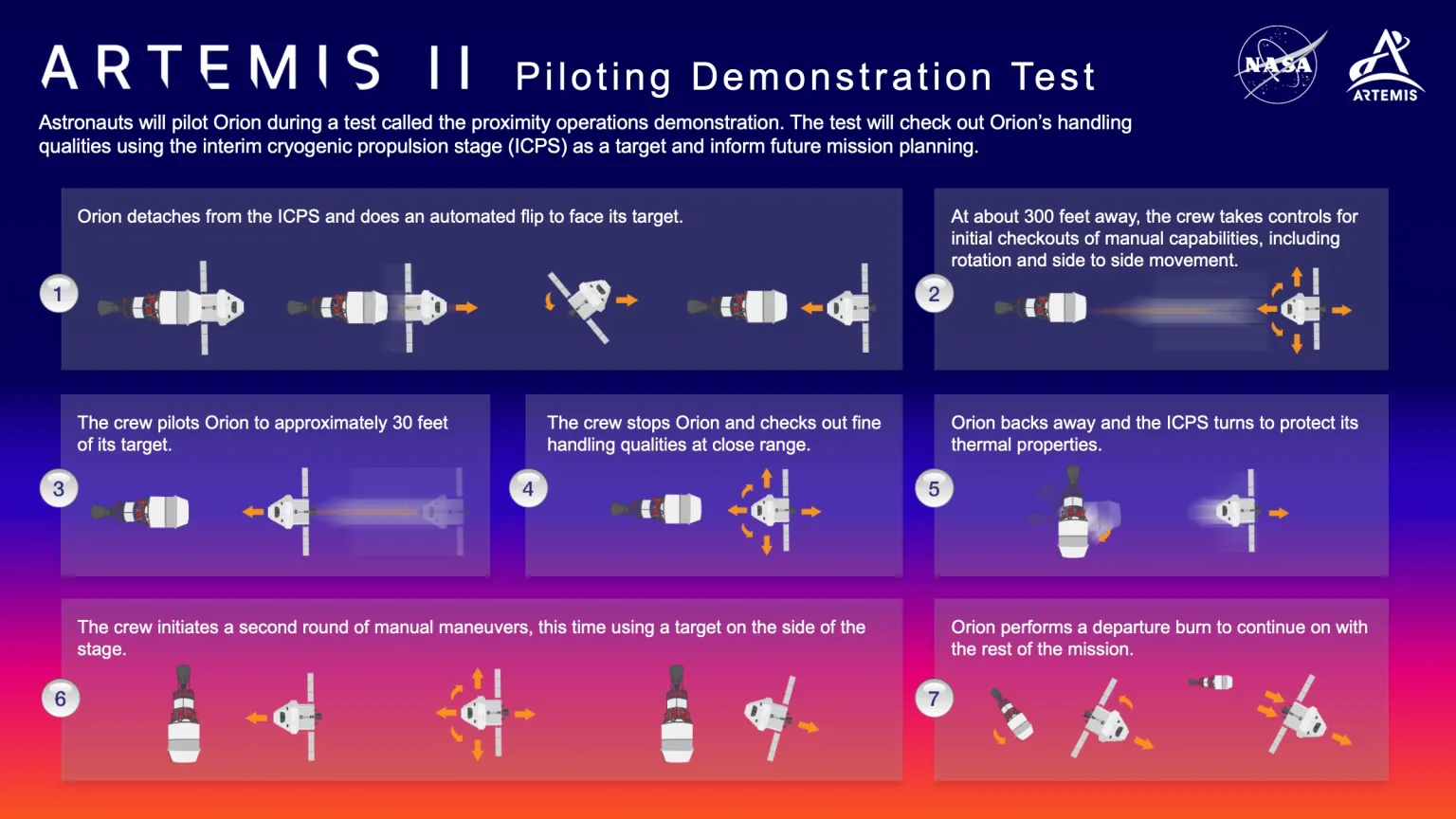
Infographic describing the proximity operations demonstration the Artemis II crew will perform. (Credit: NASA)
On the third day of the mission, while en route to the Moon, a CPR demonstration will be conducted, as well as a test of the crew’s spacesuits. The astronauts will test Orion’s communications with the Deep Space Network the same day, confirming that Orion can communicate with ground teams from outside of high-Earth orbit.
See Also
Another experiment on the eighth day will assess the spacecraft’s radiation shielding, a crucial onboard system that protects the crew from the harsh radiation environment outside low- and medium-Earth orbits.
As humans travel farther from Earth than ever before, NASA is studying the effects of deep-space travel on the human body. With significant advancements in science and technology since the Apollo missions, Artemis II will enable a deeper understanding of travel beyond the Van Allen radiation belts. To this end, NASA has a suite of science experiments onboard Orion that the crew will conduct over the course of their 10-day mission.
One of these experiments is the Artemis Research for Crew Health and Readiness (ARCHeR), a so-called actigraphy device similar to a wristwatch. The device will study the astronauts’ activity and sleep cycles. The crew will wear ARCHeR throughout the mission, and it will send back information to scientists on the ground.
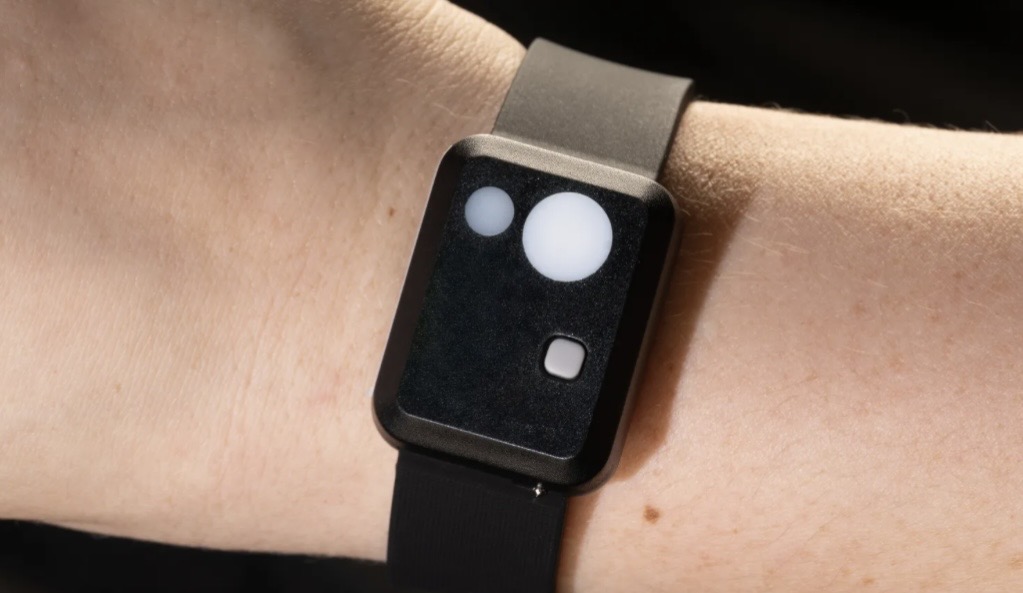
The ARCHer actigraphy device (Credit: NASA)
Another scientific experiment onboard the spacecraft is the A Virtual Astronaut Tissue Analog Response (AVATAR). These organ chips are about the size of a USB drive and will contain cells derived from the Artemis astronauts’ bone marrow. AVATAR will provide scientists with important data on the effects of deep-space environments, such as radiation, on human cells. Scientists will use this information to develop future healthcare practices for astronauts and even provide personalized health kits for future space missions.
Since 2018, NASA has collected astronaut health data from several crewed missions to the International Space Station as part of the Spaceflight Standard Measures experiment. The agency designed these experiments to collect samples and data to better understand how the body responds to a microgravity environment over extended periods. Artemis II has its own branch of the experiment, during which the crew will collect saliva, blood, and urine samples. Other testing will include assessments of ocular and brain health, as well as investigations into motion sickness and balance.
Mini organs, MAJOR breakthroughs. 🔬
Launching @NASAArtemis II, the AVATAR investigation will examine how space affects the human body at the smallest scale, informing astronaut health for future lunar missions and advancing personalized medicine on Earth:…
— NASA Science (@NASAScience_) January 26, 2026
Immune Biomarkers is another study on Artemis II that will analyze the effects of spaceflight on the human immune system. The astronauts will provide saliva samples before, during, and after the mission. The samples collected during the mission will be blotted onto filter paper booklets, which will be reconstituted on the ground for further study.
Artemis II will also feature studies into lunar geology. With the crew being the first humans to see certain parts of the far side of the Moon and the first to see it up close in 50 years, the astronauts will conduct a surface study using photography and visual descriptions, guided by geologists on the ground. The crew has studied the lunar surface in-depth and has traveled to Moon-like analogs on Earth to better understand lunar geology. A designated science control room has been set up in Mission Control, giving the astronauts constant feedback and guidance during their experiments.
The Artemis II astronauts entered quarantine at the end of last week so they don’t pick up any illness that could delay their mission.
The official launch date will be confirmed after our wet dress rehearsal at the end of the month. https://t.co/6v3kwFYoSS pic.twitter.com/9m7uxQZin3
— NASA Artemis (@NASAArtemis) January 26, 2026
The crew of Artemis II
The four-person Artemis II crew was announced on April 3, 2023, and will be the first crew to travel beyond low-Earth orbit since Apollo 17 in December 1972. What’s more, the crew will travel farther than any human crew has before, and the first person of color, the first woman, and the first non-American to travel to the Moon will all be on the mission.
NASA astronaut and commander Reid Wiseman previously flew to the ISS on a Russian Soyuz capsule in 2014 as part of Expedition 40/41. Wiseman spent 165 days onboard the orbital outpost, conducting two spacewalks. After returning to Earth, the former U.S. naval test pilot served as Chief of NASA’s Astronaut Office before stepping down to command Artemis II.
Like Wiseman, NASA astronaut and Artemis II pilot Victor Glover was also a naval test pilot and has completed one mission to the ISS. Glover first flew to space on the SpaceX and NASA Crew-1 mission, for which he also served as pilot. While onboard the ISS as part of Expedition 64/65, Glover completed four spacewalks, spending over 24 hours outside the Station. Glover will be the first person of color to fly beyond low-Earth orbit (LEO).
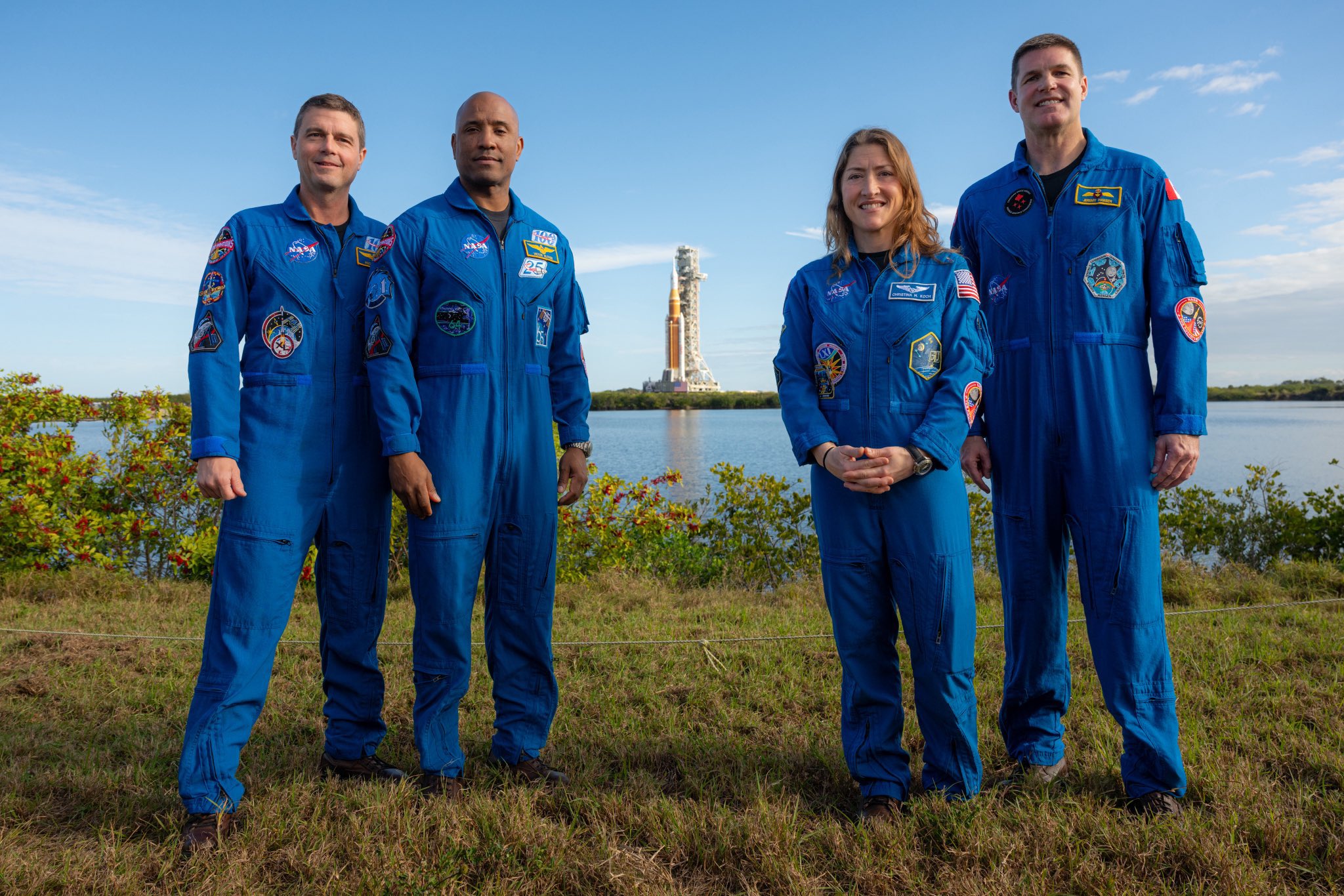
The Artemis II crew stand before their SLS and Orion during rollout. From left to right: Wiseman, Glover, Koch, Hansen. (Credit: NASA/John Kraus)
The final NASA astronaut on Artemis II is mission specialist Christina Koch, who flew on a Soyuz spacecraft to the ISS as part of Expedition 59/60/61 in 2019. Koch participated in the first all-female spacewalk with fellow NASA astronaut Jessica Meir, and would go on to break the record for the longest spaceflight by a female astronaut at 328 days. On Artemis II, she will become the first woman to travel beyond LEO and to the vicinity of the Moon.
For Canadian Space Agency (CSA) astronaut and mission specialist Jeremy Hansen, Artemis II will serve as his first trip into space. Hansen was a Royal Canadian Air Force captain and was previously CAPCOM at NASA’s Mission Control Center in Houston.
The Artemis II backup crew consists of NASA astronaut Andre Douglas and CSA astronaut Jenni Gibbons. If an issue arises with any of the primary Artemis II crew ahead of launch that requires their removal from the mission, Douglas and Gibbons will serve as the replacements.
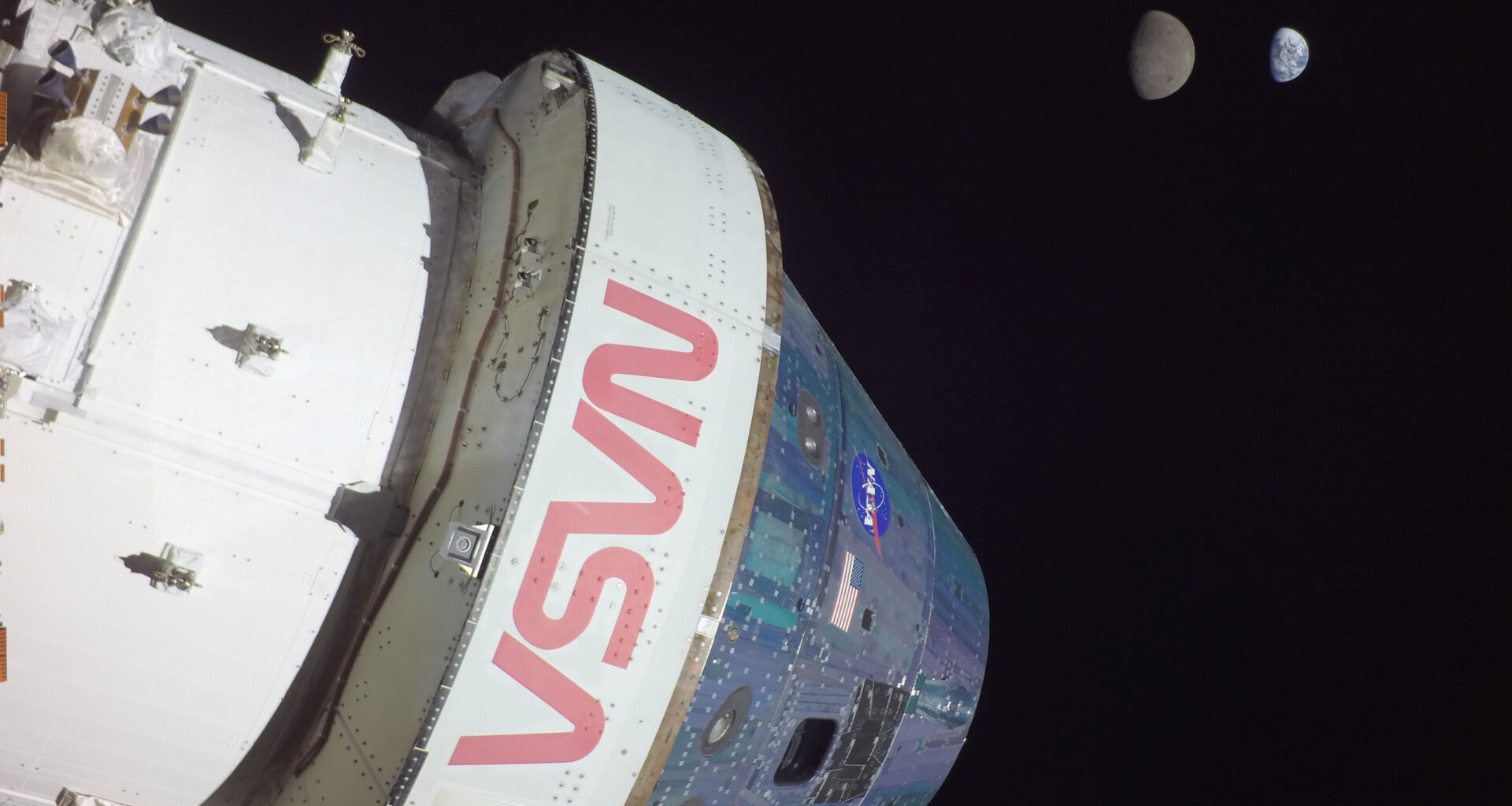
(Lead image: An uncrewed Orion with the Moon and Earth behind it during the Artemis I mission in 2022. Credit: NASA)