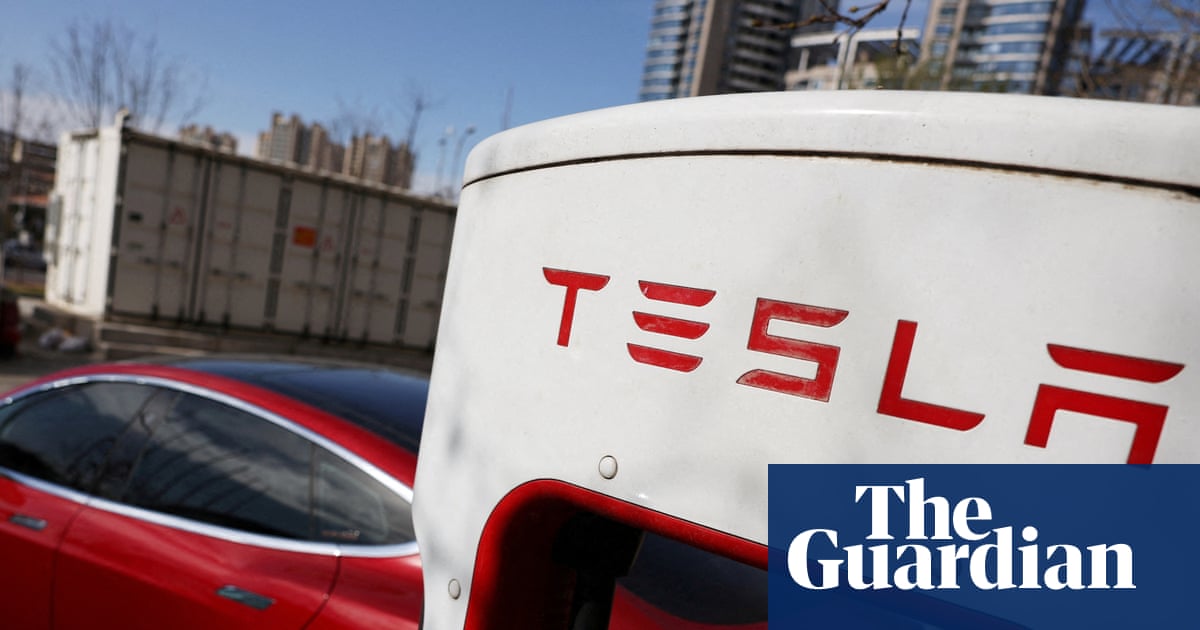
In the clearest sign yet that Tesla is pivoting away from its electric car business, CEO Elon Musk announced on Wednesday’s investor call that the company would discontinue production of its Model X SUV and Model S full-size sedan.
“It’s time to basically bring the Model S and X programs to an end,” Musk said. “We expect to wind down S and X production next quarter.”
The model S and X factory in Fremont, California would be converted to produce Tesla’s upcoming Optimus robot, Musk said.
Tesla’s most recent quarterly earnings report showed slumping vehicle sales and declining revenue as the Musk pins the company’s futures on AI and robotics. The earnings report described Tesla’s chaotic year as a “transition from a hardware-centric business to a physical AI company”.
The high hopes and grand possibilities Musk has outlined helped Tesla beat Wall Street expectations, even as the company reported its first-ever decline in total revenue – losing 3% year-over-year. Tesla reported fourth quarter earnings per share of $0.50 after the market close on Wednesday, exceeding the $0.45 that Wall Street expected. Its reported revenue was $24.9bn, beating analyst estimates of $24.79bn.
The company’s total automotive revenues dropped 11% year-over-year in 2025. Earlier this month, Tesla reported its fourth quarter vehicle delivery numbers, which measure buyers’ receipt of their cars rather than dealership sales, revealing a 16% decline year-over-year, hurt especially by cratering interest in Europe. The company’s stock rose as high as 4% in after-hours trading, before tapering off its gains.
As Tesla’s vehicle sales have fallen over the past year, Musk and the company have emphasized a shift towards AI-driven projects such as Optimus consumer robots and self-driving Robotaxis. All of these technologies remain unproven and not widely available to the public, let alone profitable, but they have allowed Musk to claim the company will see unparalleled future growth without much to show for it today.
Musk has stated that Optimus would be the “biggest product of all time” and said that the robots, along with autonomous vehicles, would usher in “a world where there is no poverty”. Tesla plans to start production of Optimus before the end of 2026, according to the earnings report. Musk has said the company will sell the robot to the public in 2027. Tesla also revealed that earlier this month it agreed to invest $2bn into xAI, Musk’s artificial intelligence company.
Tesla’s chief financial officer, Vaibhav Taneja, stated on the earnings call that the company’s capital expenditure would be $20bn, an immense amount that is vastly more than what many analysts estimated.
Although Tesla’s stock price plummeted during Musk’s tumultuous time in government last year, it rebounded to its highest price ever in December amid ongoing market frenzy for AI investments and Musk’s promise of building a “robot army”. The previous month, Tesla shareholders also approved a pay package for Musk that could award him up to a trillion dollars in compensation if the company meets a series of financial milestones.
While Tesla has touted its upcoming projects as evidence of upcoming success, some of its formerly futuristic products have struggled. The company’s Cybertruck, which Musk said earlier this month was “the best vehicle Tesla has ever made”, saw a drastic 48% decline in sales last year, according to Kelley Blue Book reports.
Tesla has faced increasing competition from other electric vehicles companies, primarily China’s BYD, which overtook Tesla last year as the world’s largest electric carmaker. BYD’s sales grew by 28% in 2025, as it offered consumers in a number of markets less expensive alternatives to Tesla’s models.