

Our expert staff answers frequently asked questions in their areas of expertise and defines common terms so you can be a smarter shopper. Read more here.
Photo-Illustration: The Strategist; Source Images Getty
If you’ve been anywhere near Instagram or TikTok lately, you’ve probably witnessed someone standing on a vibrating plate extolling the many virtues of a daily practice centered on whole-body vibration. (Maybe they’re even wearing a red-light mask or weighted vest while they’re at it.) The videos remind me of the debunked mid-century vibrating-belt machines that promised to “shake the fat off.” And indeed, weight loss is one of the alleged effects of the modern vibration plate, which is exactly what it sounds like: a device with a flat surface that vibrates. There are several kinds of vibration plates ranging in size, price, and type and intensity of vibration. But according to the many proponents currently making claims online, they all offer a litany of benefits, from building or toning muscle and increasing bone density to promoting lymphatic drainage, reducing cellulite, alleviating bloating, and recovering from soreness after a workout. Skeptical, I asked experts in fitness, bone health, physical therapy, and physiology whether vibration plates can actually do any of these things.
In short, no. According to Dr. Lauren Colenso-Semple, a researcher and science communicator specializing in female physiology, exercise, and nutrition, “when we look at vibration plates versus the things we know are effective for improving muscle and strength, like lifting weights, it’s clearly an inferior choice. Part of that is because effective strength training means using a challenging resistance.” So if getting stronger is your goal, wiggling and jiggling on a vibration plate won’t get you there. Danny Matranga, a strength and conditioning coach, puts it most succinctly: “You could buy a $1,000 vibration plate, or you could get eight years out of a $10-a-month gym membership. I promise you the gym membership will get you a lot more.”
Dr. Anatolia Vick-Kregel, senior assistant director of health and well-being and director of the Lifetime Physical Activity Program at Rice University, says studies have shown vibration plates can be effective for “waking up” muscles before exercising or as an alternative to exercise for people who are deconditioned with low physical activity due to age or disability. And Robert Nithman, program director of physical-therapy education at Elon University, tells me about a recent meta analysis that suggested vibration plates could be beneficial for static isometric muscle contractions, which could improve balance and stability. But they absolutely cannot do more for you than a workout.
Also no. Lymphatic drainage is another buzzword du jour that “is taking on its own new meaning in the wellness world,” according to Colenso-Semple. “People are lumping it in with, I’m bloated or I’m retaining fluid, and this is going to help me either lose weight or feel less bloated again,” she says. In tandem, many proponents of vibration plates have claimed the plates can help with these concerns.
In addition to the lymphatic system being typically self-regulating, “the evidence for commercial vibration plates, specifically for lymphatic drainage, is limited and very indirect,” says Vick-Kregel, pointing to a study on a small sample size of perimenopausal women that found lymphatic drainage benefits but didn’t provide enough evidence to support the idea. Colenso-Semple adds that the logic behind the idea that vibration supports lymphatic drainage is that it would improve circulation, but circulation isn’t a great measure of lymphatic drainage. What is known to improve circulation, she says, is exercise.
Eh, not really. Some fitness gurus recommend using a vibration plate to intensify certain exercises and suggest squatting while standing on the plate or holding a plank with your hands on the plate to make those moves more challenging. But beyond their potentially helping you improve your balance, Vick-Kregel says that nothing about standing on a vibration plate will “magically” improve the effectiveness of a workout because the vibration does not increase the load, which is what builds strength. And while Colenso-Semple has seen a few studies suggesting that exercising on a vibration plate can be beneficial, she cautions that they have often compared exercising on a vibration plate to not exercising at all, which doesn’t necessarily show that the vibration plate is effective. “Vibration plates also have load limits, especially the ones for at-home use, meaning you might not even be able to stand on them and then add the appropriate-weight dumbbells or barbell,” she says.
This one shows some promise, with a major caveat. Dr. Ted S. Gross, a researcher in orthopedics at the University of Washington School of Medicine, says there is research showing that low-intensity vibration plates can help stimulate bone formation and reduce bone-density loss, particularly in postmenopausal women (who are susceptible to bone-density loss due to lower estrogen levels). LIV plates look somewhat like a bathroom scale and use a high frequency but a low magnitude — meaning there are a lot of vibrations happening per minute but those vibrations are fairly weak. So when standing on an LIV plate, a person would not be visibly “shaking” and may not even feel the vibration at all, Gross says. The vibration plates currently popular online tend to employ a high frequency with a high magnitude, which creates the “bouncing” effect seen in many social-media videos. There is not much evidence to suggest this type of vibration plate provides the same effects.
The key thing to remember is that using an LIV plate won’t ever be as effective as resistance training. “The old adage goes, ‘Bone grows in response to stress,’” Nithman says. “For a healthy 25-year-old who has a lot of other options, it would not be my first choice.” And while using an LIV plate could be beneficial for people with established bone-mineral-density diagnoses like osteopenia or osteoporosis, Nithman will always recommend strength and resistance training first.
Maybe! (But there are better options.) While at-home vibration plates are having their moment in the sun, they have been commonplace in gyms for years, especially as a recovery tool. Vick-Kregel says vibration plates demonstrate some potential benefits for post-workout recovery, such as reducing delayed-onset muscle soreness, but she doesn’t recommend replacing other recovery strategies, such as massage, in favor of vibration.
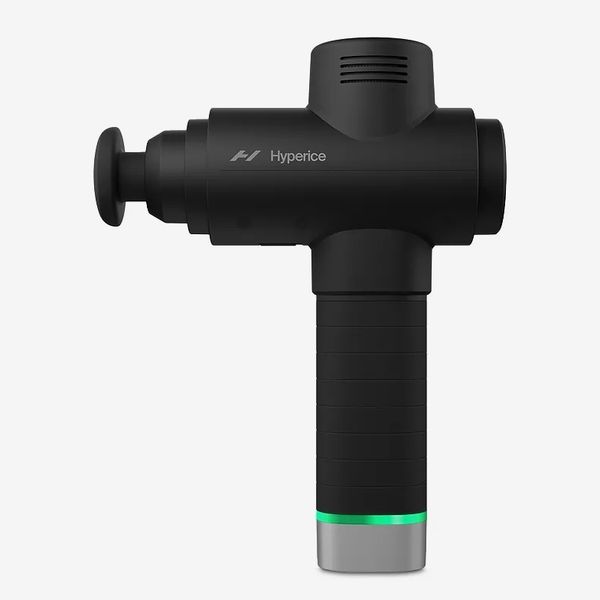
Strategist writer Brenley Goertzen used a vibration plate for recovery as a D1 athlete in college and likened the experience to getting a massage. Evan Parker, a triathlete and the operations director for the boutique fitness studio NRTHRN Strong, tells me she has been using a Lifepro vibration plate on a low setting as a recovery tool combined with stretches and meditation for about a year and a half. While she uses other recovery methods as well, Parker says the vibration plate feels like a “whole-body Theragun” that shakes out her muscles and helps her identify any tightness.
Recovery typically involves increasing blood flow and clearing the metabolic by-products from hard exercise — which you can also do by taking a walk. “You could make a very bold claim that by shaking your body, you probably circulate fluid better,” Matranga adds. “But a vibration plate wouldn’t even be on my top-20 list of things you could do to accelerate recovery from hard training.” Instead, he recommends more effective treatments using a sauna, getting a massage, or stretching.
Again, maybe, and again, there are caveats — most notably that strength training is nearly always a better option. The most interesting research on vibration plates focuses on postmenopausal women, whose lower estrogen levels can lead to decreased bone density and muscle mass, putting them at higher risk for falls and injury. For some women, especially those who are older or less physically able, using an LIV plate may be beneficial. But Colenso-Semple and Matranga both emphasized that the wellness industry has a long history of marketing products to women that they don’t necessarily need. “A lot of companies and people in the health, wellness, and fitness industries are targeting postmenopausal women because this is a group that is aging, caring about their health, and tends to have some disposable income,” says Colenso-Semple. “I wonder if the vibration plate is sort of the 2026 weighted vest.” It also promised women improved bone density and strength with limited scientific backup.
Matranga underlines the importance of resistance training as well, more than any other type of exercise. “Not only does it help specifically with bone density, it helps more than anything else with the development and retention of muscle, which is huge for how you look, how you age, and how you experience menopause,” he says. Another underappreciated benefit is that resistance training can help make the hormone fluctuations women deal with during pregnancy, menstruation, breastfeeding, and menopause more manageable.
From
$88
$108
now
19% off
get the strategist newsletter
Actually good deals, smart shopping advice, and exclusive discounts.
Vox Media, LLC Terms and Privacy Notice
The Strategist is designed to surface useful, expert recommendations for things to buy across the vast e-commerce landscape. Every product is independently selected by our team of editors, whom you can read about here. We update links when possible, but note that deals can expire and all prices are subject to change.