Newswise — By identifying and characterizing three key autophagy genes and tracking their responses under environmental stress, the study could help improve fish health management and support sustainable aquaculture.
Human activities and climate deterioration are increasingly altering aquatic ecosystems, leading to frequent disease outbreaks and heavy economic losses in fish farming. Takifugu fasciatus is prized for its high nutritional value and medicinal compounds, including tetrodotoxin and collagen. However, the species is highly sensitive to copper contamination and cold stress. Copper concentrations in summer waters can reach levels harmful to growth and survival, while temperatures below 16 °C suppress feeding and can cause mass mortality. Autophagy is a conserved cellular process that allows cells to recycle damaged components and maintain internal balance under stress. A specialized form—mitochondrial autophagy—targets dysfunctional mitochondria, preventing cellular damage. Three genes, lc3, beclin-1, and p62, serve as core markers of this process, yet their roles in environmental stress responses in T. fasciatus remained largely unexplored.
A study (DOI: 10.48130/animadv-0025-0033) published in Animal Advances on 09 January 2026 by Tao Wang’s team, Nanjing Normal University, elucidates the molecular basis of mitochondrial autophagy in Takifugu fasciatus under copper and low-temperature stress, providing critical insights for understanding stress adaptation mechanisms and developing strategies to enhance resilience in aquaculture species.
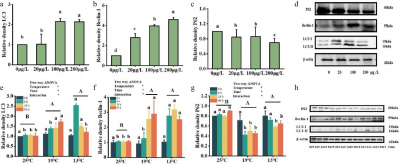
In this study, a combination of molecular cloning, bioinformatic analysis, phylogenetic comparison, quantitative gene expression assays, and protein immunoassays was employed to systematically investigate the characteristics and stress responses of three mitochondrial autophagy–related genes (lc3, beclin-1, and p62) in Takifugu fasciatus. First, full-length cDNAs were cloned and subjected to sequence analysis to determine molecular weight, amino acid length, isoelectric point, subcellular localization, conserved motifs, and chromosomal distribution. The results showed that LC3, Beclin-1, and p62 proteins had relative molecular weights of 14.72, 51.23, and 45.49 kDa, respectively, with lengths ranging from 125 to 447 amino acids and predicted cytoplasmic localization. Conserved motif analysis revealed that LC3 contained two core motifs, whereas Beclin-1 and p62 harbored multiple conserved domains, and chromosomal mapping demonstrated that the three genes were distributed on different chromosomes, suggesting distinct genomic roles. Phylogenetic analysis using MEGAX and the neighbor-joining method, together with cross-species sequence alignment, showed that all three proteins were highly conserved among teleosts, exhibiting up to 99–100% similarity with Takifugu rubripes and moderate to high homology with mammals and amphibians. Next, qRT-PCR was applied to assess tissue-specific expression patterns, revealing ubiquitous expression of all three genes, with particularly high levels in the liver; lc3 was also strongly expressed in the brain, while beclin-1 showed elevated expression in the liver, heart, and intestine, and p62 was most abundant in the liver. Finally, qRT-PCR and protein immunoassays were used to evaluate hepatic responses under copper (Cu²⁺) exposure and low-temperature stress. At the transcriptional level, Cu²⁺ and cold stress significantly induced lc3, beclin-1, and p62 expression, with beclin-1 showing the greatest sensitivity. At the protein level, LC3 and Beclin-1 were markedly upregulated under stress, whereas p62 protein levels decreased, indicating active autophagic flux. Collectively, these methodologically integrated results demonstrate that copper and low-temperature stress robustly activate mitochondrial autophagy in the liver of T. fasciatus.
The findings provide a molecular framework for understanding how fish respond to environmental stress at the cellular level. Identifying beclin-1 as a particularly sensitive stress marker opens opportunities for developing early diagnostic indicators of environmental stress in aquaculture systems. In the long term, these autophagy-related genes could serve as molecular markers in selective breeding programs aimed at producing more stress-resilient fish strains.
###
References
DOI
Original Source URL
https://doi.org/10.48130/animadv-0025-0033
Funding information
This work was supported by the National Natural Science Foundation of China (No. 32473131), the ‘JBGS’ Project of Seed Industry Revitalization in Jiangsu Province [JBGS(2021)034], Jiangsu Agriculture Science and Technology Innovation Fund [CX(22)2029], Jiangsu Province ‘333 High-level Talents Cultivating Project’.
About Animal Advances
Animal Advances (e-ISSN 3065-7660) is an open-access journal which published by Maximum Academic Press in partnership with Nanjing Agricultural University. The journal is dedicated to delivering cutting-edge discoveries and progress in animal sciences to a diverse audience, encompassing scholars, academicians, and practitioners in the industry.